Nuts: Health Benefits for Women and the Best Nuts to Eat

Almonds. Walnuts. Pistachios. Pecans. Cashews. Brazil nuts.

These small foods pack a surprising amount of nutrition.

Nuts provide a combination of healthy unsaturated fats, plant protein, fiber, vitamins, minerals, and antioxidants. The American Heart Association includes unsalted nuts such as almonds, walnuts, pistachios, pecans, and hazelnuts among foods that can support a heart-healthy eating pattern.

For women, nuts can be especially useful because they are portable, filling, easy to add to meals, and rich in nutrients important throughout adulthood.

But nuts are also calorie-dense, and some varieties have unique nutritional characteristics worth knowing about.

So how much should you eat? Which nuts are healthiest? And can nuts really help with heart health, blood sugar, and weight management?

Here is what women should know.

Why Nuts Are So Nutritious

Different nuts provide different amounts of individual nutrients, but most contain some combination of:

  • Monounsaturated fats
  • Polyunsaturated fats
  • Plant protein
  • Fiber
  • Magnesium
  • Vitamin E
  • Zinc
  • Copper
  • Selenium
  • Other antioxidants and plant compounds

This makes nuts an easy way to improve the nutritional quality of meals and snacks.

For example, instead of eating crackers by themselves, you might pair fruit with a small handful of almonds.

Or add walnuts to oatmeal.

Sprinkle pistachios over Greek yogurt.

Add cashews to a stir-fry.

Use nut butter on whole-grain toast.

Small changes like these can help make meals more satisfying without requiring complicated recipes.

If you are working on improving your overall diet, our Healthy Diet for Women to Stay Fit guide can help you build more balanced everyday meals.

Nuts Can Support Heart Health

Heart health should be a major priority for women.

Nuts contain mostly unsaturated fats rather than the large amounts of saturated fat found in some animal foods and highly processed snacks.

The American Heart Association notes that nuts contain healthy fats, fiber, protein, vitamins, minerals, and antioxidants and includes them as part of a heart-healthy eating pattern.

Research on almonds, for example, has found that diets containing nuts can help reduce total and LDL cholesterol, particularly when nuts replace foods high in saturated fat or refined carbohydrates.

The key word is replace.

Adding a handful of nuts on top of an already calorie-heavy diet is different from replacing:

Chips.

Cookies.

Processed meats.

Or other less nutritious foods

with nuts.

Try:

Apple + almonds instead of cookies

or

Walnuts in oatmeal instead of a sugary pastry

or

Pistachios instead of chips

The overall eating pattern matters.

Nuts Provide Healthy Fats

Fat is not something women need to eliminate from their diets.

Your body needs dietary fat for many normal functions, including helping absorb fat-soluble vitamins such as vitamins A, D, E, and K.

The type of fat matters.

Nuts are particularly rich in unsaturated fats.

Harvard’s Nutrition Source notes that polyunsaturated fats from foods such as nuts and seeds can be part of a dietary pattern associated with better metabolic health.

This does not mean you need an enormous serving.

A small portion provides plenty.

Walnuts Provide Plant-Based Omega-3 Fat

Walnuts stand out from many other nuts because they contain relatively high amounts of alpha-linolenic acid, or ALA.

ALA is a plant-based omega-3 fatty acid.

The American Heart Association specifically notes that walnuts are particularly rich in omega-3 fats compared with many other nuts.

Walnuts can easily be added to:

  • Oatmeal
  • Yogurt
  • Salads
  • Smoothie bowls
  • Homemade trail mix
  • Whole-grain cereal

Keep in mind that plant-based ALA is not identical to the EPA and DHA omega-3 fats found in fatty fish.

You do not necessarily have to choose one or the other.

Both walnuts and seafood can have a place in a healthy diet.

Almonds Are Rich in Vitamin E

Almonds are among the better food sources of vitamin E.

Vitamin E acts as an antioxidant and helps protect cells from oxidative damage. It also contributes to immune function and other normal cellular processes. The NIH lists almonds among notable food sources of vitamin E.

Almonds are easy to use as:

  • A portable snack
  • An oatmeal topping
  • A yogurt topping
  • A salad topping
  • Almond butter
  • An ingredient in homemade trail mix

Choose unsalted or lightly salted varieties more often if you are watching sodium intake.

Nuts Can Help Make Meals More Filling

One common concern is:

“Aren’t nuts fattening?”

Nuts are calorie-dense.

That part is true.

Fat contains more calories per gram than protein or carbohydrate, so a large amount of nuts can add substantial calories quickly.

However, this does not mean nuts automatically cause weight gain.

Their combination of:

  • Fat
  • Protein
  • Fiber

can make them satisfying.

Research summarized by Harvard has found that nut consumption is not consistently associated with greater weight gain and, in some studies, has actually been associated with less long-term weight gain and lower obesity risk.

This does not mean eating unlimited nuts causes weight loss.

Portions still matter.

But nuts can fit comfortably into a weight-management eating plan.

For women who want help structuring calories, protein, portions, meals, and exercise around an individual weight goal, our Custom Women’s Diet & Fitness Plan is designed around your goals, schedule, food preferences, and lifestyle.

What Is a Serving of Nuts?

Because nuts are calorie-dense, portion awareness can be helpful.

The American Heart Association considers approximately:

1 ounce of whole nuts

or

2 tablespoons of nut butter

a serving.

One ounce is roughly a small handful, although the exact number of nuts depends on the variety.

You do not necessarily need to weigh your nuts every day.

But there is a big difference between:

A small handful

and

Eating directly from a large container while watching television.

If portion control is difficult, place the amount you plan to eat into a small bowl instead of eating from the package.

Nuts and Blood Sugar

Nuts can also be useful when constructing meals that support blood-sugar management.

Because nuts contain fat, fiber, and protein while being relatively low in digestible carbohydrate, pairing them with carbohydrate-containing foods may create a more balanced snack.

For example:

Instead of:

Apple alone

you might try:

Apple + almonds

Instead of:

Toast alone

try:

Whole-grain toast + peanut or almond butter

Instead of:

Banana alone

try:

Banana + walnuts

Harvard’s Nutrition Source includes nuts among sources of healthful unsaturated fats in dietary patterns associated with lower type 2 diabetes risk.

Nuts are not a treatment for diabetes, however.

Women with diabetes who use insulin or glucose-lowering medications should follow individualized guidance from their healthcare team.

Nuts May Be Especially Useful Around Menopause

Women often notice changes in body composition and weight during the years surrounding menopause.

Nutrition alone does not prevent every menopause-related change.

However, healthy dietary patterns can help.

A 2026 study involving more than 38,000 women in the Nurses’ Health Study II found that dietary patterns emphasizing minimally processed plant foods—including nuts, legumes, fruits, vegetables, and whole grains—were associated with less weight gain and lower obesity risk around menopause.

That does not prove that eating walnuts by themselves prevents menopause weight gain.

It reinforces a broader point:

Nuts can be one useful part of a high-quality overall diet.

Pistachios

Pistachios provide:

  • Protein
  • Fiber
  • Unsaturated fat
  • Potassium
  • Other vitamins and minerals

They also have one practical advantage.

If you buy pistachios in the shell, eating them takes time.

That can naturally slow down snacking compared with quickly eating from a bag of chips or candy.

Try adding pistachios to:

  • Salads
  • Yogurt
  • Oatmeal
  • Grain bowls

or simply eat a small serving as a snack.

Cashews

Cashews have a creamy texture and work especially well in both sweet and savory dishes.

They provide unsaturated fat, protein, and minerals.

You can use cashews in:

  • Stir-fries
  • Trail mix
  • Oatmeal
  • Yogurt bowls
  • Homemade sauces

Cashew butter is another option.

As with other nut butters, check labels.

Some products contain significant amounts of:

  • Added sugar
  • Added oils
  • Sodium

A simple ingredient list containing mostly nuts is often a good choice.
Pecans

Pecans contain unsaturated fats along with fiber and plant compounds.

They work particularly well in:

  • Oatmeal
  • Salads
  • Yogurt
  • Roasted vegetables
  • Homemade snack mixes

The problem usually is not the pecan itself.

It is what sometimes comes with it.

A handful of plain pecans is very different nutritionally from a giant slice of pecan pie loaded with sugar and syrup.

Food preparation matters.

Brazil Nuts: Healthy—but Do Not Overdo Them

Brazil nuts deserve special attention.

They are exceptionally rich in selenium.

Selenium is an essential mineral involved in thyroid function, reproduction, DNA production, and antioxidant defenses.

But Brazil nuts contain so much selenium that eating large quantities regularly can result in excessive intake.

The NIH reports that a single Brazil nut may contain approximately 68 to 91 micrograms of selenium, while the adult upper intake level in the United States is 400 micrograms per day.

Too much selenium over time can cause problems including:

  • Hair loss
  • Brittle nails
  • Nausea
  • Metallic taste
  • Skin changes
  • Nervous-system symptoms

So Brazil nuts are a perfect example of:

Healthy does not mean unlimited.

You do not need to eat a handful every day.

What About Peanuts?

Technically, peanuts are legumes, not tree nuts.

They are related botanically to foods such as beans and lentils.

Nutritionally, however, peanuts have many similarities to tree nuts.

They provide:

  • Protein
  • Unsaturated fat
  • Fiber
  • Vitamins
  • Minerals

The American Heart Association includes peanuts alongside tree nuts in its healthy-nut recommendations.

Peanut butter can therefore be an inexpensive way to incorporate many of the nutritional benefits associated with nuts.

Look for varieties without excessive added sugar, sodium, or unnecessary added fats.

Nut Butter Can Be Healthy Too

Nut butter can be especially convenient.

Options include:

  • Peanut butter
  • Almond butter
  • Cashew butter
  • Mixed-nut butter

A simple nut butter might contain:

Peanuts

or

Almonds + salt

Some commercial varieties contain larger amounts of added sugar or oils.

Check the Nutrition Facts label and ingredient list.

Nut butter can be paired with:

  • Apple slices
  • Bananas
  • Whole-grain toast
  • Oatmeal
  • Yogurt
  • Smoothies

Raw or Roasted?

Both raw and roasted nuts can fit into a healthy diet.

The bigger issue is often what has been added.

Honey-roasted, candied, chocolate-covered, or heavily salted nuts can contain considerably more:

  • Added sugar
  • Sodium
  • Calories

than plain varieties.

That does not mean you can never eat them.

But for everyday use, options such as:

Raw

Dry roasted

Unsalted

or

Lightly salted

can make it easier to enjoy the nutritional benefits without lots of extras.

Nuts Are Easy to Add to a Healthy Grocery List

One reason nuts are so useful is that they are convenient.

They last longer than many fresh foods and require virtually no preparation.

Add them to your grocery list alongside:

  • Vegetables
  • Fruits
  • Whole grains
  • Beans
  • Eggs
  • Fish
  • Yogurt
  • Lean proteins

For more ideas, use our Foods to Buy for Healthy Eating guide.

Easy Ways to Eat More Nuts

You do not have to sit down and eat plain nuts every day.

Try:

Breakfast

Oatmeal + berries + walnuts

Greek yogurt + almonds

Whole-grain toast + peanut butter + banana

Lunch

Chicken salad + pecans

Grain bowl + pistachios

Snack

Apple + almond butter

Banana + peanut butter

Small handful of mixed nuts + fruit

Dinner

Vegetable stir-fry + cashews

Salad + walnuts

Roasted vegetables + chopped almonds

Simple combinations work.

Watch for Nut Allergies

Tree-nut and peanut allergies can cause serious allergic reactions in susceptible people.

If you know you have an allergy, avoid the responsible food and follow the emergency plan provided by your healthcare professional.

Symptoms of a severe allergic reaction can include:

  • Difficulty breathing
  • Throat tightness
  • Swelling
  • Wheezing
  • Dizziness
  • Widespread hives

A severe allergic reaction requires urgent medical treatment.

And remember:

A peanut allergy does not necessarily mean someone is allergic to every tree nut, and a tree-nut allergy does not necessarily mean every nut causes a reaction.

An allergist can provide individualized evaluation.

The Bottom Line

Nuts may be small, but they can contribute a lot to a woman’s diet.

They provide combinations of:

  • Unsaturated fats
  • Protein
  • Fiber
  • Vitamin E
  • Magnesium
  • Selenium
  • Zinc
  • Other nutrients and antioxidants

Eating nuts as part of a balanced diet can support cardiovascular health and can provide a satisfying alternative to many highly processed snacks.

Different nuts offer different nutritional advantages.

Walnuts provide plant-based omega-3 ALA.

Almonds are especially rich in vitamin E.

Pistachios provide protein, fiber, and healthy fats.

Cashews and pecans offer additional variety.

Brazil nuts contain exceptionally high amounts of selenium—but should be eaten in moderation because excessive selenium can be harmful.

You do not need one “perfect” nut.

Variety works beautifully.

Keep portions reasonable.

Choose unsalted or lightly salted varieties often.

Limit heavily candied or sugar-coated nuts.

Use nut butters with simple ingredient lists.

And think of nuts as one component of a larger healthy eating pattern.

If you want help creating meals around your individual nutrition, weight, fitness, schedule, and lifestyle needs, learn more about our Custom Women’s Diet & Fitness Plan.

Healthy eating does not require complicated foods.

Sometimes one of the easiest upgrades to your diet really can fit in the palm of your hand.

This article is for general educational purposes and is not intended to diagnose or treat medical conditions. Women with nut allergies, kidney disease, specialized dietary restrictions, or medical conditions requiring individualized nutrition guidance should consult an appropriate healthcare professional.

Smart Portioning, Protein, and Planning: A Busy Woman’s Guide to Sustainable Weight Management

For many women juggling careers, households, and social commitments, sustainable weight management isn’t about drastic diets or extreme rules. It’s about practical, real-life habits—portioning that fits your day, protein that supports energy and satiety, and planning that reduces the last-minute, less-healthy choices. This guide offers clear, actionable steps you can start today, with the option of a personalized plan if you want tailored guidance.

Why portion size and protein matter for busy women

Two pillars often overlooked in quick-fix meal ideas are portion control and adequate protein. Proper portioning helps you meet energy needs without feeling deprived, while protein supports fullness, muscle maintenance, and steady energy between meals. When you combine mindful portions with protein at most meals, you create a foundation for balanced meals that sustain you through busy mornings, long workdays, and workouts.

Portioning isn’t about perfection; it’s about consistency. Most days won’t be identical, but a reliable framework can guide choices. Protein, fiber-rich foods, and a balance of fats and carbohydrates help you feel satisfied longer and reduce cravings later in the day.

How to think about portions without weighing everything

Use simple, visual cues to build balanced plates. The following guides apply to many common foods and can be adjusted to your appetite and activity level.

  • Proteins: A palm-sized portion per meal is a practical starting point for many adults.
  • Starches/grains: A closed fist or cupped handful portion is a reasonable starting point for cooked grains, potatoes, or pasta.
  • Vegetables: Half your plate should be vegetables or salad for most meals.
  • Healthy fats: A thumb-size portion of fats like olive oil, avocado, or nuts is a sensible amount per meal.

These cues are flexible. If you’re more active or have specific goals, you may adjust portions slightly, but the general approach remains the same: vegetables first, protein at each meal, balanced carbs, and a little fat to support flavor and satiety.

Protein: the cornerstone of fullness and steady energy

Protein is a vital nutrient that helps you feel satisfied and supports muscle health, which is important for women as metabolism and activity patterns change over time. A practical strategy is to include a source of high-quality protein at a majority of meals and snacks.

Tips to maximize protein intake without overthinking it:

  • Include a protein source in most meals and snacks (e.g., eggs, Greek yogurt, beans, lean meat, tofu, tempeh, fish, or dairy).
  • Spread protein across meals. Rather than loading protein into one meal, aim for a steady intake across the day.
  • Choose a mix of animal and plant-based proteins if you follow a vegetarian or flexitarian pattern.
  • Healthy snacks with protein can curb cravings and stabilize energy between meals.

As a general guideline, you might aim for roughly 20–35 grams of protein per meal, depending on your body size, activity level, and goals. It’s not a strict rule; use it as a flexible target to guide shopping and meal prep.

Fiber, fats, and carbohydrates: building a balanced plate

Balanced meals contain a mix of nutrients that help you feel full, support energy levels, and keep blood sugar stable. Here are practical ways to balance your plate.

  • Fiber-rich vegetables and legumes: These provide fullness and support digestion. Aim to include a variety of colors and textures each day.
  • Complex carbohydrates: Choose minimally processed grains and starchy vegetables that release energy gradually, such as oats, quinoa, brown rice, sweet potatoes, and beans.
  • Healthy fats: Include moderate amounts of fats from olive oil, avocado, nuts, and seeds to improve flavor and satiety.

Keep in mind that portioning can be flexible with these groups. If you’re very active or have higher energy needs, you can add a bit more complex carbs around workouts while keeping vegetables and protein constant.

Practical meal-planning templates for a typical busy day

Two simple templates can cover most weekdays and adapt to work commitments, family meals, and workouts. Use them as a starting point and adjust based on your schedule and preferences.

Template A: Workday lunch and dinner

Goal: a balanced plate at midday and in the evening that supports steady energy, without requiring long cooking sessions.

  • Lunch: Build a plate with half vegetables, a quarter protein, and a quarter complex carbohydrate. Add a small amount of healthy fat (for flavor and satiety).
  • Snack (optional): A protein-rich option such as yogurt, a handful of nuts, or cheese with fruit.
  • Dinner: Similar plate structure, with a focus on lean protein, colorful vegetables, and a whole-grain or starchy carbohydrate.
  • Prep tips: Cook a batch of proteins (grill chicken, bake tofu) and roast a set of vegetables at the start of the week. Use leftovers creatively (stir-fries, bowls, or sheet-pan meals).

Sample day:

  • Lunch: Spinach and chickpea salad with cherry tomatoes, cucumber, olive oil dressing, and a small portion of quinoa.
  • Snack: Apple with a handful of almonds.
  • Dinner: Grilled salmon, roasted broccoli, and a serving of brown rice.

Template B: Training day

If you exercise regularly, timing your meals around workouts can help you feel strong and recover well.

  • Pre-workout: A light snack with protein and carbs (e.g., yogurt with berries or a banana with a small handful of nuts) about 30–60 minutes before training.
  • Post-workout: A meal with protein and carbohydrates within two hours after training to support recovery. For example, a turkey wrap with veggies and a piece of fruit, or a tofu and veggie stir-fry with brown rice.
  • General tip: Keep hydration consistent and choose foods you enjoy so meal planning remains sustainable.

When a personalized approach can help

Many readers benefit from a tailored plan that considers activity level, dietary preferences, schedules, and any food sensitivities. A personalized approach can help with:

  • Aligning meals with training loads and workdays.
  • Balancing energy with appetite signals, particularly during shifts in routine.
  • Accommodating preferences, whether you prefer plant-based meals, dairy-free options, or time-saving strategies.
  • Addressing specific concerns such as bloating, cravings, or digestive comfort.

While a DIY approach works well for many, some readers find that a customized plan provides clearer structure and accountability. If that sounds helpful, consider a guided program that creates flexible meal and fitness plans tailored to you.

How Women’s Health & Diet can support your goals

Women’s Health & Diet recognizes that every body is different. A customized diet and fitness plan can adapt to your lifestyle, preferences, and daily rhythm, helping you build sustainable habits rather than chasing short-term results. While the core ideas—balanced meals, adequate protein, and planning—remain consistent, a personalized plan can fine-tune portions, snack timing, workouts, and pacing based on what you actually do each week.

If you’re curious about a structured, individualized approach, exploring a custom plan can be a practical next step. It’s about support and guidance, not guarantees. Your choices and consistency matter most over time.

Remember, you don’t have to navigate this alone. A personalized plan can pair structure with flexibility, so you can adapt to busy days, vacations, or changes in your training schedule while staying aligned with your goals.

Common mistakes to avoid

A few pitfalls can derail steady progress. Being aware of them helps you stay on track without feeling restricted.

  • Overloading portions on days with less activity and under-eating on busy days.
  • Relying on highly processed convenience foods most of the time, which may blunt satiety and energy.
  • Skipping meals or letting hunger drive impulsive choices.
  • Ignoring liquids—hydration supports appetite regulation and energy levels.
  • Trying to “out-train” a poor meal plan with workouts alone.

Frequently Asked Questions

  • Do I need to weigh my food to start? Not necessarily. You can begin with visual portions and adjust as you learn what looks right for you. If you have specific goals or medical considerations, a more precise approach may be helpful.
  • How much protein do I need per meal? A practical starting point is aiming for about 20–35 grams of protein per meal, depending on your size, activity level, and goals. Use this as a flexible target to guide planning.
  • Can I still eat out and stay on track? Yes. Focus on building a plate with protein, vegetables, and a reasonable portion of carbohydrates. Choose grilled or baked options, and enjoy sauces or sides in moderation.
  • Will portioning alone cause weight loss? Portioning supports energy balance and satiety, which can help with weight management over time alongside consistent activity and healthy choices. Results vary by individual and consistency.
  • How long does it take to see changes? Change is gradual and individual. Consistent habits—protein at meals, balanced plates, and planning—toster energy and satisfaction over weeks and months, not days.

If you’d like tailored guidance that accounts for your schedule, preferences, and activity, consider a customized plan. It can help you translate these principles into a practical week-by-week approach. Learn more about the Women’s Health & Diet Custom Diet & Fitness Plan here: https://womenhealthanddiet.com/custom-diet-fitness-plans/.

Conclusion

Portion control and protein, combined with thoughtful planning, create a sensible path to sustainable weight management for busy women. By focusing on balanced plates, timely meals, and flexible adjustments for your lifestyle, you can support energy, mood, and long-term well-being. Remember that you are aiming for consistency over perfection, and small, steady steps add up over time.

If you want personalized guidance to translate these ideas into your real week, a customized diet and fitness plan can be a helpful companion. Explore the option when you’re ready: Women’s Health & Diet Custom Diet & Fitness Plan.

Healthy Eating for Students: Easy, Affordable Nutrition Tips for Busy School Days

Classes. Homework. Exams. Work. Activities. Commuting. Social life.

When you are a student, healthy eating can quickly move to the bottom of the priority list.

Breakfast becomes an energy drink.

Lunch comes from a vending machine.

Dinner is whatever can be prepared in five minutes.

Then you stay up studying and realize you are hungry again at midnight.

Eating this way occasionally is not a disaster. But when it becomes your normal routine, you may find yourself struggling with hunger, low energy, poor meal quality, and difficulty maintaining healthy habits.

Healthy eating for students does not require expensive organic groceries, complicated recipes, or hours of meal preparation.

The goal is much simpler:

Build meals and snacks that give your body enough protein, fiber, carbohydrates, healthy fats, vitamins, minerals, and fluids while fitting your schedule and budget.

Current CDC nutrition guidance emphasizes nutrient-dense foods such as vegetables, fruits, protein foods, dairy without added sugars, healthy fats, and whole grains while limiting excessive amounts of highly processed foods, added sugars, refined carbohydrates, and sodium.

Here is how students can put that advice into practice.

Do Not use Your Study Strategy as an excuse for Skipping Meals

Students often skip meals because they are busy.

You wake up late and skip breakfast.

You have back-to-back classes and miss lunch.

Then by late afternoon, you are extremely hungry.

That can make it harder to make intentional food choices because now you are simply looking for whatever is fastest.

You do not necessarily need to eat at the same exact times every day.

But having some structure can help.

Depending on your schedule, that might mean:

  • Breakfast, lunch, and dinner
  • Three meals plus a snack
  • A portable breakfast and larger lunch
  • Two main meals plus several planned snacks

The best schedule is one you can realistically repeat.

Build Meals Around Protein

Protein is particularly useful for busy students because it supports muscle and helps make meals more satisfying.

CDC guidance recommends eating a variety of protein foods, including meat, poultry, seafood, eggs, beans, peas, lentils, nuts, seeds, and soy foods.

Affordable student-friendly options include:

  • Eggs
  • Greek yogurt
  • Chicken
  • Tuna
  • Turkey
  • Beans
  • Lentils
  • Peanut butter
  • Cottage cheese
  • Tofu
  • Canned salmon
  • Cheese
  • Nuts and seeds

Instead of eating only a bagel for breakfast, for example, you might have:

Bagel + eggs + fruit

Instead of eating crackers alone between classes:

Crackers + cheese + fruit

Instead of having instant noodles by themselves:

Noodles + egg or chicken + frozen vegetables

Small additions can make a basic student meal much more complete.

For more ideas on building balanced meals, explore our Healthy Diet for Women to Stay Fit guide.

Do Not Be Afraid of Carbohydrates

Students sometimes try to eat “healthier” by removing carbohydrates.

That is usually unnecessary.

Carbohydrates provide energy and can be part of a good diet.

Useful carbohydrate foods include:

  • Oatmeal
  • Brown rice
  • Potatoes
  • Sweet potatoes
  • Whole-grain bread
  • Whole-grain pasta
  • Beans
  • Fruit
  • Quinoa
  • Whole-grain cereal

What matters more is the overall quality and balance of your eating pattern.

Try combining carbohydrates with protein, produce, and healthy fats.

For example:

Oatmeal + berries + Greek yogurt

Brown rice + chicken + vegetables

Whole-grain toast + eggs + avocado

Potato + beans + vegetables + cheese

You do not need to eliminate an entire nutrient category to eat well.

Eat More Fiber

Fiber supports digestive health and can help meals be more fulfilling.

CDC guidance recommends fiber-rich foods such as fruits, vegetables, whole grains, legumes, nuts, and seeds.

Simple ways students can add more fiber include:

  • Adding berries or banana to oatmeal
  • Choosing whole-grain bread
  • Adding beans to rice bowls
  • Keeping apples or oranges nearby
  • Adding frozen vegetables to quick meals
  • Eating hummus with vegetables
  • Adding lentils to soups
  • Snacking on nuts and fruit

You do not have to transform every meal overnight.

Simply look for opportunities to add more plant foods.

Frozen and Canned Foods Can Be Excellent Choices

Healthy food does not always have to be fresh.

This is especially important for students who may:

  • Have limited refrigerator space
  • Live in dorms
  • Shop infrequently
  • Have tight budgets
  • Need foods that last longer

CDC notes that frozen and canned fruits and vegetables can be nutritious options. When possible, look for vegetables with lower sodium and fruits without lots of added sugar or syrup.

Useful staples include:

  • Frozen broccoli
  • Frozen mixed vegetables
  • Frozen berries
  • Canned beans
  • Canned tuna or salmon
  • Canned tomatoes
  • Frozen fruit
  • Frozen brown rice
  • Canned corn

These foods often last much longer than fresh produce and can reduce food waste.

Create a Student Grocery List

Walking into the grocery store without a plan can make it easy to overspend.

Build your grocery list around several categories.

Protein

Eggs
Greek yogurt
Chicken
Tuna
Beans
Lentils
Peanut butter

Carbohydrates

Oatmeal
Rice
Potatoes
Whole-grain bread
Whole-grain tortillas
Pasta

Vegetables

Frozen broccoli
Spinach
Carrots
Bell peppers
Frozen mixed vegetables

Fruit

Bananas
Apples
Oranges
Frozen berries

Healthy fats

Peanut butter
Nuts
Seeds
Avocado
Olive oil

Quick extras

Hummus
Cheese
Low-sugar cereal
Popcorn
Soup
Salsa

For a larger shopping guide, use our Foods to Buy for Healthy Eating guide.

Healthy Eating on a Student Budget

Healthy food does not automatically have to be expensive.

Some of the most affordable nutritious foods include:

  • Oats
  • Rice
  • Beans
  • Lentils
  • Eggs
  • Bananas
  • Potatoes
  • Frozen vegetables
  • Canned tuna
  • Peanut butter
  • Whole-grain pasta

A bowl made from rice, beans, frozen vegetables, salsa, and an egg can be inexpensive, filling, and nutritionally useful.

Another budget-friendly meal could be:

Oatmeal + banana + peanut butter

Or:

Whole-grain pasta + tomato sauce + vegetables + lean protein

Buy store brands when appropriate.

Compare unit prices.

Use frozen produce when fresh produce is expensive.

And plan meals around foods you already have before buying more.

Prepare Food Before You Get Busy

Meal preparation does not have to mean cooking seven elaborate dinners on Sunday.

Try preparing components.

Cook:

A batch of rice.

Several chicken breasts.

A few boiled eggs.

Roasted vegetables.

Then mix and match them.

Monday might be:

Chicken + rice + broccoli.

Tuesday:

Chicken wrap + salad.

Wednesday:

Rice bowl + chicken + vegetables + salsa.

You have created several meals without cooking from scratch every night.

CDC notes that meal planning can help people make more nutritious choices and avoid relying as heavily on convenience meals.

Keep Emergency Food in Your Backpack

Your schedule will not always go according to plan.

A class runs late.

You get stuck on campus.

You have an unexpected study session.

This is where portable snacks become valuable.

Keep options such as:

  • Nuts
  • Individual nut-butter packets
  • Whole-grain crackers
  • Shelf-stable fruit
  • A protein bar that fits your needs
  • Roasted chickpeas
  • Trail mix

If refrigeration is available, you can also bring:

  • Greek yogurt
  • Cheese
  • Boiled eggs
  • Hummus
  • Fresh fruit

The goal is to avoid reaching the point where you have eaten nothing for eight hours and the vending machine becomes your only option.

Learn How to Navigate the Dining Hall

College dining halls can actually provide plenty of healthy choices.

The problem is usually not the availability of food.

It is the overwhelming number of choices.

One simple approach is to build your meal around:

Protein + vegetables or fruit + carbohydrate + healthy fat when appropriate.

For example:

Grilled chicken.

Mixed vegetables.

Rice.

Fruit.

Or:

Eggs.

Whole-grain toast.

Fruit.

Yogurt.

You can still eat pizza.

You can still have dessert.

You can still enjoy social meals.

Healthy eating does not require turning every dining-hall visit into a nutrition examination.

Focus on your usual pattern rather than expecting every meal to be nutritionally perfect.

Choose Snacks That Actually Satisfy You

A snack consisting only of candy may taste good but may not keep you satisfied for very long.

Try combining food groups.

Examples include:

Apple + peanut butter

Greek yogurt + berries

Crackers + cheese

Carrots + hummus

Banana + nuts

Popcorn + a protein-rich food

Planning snacks is especially useful if you have long gaps between classes.

Drink Enough Water

Students often spend hours drinking:

Coffee.

Energy drinks.

Soda.

Sweet tea.

Sports drinks.

while barely drinking water.

Water should generally be your primary hydration beverage.

Unsweetened beverages can also fit into your day.

Current CDC guidance recommends water and other beverages without added sugars as healthier choices for adolescents and adults.

Carry a reusable water bottle.

It is a surprisingly simple way to drink more throughout the day.

Be Careful With Energy Drinks

A late-night study session can make an energy drink very tempting.

But relying on large amounts of caffeine to compensate for chronic sleep deprivation can create another problem:

You drink caffeine because you are tired.

Then caffeine makes it harder to sleep.

You sleep less.

Then you need even more caffeine tomorrow.

Coffee or tea can fit into a healthy routine for many adults, but pay attention to how much caffeine you are consuming and whether it is affecting your sleep.

Food cannot compensate for consistently inadequate sleep.

Do Not Live on “Brain Foods”

You may see lists promising foods that will:

“Boost your brain.”

“Make you smarter.”

“Help you ace your exam.”

Nutrition can support overall health, but no single food will suddenly turn a C into an A.

Instead, eat consistently and choose a varied diet that supplies adequate:

  • Energy
  • Protein
  • Healthy fats
  • Vitamins
  • Minerals
  • Fiber
  • Fluids

Your brain is part of your body.

Supporting overall health also supports the conditions your brain needs to function.

Avoid Extreme Dieting During School

College and high-school students may feel pressure to lose weight quickly.

That can lead to:

Skipping meals.

Fasting for long periods.

Eliminating entire food groups.

Eating extremely few calories.

Using questionable supplements.

This can interfere with your ability to meet nutritional needs and may contribute to fatigue, nutrient deficiencies, and unhealthy relationships with food.

Healthy weight management should be sustainable.

If you want help structuring meals around your individual body, goals, schedule, food preferences, and lifestyle, learn more about our Custom Women’s Diet & Fitness Plan.

Students with medical conditions, eating disorders, significant food allergies, or other specialized nutrition needs should work with an appropriate healthcare professional or registered dietitian.

A Sample Day of Healthy Student Eating

Your portions and food needs will be individual, but a simple day could look like:

Breakfast

Oatmeal
Greek yogurt
Berries
Peanut butter

Lunch

Chicken or bean bowl
Brown rice
Mixed vegetables
Salsa
Avocado

Snack

Apple
Cheese or nuts

Dinner

Salmon, chicken, tofu, or beans
Potatoes or whole grains
Vegetables

Study Snack

Popcorn and yogurt

This is only an example.

A student athlete may need substantially more food.

A smaller, less active student may need less.

A night student may eat at completely different times.

Healthy eating needs to work around your life.

The Bottom Line

Healthy eating for students does not require perfect meal preparation or an expensive grocery budget.

Start with the basics:

Eat regularly enough that you are not constantly starving.

Include protein in meals.

Choose fiber-rich carbohydrates.

Eat vegetables and fruits.

Include healthy fats.

Keep inexpensive staples at home.

Use frozen and canned foods.

Pack snacks for long school days.

Drink water.

Plan before your schedule gets hectic.

And allow yourself flexibility.

Healthy eating is not ruined because you ate pizza with friends.

It is not ruined because you bought takeout during finals week.

It is not ruined because one day was less nutritious than another.

What matters most is the pattern you build over time.

The CDC notes that healthy eating patterns support muscles, bones, digestion, healthy weight management, and reduced risk of several chronic diseases.

The habits you build while you are a student can follow you long after graduation.

You do not need to become obsessed with food.

You simply need a system that makes nourishing yourself easier—even when school gets busy.

If you want additional help building that system, explore our Healthy Diet for Women to Stay Fit and Foods to Buy for Healthy Eating resources.

And if you would prefer an eating and fitness plan built around your individual needs rather than trying to piece everything together yourself, you can learn more about our Custom Women’s Diet & Fitness Plan.

This article is for general educational purposes and is not intended to replace individualized medical or nutritional care. Students with significant medical conditions, eating disorders, pregnancy, nutrient deficiencies, or specialized dietary needs should seek advice from an appropriate qualified healthcare professional.


Healthy Stovetop Candied Yams

These Healthy Stovetop Candied Yams are tender, warmly spiced, and coated in a lightly sweet maple glaze without the large amounts of butter and refined sugar traditionally used in candied yams.

Sweet potatoes are naturally sweet, so this recipe lets their flavor shine while cinnamon, ginger, nutmeg, cloves, allspice, and vanilla create that familiar holiday-style candied-yam flavor.

Prep Time: 15 minutes
Cook Time: 30–40 minutes
Total Time: About 50 minutes
Servings: 8–10
Serving Size: About ¾–1 cup

Ingredients

  • 9 cups peeled and chopped sweet potatoes
  • ⅓ cup pure maple syrup
  • 1 tablespoon unsalted butter
  • 2 teaspoons ground cinnamon
  • 2 teaspoons ground ginger
  • 1 teaspoon ground nutmeg
  • ¼ teaspoon ground cloves
  • ¼ teaspoon ground allspice
  • ½ cup water
  • 1 tablespoon lemon juice
  • 1 teaspoon vanilla extract
  • Small pinch of salt, optional
  • 1 teaspoon cornstarch
  • 1 tablespoon water, for mixing with the cornstarch

Instructions

Step 1: Make the Spiced Glaze

Add the maple syrup, butter, cinnamon, ginger, nutmeg, cloves, allspice, ½ cup water, lemon juice, vanilla, and optional pinch of salt to a large skillet or pot.

Heat over medium-low heat until the butter melts, stirring to combine.

Step 2: Add the Sweet Potatoes

Add the chopped sweet potatoes and gently toss until evenly coated.

Cover and cook over low to medium-low heat for 20–25 minutes, stirring gently occasionally.

Step 3: Finish Cooking

Remove the lid and continue cooking for another 5–10 minutes, until the sweet potatoes are tender.

Avoid stirring too aggressively so the pieces don’t break apart.

Step 4: Thicken the Glaze

Mix 1 teaspoon cornstarch with 1 tablespoon water until smooth.

Stir it gently into the liquid surrounding the sweet potatoes.

Cook for another 1–2 minutes, until the sauce becomes lightly thickened and glossy.

Step 5: Serve

Remove from the heat and allow the yams to rest for about 5 minutes.

The maple glaze will continue to thicken slightly as it cools.

Why This Version Is Healthy

The biggest change is the dramatic reduction in added sugar.

This healthy version uses:

  • No white sugar
  • No brown sugar
  • Only ⅓ cup pure maple syrup for the entire 9-cup batch
  • Only 1 tablespoon unsalted butter

The cornstarch helps create that thick, glossy candied-yam-style sauce without requiring more sugar.

Sweet potatoes themselves provide fiber, potassium, vitamin C, and beta-carotene, which the body converts to vitamin A.

Is maple syrup still sugar?

Yes. Maple syrup is still considered added sugar, which is why we’re limiting it to ¼ cup for this large batch rather than treating it as an unlimited “healthy” sweetener.

With approximately 10 servings, that works out to only about 1¼ teaspoons of maple syrup per serving.

Estimated Nutrition Facts

Per serving, based on 10 servings:

  • Calories: approximately 145–155
  • Protein: approximately 2 g
  • Total Fat: approximately 1–2 g
  • Saturated Fat: less than 1 g
  • Carbohydrates: approximately 31–33 g
  • Dietary Fiber: approximately 4 g
  • Total Sugars: approximately 12–13 g
  • Added Sugars: approximately 6–7 g
  • Sodium: very low if the optional salt is omitted

Nutrition values are estimates and may vary based on the size and variety of the sweet potatoes and ingredient brands.

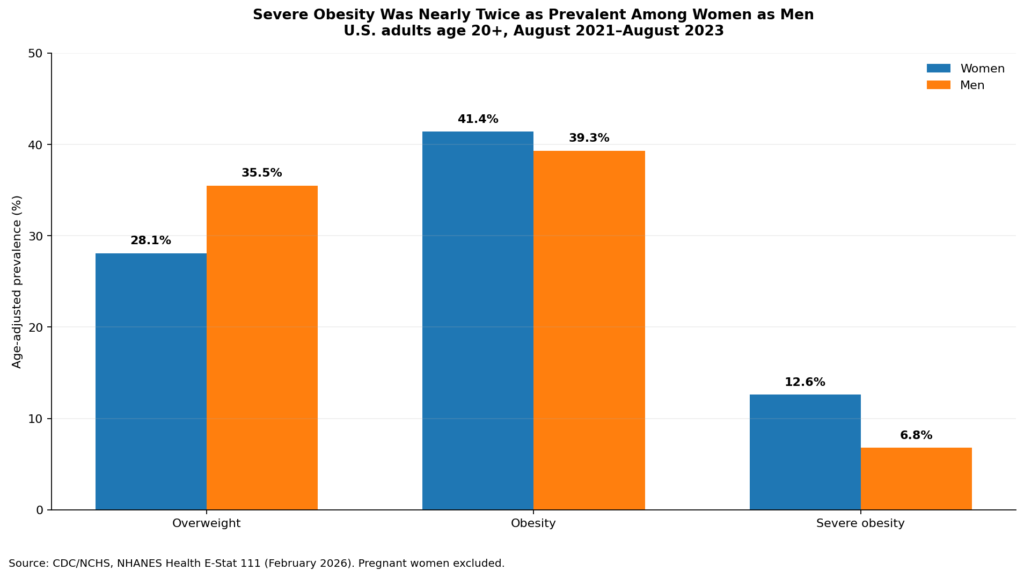
Severe Obesity Is Nearly Twice as Prevalent Among U.S. Women as Men, CDC Data Show

New federal data show a striking sex difference in severe obesity among U.S. adults, even as overall obesity prevalence was similar for women and men.

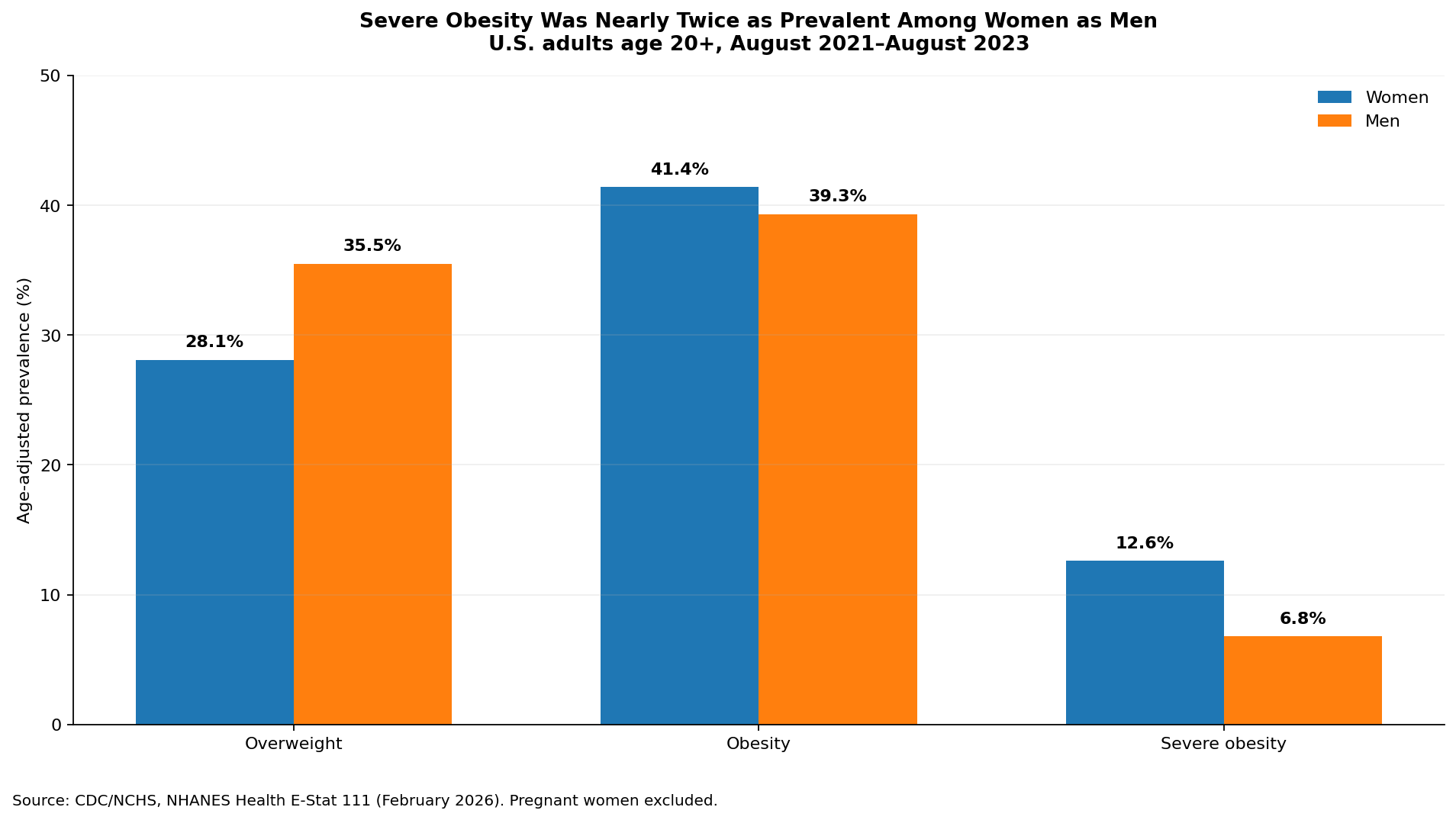
CDC’s National Center for Health Statistics reported that, during August 2021-August 2023, age-adjusted severe obesity prevalence was 12.6% among women and 6.8% among men age 20 and older. The estimates are based on measured height and weight from the National Health and Nutrition Examination Survey.

The findings provide a current national benchmark for journalists and health organizations tracking weight-related population trends. They describe prevalence at the population level and do not establish why the difference exists or determine any individual’s health.

Key Findings
  • Severe obesity prevalence was 12.6% among women versus 6.8% among men.
  • Overall obesity prevalence was 41.4% among women and 39.3% among men.
  • Overweight prevalence was 28.1% among women and 35.5% among men.
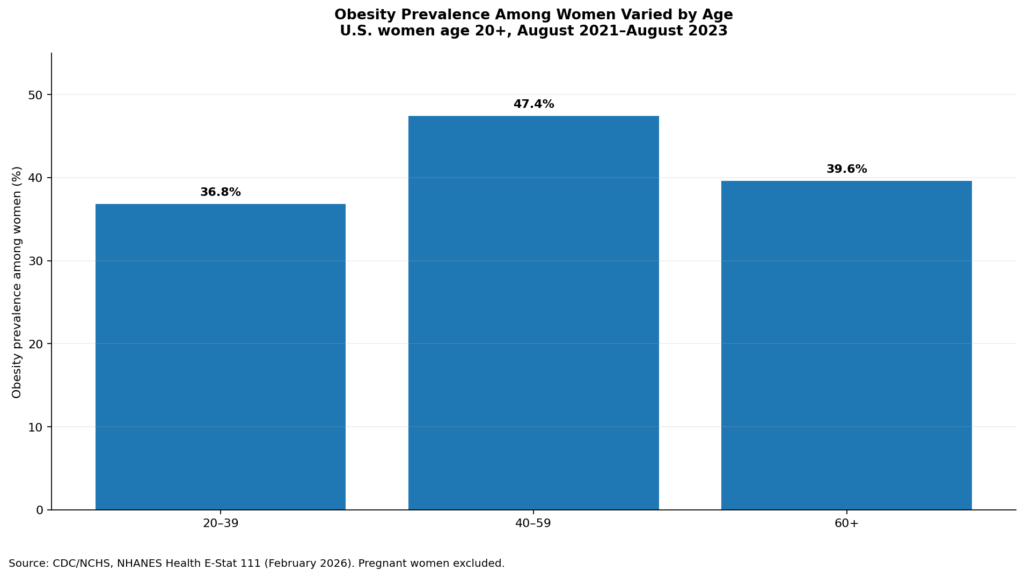
  • Among women, obesity prevalence was 36.8% at ages 20-39, 47.4% at ages 40-59, and 39.6% at age 60 and older.

Source: CDC/NCHS, National Health and Nutrition Examination Survey, August 2021-August 2023; Health E-Stat 111, February 2026.

The Largest Sex Gap Appeared in Severe Obesity

Overall obesity prevalence was broadly similar for women and men in the NCHS estimates, but severe obesity showed a substantially larger difference. The 12.6% prevalence among women was about 1.9 times the 6.8% prevalence among men. That comparison is descriptive and should not be interpreted as evidence that sex alone causes severe obesity.

Women’s Obesity Prevalence Varied by Age

Among women, obesity prevalence was highest in the 40-59 age group at 47.4%, compared with 36.8% among women ages 20-39 and 39.6% among women age 60 and older. These population estimates can help frame reporting on weight management and prevention, but they do not explain the biological, social, economic, behavioral or environmental factors that may contribute to the observed patterns.

Why Measured National Data Matter

NHANES uses standardized physical examinations rather than relying only on self-reported height and weight. That makes the survey an important source for nationally representative estimates of overweight and obesity. Body mass index is a population screening measure and does not by itself diagnose an individual’s health, body composition or disease risk.

Want a Plan Built Around Your Goals?

Get a personalized Women’s Health & Diet plan designed around your goals, schedule, food preferences, and fitness level.

Learn About Custom Diet & Fitness Plans

About the Data

The estimates come from CDC/NCHS Health E-Stat 111, published in February 2026, using National Health and Nutrition Examination Survey data collected from August 2021 through August 2023. Adults age 20 and older were classified using body mass index calculated from measured height and weight; pregnant women were excluded. Estimates were age adjusted where reported to support population comparisons. The analysis describes prevalence in the U.S. civilian noninstitutionalized adult population. It does not establish causes for differences by sex or age, predict outcomes for individuals, or substitute for individualized medical assessment. BMI is a screening measure and has recognized limitations when applied to individuals.

Sources

About Women’s Health & Diet: Women’s Health & Diet publishes practical, evidence-informed nutrition, fitness and wellness content for women, including research-driven insights that make public health data easier to understand and use.

Why a personalized nutrition plan can support sustainable weight management for women

For many women balancing work, family, and self-care, generic diet advice often falls short. A personalized nutrition plan uses your schedule, food preferences, and everyday energy needs to help you move toward healthier habits without feeling deprived. This article outlines how personalization works, what to look for, and practical steps you can take today.

Understanding why one-size-fits-all diets fail

Generic plans often ignore daily routines, hunger signals, and cultural food patterns. They can be too rigid, too time-consuming, or unrealistic for a busy life. Over time, these mismatches can lead to inconsistent adherence, fluctuating energy, and frustration. Personalization aims to align nutrition with real life, not fiction.

What a personalized plan can address for you

Consider your schedule and lifestyle

Your days vary: commuting, meetings, school runs, workouts. A plan that fits your routine reduces friction. It might emphasize simple meals you can assemble in under 15 minutes, or a rotating meal pattern that keeps grocery shopping straightforward.

Protein, fiber, and satiety

Protein and fiber are your allies for fullness and steady energy. A balanced plate can support appetite control and muscle maintenance as you age. Practical targets include aiming for a source of protein at each meal and filling half the plate with vegetables or high-fiber foods.

Cravings, appetite, and timing

Cravings are real and often tied to rhythm, stress, or sleep. A personalized plan can include strategies to manage cravings without feeling banned from favorite foods. This might mean grace meals, planned snack times, or including a preferred treat within an overall day’s plan.

Energy around workouts

If you exercise, fueling around workouts matters. Some people perform better with a small snack 30–60 minutes before activity, while others feel energized with a larger meal earlier in the day. A personalized approach tunes meal timing to match your training schedule and energy patterns.

Food preferences and culture

Food is part of your identity and culture. Personalization respects taste, cooking skills, budget, and traditional foods. A plan that honors these factors is more sustainable than one that asks you to abandon staples you enjoy.

Health considerations

Body-wide energy balance matters, but so do micronutrient needs and any medical considerations your clinician has noted. A personalized approach can help ensure you’re getting enough iron, calcium, vitamin D, and other nutrients through foods you enjoy.

How to start evaluating your needs

Starting with a clear picture of your current patterns helps you decide what to adjust. Use a simple two-week audit to identify opportunities and roadblocks.

  • Track meals and hunger. Record what you eat and how hungry you felt before and after. Note which meals kept you satisfied longer and which led to quick cravings.
  • Assess energy and mood. Note energy levels across the day, especially mid-afternoon dips and morning peaks, and how sleep influences appetite.
  • Map your schedule. Write down typical wake times, work blocks, workouts, and family meals to spot windows for regular meals or snacks.
  • Identify your go-to foods. List foods you enjoy and how you might combine them with protein or fiber to improve fullness.
  • Grocery and cooking habits. Observe how much time you spend cooking and whether you rely on quick options or takeout. Identify opportunities to batch-cook or prep.

After two weeks, you’ll have a practical picture of what works and what doesn’t. Use that information to shape a flexible, realistic plan rather than chasing a perfect template.

When to consider a customized plan

For some readers, a personalized program starts with a professional assessment of needs, preferences, and lifestyle. Consider a tailored approach if you:

  • Experience repeated plateaus. You’ve been following a plan but haven’t achieved steady progress.
  • Have busy or irregular schedules. Your days include long shifts, travel, or shift work that makes fixed meal times difficult.
  • Struggle with cravings or emotional eating. You want strategies beyond willpower to manage urge-driven eating.
  • Want to balance energy with workouts. You regularly exercise and need timing and portion guidance that fit training goals.
  • Prefer a plan that aligns with your food preferences. You want to maintain cultural foods, budget, and cooking skills.

In these cases, a customized approach can tailor daily portions, meal timing, and protein targets to your real life. A careful plan emphasizes sustainable changes rather than quick fixes, and it respects your pace and progress.

Practical steps you can take this week

Even before formal personalization, you can implement practical improvements that reflect individual needs.

  • Use a simple plate method. Aim for about half your plate with non-starchy vegetables, a quarter with lean protein, and a quarter with whole grains or starchy vegetables. Add a serving of fruit and a glass of water.
  • Prioritize protein at each meal. A palm-sized portion of lean protein per main meal helps with fullness and muscle support.
  • Plan snacks around energy needs. If you have an active afternoon, include a protein-rich snack to prevent overeating later.
  • Choose fiber-rich foods regularly. Include beans, lentils, whole grains, fruits, and vegetables to support satiety and gut health.
  • Practice mindful eating. Slow down, savor flavors, and pause between bites to check hunger signals before seconds.

These steps are adaptable to many schedules. The goal is consistent, enjoyable nutrition that fits your life, not perfection in every meal.

Frequently asked questions

  • What exactly is personalization in a nutrition plan? Personalization means strategies are adjusted to your schedule, food preferences, activity level, and any special considerations to support sustainable habits rather than a one-size-fits-all template.
  • Will a personalized plan ban foods I love? Most effective plans incorporate favorite foods in moderation, helping you stay satisfied while meeting overall balance goals.
  • How long before I notice changes in energy or mood? Individual timelines vary. Some people feel steadier energy within days; others notice gradual improvements over weeks as routines stabilize and cravings align with patterns.
  • Do I need to track everything? You can start with simple tracking and gradually reduce as you become more confident. The goal is to understand patterns, not achieve perfect records.
  • Is a customized plan right for me? If you value practical guidance tailored to your life and you want to move beyond generic advice, a customized plan may be worth exploring. It can be adjusted over time as your needs evolve.

Conclusion

Personalized nutrition respects your life, not just your goals. By aligning meals with your schedule, taste, and energy needs, you can build consistent habits that support your wellbeing over time. A flexible plan reduces the risk of burnout and helps you stay focused on sustainable progress rather than short-term outcomes. If you’d like tailored guidance, explore the Women’s Health & Diet Custom Diet & Fitness Plan. You can learn more at the custom plan page.

Is It Normal to Skip a Period? Common Reasons for a Missed Period

Your period usually arrives every month.

Then suddenly—it doesn’t.

A missed period can have you wondering:

Am I pregnant?

Is something wrong with my hormones?

Could stress have caused this?

Is skipping one period normal?

The short answer is that an occasional missed period can happen for several reasons and does not always mean something is seriously wrong.

Pregnancy is the most common natural reason for a missed period in someone who is sexually active, however periods can also disappear or become irregular for different reasons such as stress, weight changes, intense exercise, breastfeeding, birth control, polycystic ovary syndrome (PCOS), thyroid disorders, perimenopause, and other medical conditions.

The medical term for the absence of menstrual periods is amenorrhea. ACOG defines secondary amenorrhea as going three months or longer without a period after previously menstruating.

So one late or skipped period does not automatically mean you have amenorrhea or a serious health condition, But it is still worth paying attention to.

What Is Considered a Normal Menstrual Cycle?

A menstrual cycle is counted from the first day of one period to the first day of the next.

According to the American College of Obstetricians and Gynecologists, most adult menstrual cycles last approximately 21 to 35 days. A typical period lasts around two to seven days.

Not every woman has a period every 28 days.

Your normal cycle might be:

25 days.

30 days.

33 days.

And some variation from one month to another can occur.

The more important question is whether your cycle has suddenly changed from what is normal for you.

For example, if your periods have arrived every 28 to 30 days for years and suddenly you go 50 or 60 days without one, that deserves more attention than a cycle that arrives a few days later than expected.

First Question: Could You Be Pregnant?

If you are sexually active and pregnancy is possible, pregnancy should be one of the first possibilities you consider.

A missed period is often one of the earliest signs of pregnancy.

The Office on Women’s Health states that most home pregnancy tests can detect pregnancy after a missed period, although testing too early may produce a false-negative result because pregnancy hormone levels may still be too low.

If your period does not arrive:

Take a home pregnancy test.

Follow the instructions carefully.

If the result is negative but your period still does not come, repeat the test after several days or contact your healthcare provider.

Women with irregular periods may have a harder time knowing when to test because ovulation does not necessarily happen at the same time every month.

Stress Can Delay or Stop a Period

It’s true, stress really can affect your menstrual cycle.

The reproductive system communicates with the brain through a complex hormonal system involving the hypothalamus, pituitary gland, and ovaries.

Significant physical or emotional stress can interfere with this communication.

NICHD lists emotional stress among the factors associated with hypothalamic amenorrhea, a condition in which the brain slows or stops releasing the hormonal signals needed to maintain normal menstrual cycles.

Stress might come from:

  • Work
  • School
  • Relationship problems
  • Financial problems
  • Grief
  • Major life changes
  • Illness
  • Lack of sleep
  • Intense emotional pressure

One stressful week does not automatically make your period disappear.

But significant or prolonged stress can affect cycles in some women.

If stress has become a major issue in your life, you may also find our article on What Causes High Cortisol? Understanding Stress Hormones and Cortisol Imbalance helpful.

Rapid Weight Loss Can Affect Your Period

Your reproductive system needs adequate energy.

Rapid weight loss, very low calorie intake, eating disorders, or very low body fat can interfere with normal ovulation.

ACOG lists:

  • Low body weight
  • Rapid weight loss
  • Eating disorders

among possible causes of secondary amenorrhea.

This is one reason extremely restrictive dieting is not harmless.

If your calorie intake becomes too low relative to your body’s needs, your brain may reduce the hormonal signals involved in reproduction.

Your period may become irregular or stop completely.

If you are trying to lose weight, focus on a sustainable eating pattern rather than severe calorie restriction.

Our Healthy Diet for Women to Stay Fit guide provides a more balanced approach to nutrition.

Intense Exercise Can Also Affect Menstruation

Exercise is healthy.

But extremely intense physical activity combined with inadequate calorie intake can disrupt the menstrual cycle.

This is sometimes seen in:

  • Competitive athletes
  • Distance runners
  • Dancers
  • Gymnasts
  • Women doing very intense daily workouts
  • Women combining heavy exercise with severe dieting

NICHD specifically identifies strenuous exercise that burns more calories than are consumed as a possible contributor to hypothalamic amenorrhea.

That does not mean exercise is bad for women.

It means your body needs enough food and recovery to support your activity level.

PCOS Can Cause Skipped Periods

Polycystic ovary syndrome, or PCOS, is one of the most common hormonal causes of irregular or missed periods.

Women with PCOS may not ovulate regularly.

When ovulation does not occur consistently, periods can:

  • Come late
  • Skip months
  • Become unpredictable
  • Sometimes become very heavy when they finally occur

NICHD lists skipped or absent periods among the common symptoms of PCOS.

Other possible PCOS symptoms include:

  • Facial or body hair growth
  • Persistent acne
  • Scalp hair thinning
  • Difficulty getting pregnant
  • Dark, velvety patches of skin
  • Weight-management difficulties

But having one missed period does not mean you have PCOS.

PCOS is diagnosed by looking at menstrual patterns, androgen-related symptoms or laboratory findings, ovarian characteristics when needed, and other possible causes.

Thyroid Problems Can Affect Your Period

Your thyroid gland produces hormones that influence metabolism and many other body functions.

Both an underactive thyroid and an overactive thyroid can cause menstrual irregularities, including missed periods.

Depending on the thyroid condition, other symptoms may include:

  • Unusual fatigue
  • Weight changes
  • Feeling unusually cold
  • Feeling unusually hot
  • Changes in heart rate
  • Hair changes
  • Constipation or frequent bowel movements
  • Mood changes

These symptoms overlap with many other conditions, so they do not diagnose thyroid disease by themselves.

A healthcare professional can order thyroid blood tests when appropriate.

Birth Control Can Cause Periods to Stop

Certain hormonal contraceptives can make periods extremely light or stop them completely.

These may include:

  • Some birth control pills
  • Hormonal IUDs
  • Injectable contraceptives
  • Certain implants

NICHD notes that hormonal contraceptives can cause amenorrhea and that it may take some time after stopping certain methods for menstrual cycles to become regular again.

If your birth-control method is known to reduce menstrual bleeding, not having a monthly period does not necessarily mean something is wrong.

However, if pregnancy is possible or you are unsure whether your bleeding pattern is expected with your contraceptive, contact your healthcare provider.

Breastfeeding Can Stop Periods

Breastfeeding can naturally delay the return of menstrual periods after childbirth.

Hormones involved in milk production can suppress ovulation.

Some breastfeeding women regain their periods relatively quickly.

Others may go many months without menstruating.

NICHD lists breastfeeding as a normal physiological cause of amenorrhea.

However, breastfeeding does not guarantee that pregnancy cannot occur.

Ovulation can happen before the first postpartum period appears.

Perimenopause Can Make Periods Unpredictable

As women approach menopause, menstrual cycles often become less predictable.

During perimenopause, periods may:

  • Come closer together
  • Come farther apart
  • Be skipped
  • Become lighter
  • Become heavier
  • Last longer or shorter

The Office on Women’s Health notes that irregular cycles are common during the transition toward menopause.

But do not automatically assume that every missed period in your 40s is perimenopause.

Pregnancy can still occur before menopause.

A healthcare professional can also evaluate other causes when necessary.

Menopause itself is generally recognized after 12 consecutive months without a menstrual period when another cause is not responsible.

Some Medications Can Affect Periods

Certain medications may interfere with ovulation or menstrual bleeding.

NICHD notes that some:

  • Antidepressants
  • Blood-pressure medicines
  • Hormonal treatments
  • Cancer treatments

can contribute to amenorrhea in certain circumstances.

Do not stop a prescription medication simply because your period changed.

Instead, tell the healthcare professional who prescribed it.

Primary Ovarian Insufficiency

Another possible—but less common—reason periods may stop is primary ovarian insufficiency, or POI.

POI occurs when the ovaries stop functioning normally before the typical age of menopause.

Periods may become:

  • Irregular
  • Infrequent
  • Absent

POI is not exactly the same thing as menopause because women with POI may occasionally ovulate.

It deserves medical evaluation because estrogen levels, fertility, and long-term bone and cardiovascular health may be affected.

What About Skipping Just One Period?

A single missed period can happen.

Maybe you were:

Very stressed.

Sick.

Traveling.

Sleeping poorly.

Dieting aggressively.

Training intensely.

Or your ovulation simply occurred later than usual.

If pregnancy is possible, take a pregnancy test.

Then pay attention to what happens over the next cycle.

One missed period followed by a return to your normal pattern may not signal a major problem.

But repeated missed periods deserve evaluation.

When Should You See a Doctor?

ACOG recommends medical evaluation when a woman who previously menstruated has gone three months or longer without a period and there is no clear explanation.

You may want to seek care sooner if missed periods occur along with symptoms such as:

  • Significant pelvic pain
  • New facial or body hair
  • Severe acne
  • Significant unexplained weight changes
  • Milky nipple discharge when you are not breastfeeding
  • Severe headaches
  • Vision changes
  • Symptoms of thyroid disease
  • Difficulty getting pregnant
  • Very heavy bleeding when your period returns

Your healthcare provider may ask about:

  • Pregnancy possibility
  • Menstrual history
  • Weight changes
  • Exercise
  • Stress
  • Medications
  • Birth control
  • Other symptoms

Depending on your situation, testing may include a pregnancy test, thyroid testing, reproductive-hormone tests, androgen testing, or imaging.

A Missed Period Plus Severe Pain Needs Special Attention

There is one situation that should not be treated as an ordinary late period.

An ectopic pregnancy occurs when a pregnancy develops outside the uterus, most commonly in a fallopian tube.

Early symptoms can include:

  • A missed period
  • Abnormal vaginal bleeding
  • Pelvic or abdominal pain
  • Cramping on one side

More serious symptoms can include:

  • Sudden severe abdominal or pelvic pain
  • Shoulder pain
  • Weakness
  • Dizziness
  • Fainting

A ruptured ectopic pregnancy can cause life-threatening internal bleeding. ACOG recommends emergency care for severe pain, shoulder pain, weakness, dizziness, or fainting when an ectopic pregnancy is possible.

Track Your Periods

One of the simplest things you can do is track your cycles.

Record:

  • The first day of your period
  • How long bleeding lasts
  • Whether you skipped a month
  • How heavy bleeding becomes
  • Pelvic pain
  • Spotting
  • Other symptoms

You can use:

A calendar.

A notes app.

A period-tracking app.

Patterns are much easier to discuss with a healthcare professional when you have actual dates.

Instead of saying:

“My periods are kind of irregular,”

you can say:

“My cycles were 29 days, 31 days, 58 days, and then 46 days.”

That gives your provider much more useful information.

Can Food Help Regulate Your Period?

A nutritious diet supports overall reproductive health, but no single food can guarantee a monthly period.

If missed periods are related to inadequate calorie intake, severe dieting, or nutritional deficiency, improving nutrition may be part of treatment.

But if your periods are being affected by:

PCOS.

Thyroid disease.

Primary ovarian insufficiency.

Pregnancy.

Medication.

or another medical condition,

food alone may not solve the underlying problem.

The right approach depends on the cause.

If you want help building an eating and fitness routine around your individual goals, schedule, preferences, and lifestyle, you can learn more about our Custom Women’s Diet & Fitness Plan.

The Bottom Line

Is it normal to skip a period?

Sometimes.

A single missed period can happen and does not automatically mean you have a serious medical problem.

But a missed period is also something worth paying attention to—especially if it is unusual for you.

Possible reasons include:

  • Pregnancy
  • Stress
  • Rapid weight loss
  • Very low calorie intake
  • Intense exercise
  • PCOS
  • Thyroid disorders
  • Hormonal birth control
  • Breastfeeding
  • Perimenopause
  • Certain medications
  • Primary ovarian insufficiency
  • Other medical conditions

If pregnancy is possible, take a pregnancy test.

If your period returns and your cycle goes back to normal, the missed period may have been temporary.

But if periods repeatedly disappear, become very irregular, or stop for approximately three months without a clear explanation, make an appointment with a healthcare professional.

And if a missed period occurs with severe one-sided pelvic pain, shoulder pain, weakness, dizziness, or fainting, seek urgent medical attention because an ectopic pregnancy must be ruled out.

Your period does not have to arrive on the exact same calendar date every month.

But your menstrual pattern can provide valuable information about your reproductive and overall health.

When something changes, pay attention.

This article is for general educational purposes and is not intended to diagnose or treat menstrual disorders, pregnancy, or other medical conditions. Speak with a qualified healthcare professional about persistent missed periods, abnormal bleeding, pelvic pain, fertility concerns, or other symptoms that concern you.


Is a Personalized Meal Plan Right for You? A Practical Guide for Women Balancing Busy Lifestyles

Many women feel overwhelmed by generic diet advice that doesn’t fit their days. A personalized meal plan can help align nutrition with your energy, schedule, and cravings without adding stress. This guide explains how to tell if a tailored approach might help and how to begin.

Is a personalized meal plan right for you?

For some, a one size fits all approach feels insufficient or unsustainable. A personalized plan takes into account your daily routine, how you feel after meals, and your unique preferences. It isn’t about perfection or punishment; it’s about creating a practical structure that supports steady energy, balanced moods, and sensible cravings.

Ask yourself these questions to gauge whether a customized approach might be useful:

  • You have a variable schedule due to work shifts, caregiving, or family responsibilities.
  • You experience frequent cravings or bloating that make traditional diets feel unpredictable.
  • You want more consistent energy and better mood throughout the day.
  • You have dietary preferences, restrictions, or cultural foods you want to honor.
  • You have tried general diet plans and found them hard to follow long term.
  • You’re curious about how your cycle, sleep, stress, or workouts affect appetite and recovery.

If several of these statements resonate, a personalized plan may offer a structure that accommodates your life rather than forcing you into a rigid routine.

Foundations of a practical plan for most women

While every plan should be tailored, there are core principles that help many women create sustainable habits. These foundations keep meals simple, satisfying, and nutritionally balanced without requiring extreme restrictions.

Protein at every meal

Protein supports muscle maintenance, satiety, and steady energy. A practical target is to include a palm-sized portion of lean protein at meals, plus a protein-rich snack as needed. Examples include Greek yogurt, eggs, lean poultry, fish, tofu, beans, or lentils.

Fiber and nutrient-dense carbohydrates

Fiber supports digestion and fullness, while complex carbohydrates provide lasting energy. Favor vegetables, fruits, whole grains, beans, and legumes. Aim to fill roughly half your plate with colorful vegetables at most meals, with smart carbohydrate choices such as quinoa, oats, brown rice, sweet potatoes, or whole grain bread.

Healthy fats

Healthy fats support satiety and nutrient absorption. Include sources like olive oil, avocados, nuts, seeds, and fatty fish in your meals. You don’t need to fear fats; the goal is balanced portions and quality sources.

Meal timing and spacing

Consistent meal timing can reduce extreme hunger and cravings. If your day is busy, consider 3 main meals with one or two portable snacks. If you work evenings or have night shifts, adjust timing to align with when you’re most hungry and energized.

Hydration and mood

Water and electrolytes matter for energy, digestion, and appetite signals. Keep a simple habit of drinking water with meals and carrying a bottle to stay hydrated during busy days. Caffeine and alcohol can affect sleep, energy, and cravings, so plan them mindfully.

Practical tools you can use now

Use accessible strategies that don’t require perfection. The goal is consistency and adaptability to your life, not a rigid specification that’s hard to maintain.

Simple portion guidance you can apply today

Use a basic hand-portion method if you don’t want to weigh or measure foods:

  • Protein: a palm-sized portion per meal
  • Vegetables: a fist-sized portion at most meals
  • Carbohydrates: a cupped hand for carbohydrates like grains or starchy vegetables
  • Fats: a thumb-sized portion for added fats such as olive oil, nuts, or avocado

Pair each meal with at least one serving of fiber-rich vegetables and a source of lean protein to support fullness and steady energy.

Sample flexible day

Here is a balanced, adaptable day that many women find sustainable. Adjust portions to your hunger, activity level, and schedule:

  • Breakfast: Greek yogurt with berries, a sprinkle of chia seeds, and a handful of walnuts.
  • Morning snack: An apple with a small handful of almonds.
  • Lunch: Quinoa bowl with mixed greens, grilled chicken, chickpeas, cucumber, tomatoes, and olive oil vinaigrette.
  • Afternoon snack: Carrot sticks or sliced bell peppers with hummus.
  • Dinner: Baked salmon, roasted broccoli and sweet potato, a side salad, and a drizzle of extra-virgin olive oil.

Feel free to swap ingredients based on what’s available or your preferences. The key is including protein, fiber, and healthy fats at most meals to keep you satisfied.

When to seek a personalized plan

A customized approach becomes especially helpful when you notice persistent roadblocks. Consider a plan if you:

  • Struggle to maintain energy between activities or find yourself in cycles of overeating after long workdays
  • Have digestion issues that seem tied to meals or timing
  • Follow a strict diet but still feel fatigued or unsettled
  • Have dietary restrictions, allergies, or cultural foods you want to honor consistently
  • Need a framework that adapts to shifts in your exercise routine, sleep quality, or stress levels

Personalized plans are not about chasing a perfect formula but about finding a flexible framework that fits your life, supports your goals, and respects your preferences.

How to start building your own personalized plan

Starting a personalized plan doesn’t require a long process or a complicated toolkit. A practical, phased approach can set you up for success.

Phase 1: Observe and record

Spend 1–2 weeks noting:

  • What meals feel satisfying and what leaves you hungry
  • Patterns in cravings and energy levels
  • Digestive comfort after different foods
  • How sleep, stress, and activity relate to appetite

Keep a simple log or notes app handy for quick reflections after meals.

Phase 2: Set realistic goals

Focus on process goals rather than outcomes. Examples include:

  • Include a protein source at each meal.
  • Add at least one extra serving of vegetables daily.
  • Plan meals for the next day during the evening routine.
  • Limit highly processed snacks to a reasonable, planned amount.

Phase 3: Build a scalable meal map

Create a simple weekly plan with rotation options. For example, choose two proteins (chicken and beans), two vegetables you enjoy, and two grain or starch bases (quinoa and brown rice). Mix and match to avoid boredom while keeping balance.

Phase 4: Prepare with intention

Batch cooking or meal prepping can reduce decision fatigue on busy days. A few strategies:

  • Prepare a couple of basic sauces or dressings to vary flavor.
  • Wash and chop vegetables ahead of time for quick assembling.
  • Cook a batch of a grain and a protein to use across several meals.

Working with a professional plan, when needed

A professional, tailored program can help translate your observations into a precise blueprint. A customized diet and fitness plan can account for your schedule, food preferences, energy patterns, and activity level. It can also align with fitness goals, whether you’re aiming to improve endurance, build strength, or simply feel more energetic throughout the day. Importantly, a plan should remain flexible and collaborative, adjusting as your life or priorities change.

Women’s Health & Diet offers customized diet and fitness plans that take into account your lifestyle, foods you enjoy, and wellness goals. While a tailored plan can be a good fit for many, the best approach is one that feels doable and supports your long-term well-being, not a quick fix.

Frequently asked questions

What is a personalized meal plan?

A personalized meal plan is a nutrition framework designed to fit your daily schedule, food preferences, energy needs, and lifestyle. It typically includes suggested meals or meal ideas, portion guidance, and strategies for staying on track with your goals while respecting your routine.

How long does it take to notice changes?

Individual results vary. Some people notice improvements in energy and satiety within a few weeks, while others may take longer depending on consistency, activity, sleep, and stress. The aim is sustainable changes that feel manageable over time.

Can a personalized plan work for vegetarians or vegans?

Yes. A good plan can accommodate vegetarian and vegan preferences by emphasizing plant-based protein sources, fortified foods or supplements if needed, and a variety of nutrient-dense options to ensure balance.

Do I need to track everything I eat?

Tracking can be helpful for learning what works for you, especially in the early stages. It is not required for everyone. Many people prefer simple habit tracking, such as noting meals that feel satisfying and energizing, rather than logging every bite.

How does a plan fit with eating out and social events?

A flexible plan includes strategies for dining out, such as choosing protein-rich options, balancing plates with vegetables, and planning for portion control. It’s about maintaining structure while allowing for enjoyable meals and social occasions.

Conclusion

A personalized meal plan can be a helpful tool for women who want to align nutrition with a busy life, fluctuating energy, and evolving goals. By starting with observation, setting realistic goals, and building a flexible framework, you can create a sustainable approach that supports well-being without feeling restrictive. If you’re curious about taking the next step, a customized plan can help translate your daily rhythms into a practical nutrition and fitness blueprint.

For readers who want guided support tailored to their schedule and preferences, consider exploring the Women’s Health & Diet Custom Diet & Fitness Plan. You can learn more and start a conversation here: https://womenhealthanddiet.com/custom-diet-fitness-plans/.

Essential Minerals for Hormonal Balance in Women: What You Really Need

Hormones influence almost every stage of a woman’s life.

They help regulate menstrual cycles, ovulation, fertility, metabolism, blood sugar, thyroid function, bone health, mood, pregnancy, and eventually the transition through perimenopause and menopause.

Because hormones play such a large role in women’s health, the phrase “hormonal balance” has become extremely popular.

You may see advertisements claiming that magnesium will “balance your hormones,” zinc will “fix estrogen,” or a special mineral supplement will reset your entire endocrine system.

The truth is more complicated.

Your body absolutely needs certain minerals to produce hormones, respond to hormones, and carry out the biological processes that hormones control. But there is no single mineral—or supplement—that can automatically correct every hormonal problem.

The best approach is to consume adequate amounts of essential nutrients through a varied diet, identify actual deficiencies when they occur, and seek medical care when symptoms suggest an underlying hormonal condition.

Here are some of the minerals that are particularly important for women’s hormonal and metabolic health.

Magnesium: Important for Hundreds of Body Processes

Magnesium is one of the most talked-about minerals for women’s health—and for good reason.

Your body uses magnesium as a helper, or cofactor, in more than 300 enzyme systems. These systems are involved in processes including protein production, nerve function, muscle function, blood pressure regulation, energy production, and blood glucose control.

For adult women, the recommended daily amount is generally about 310 to 320 milligrams, while needs rise during pregnancy.

Good food sources include beans, nuts, seeds, whole grains, leafy green vegetables, milk, and yogurt.

Because magnesium is involved in glucose metabolism, researchers have investigated its relationship with insulin resistance and type 2 diabetes. NIH notes that people who consume more magnesium in their diets tend to have a lower risk of developing type 2 diabetes, although this does not mean magnesium supplements are a treatment for every blood-sugar or hormonal problem.

This can be particularly relevant to women because insulin regulation is closely connected with metabolic health and conditions such as polycystic ovary syndrome.

But having fatigue, cravings, irregular periods, or difficulty losing weight does not automatically mean you need magnesium supplements.

Start by looking at your overall diet.

Our Healthy Diet for Women to Stay Fit guide can help you build meals containing a wider variety of nutrient-rich foods.

Iodine: Essential for Thyroid Hormones

If we are talking about minerals and hormones, iodine deserves special attention because the connection is extremely direct.

Your body needs iodine to produce the thyroid hormones thyroxine, or T4, and triiodothyronine, or T3.

These thyroid hormones help regulate metabolism and many other biochemical processes throughout the body.

Adults generally need about 150 micrograms of iodine per day. Requirements increase to 220 micrograms during pregnancy and 290 micrograms during breastfeeding.

Sources of iodine can include iodized salt, seafood, dairy products, eggs, and certain fortified foods.

Women who do not use iodized salt or who follow restrictive vegan or vegetarian diets may need to pay closer attention to iodine intake.

However, this is not a situation where more is always better.

Too little iodine can interfere with thyroid function, but too much iodine can also cause thyroid problems in susceptible people.

So if you have symptoms such as persistent fatigue, unusual weight changes, feeling unusually cold or hot, rapid heartbeat, neck swelling, or significant menstrual changes, do not simply begin taking high-dose iodine.

A thyroid evaluation is more useful than guessing.

Selenium: A Partner in Thyroid Hormone Metabolism

Selenium works closely with the thyroid as well.

The thyroid contains a higher concentration of selenium than any other organ in the body.

Selenium-containing proteins help convert the thyroid hormone T4 into the more active T3 and also help protect thyroid tissue from oxidative damage that occurs during thyroid-hormone production.

Selenium can be obtained from foods including seafood, meat, poultry, eggs, dairy products, grains, and Brazil nuts.

But selenium is a great example of why “good for hormones” should never become:

Take as much as possible.

Research has not shown that giving selenium supplements to everyone improves thyroid function. Studies involving thyroid disease and selenium supplementation have produced mixed results.

And excessive selenium intake can cause toxicity.

So rather than automatically buying a selenium supplement because you heard it supports thyroid hormones, aim to get adequate—not excessive—amounts.

Zinc: Important for Reproductive and Cellular Health

Zinc is involved in hundreds of enzyme reactions and plays important roles in DNA production, protein synthesis, cell division, immune function, wound healing, and normal growth and development.

It is also involved in the reproductive system. Severe zinc deficiency can affect reproductive function.

Adult women generally need about 8 milligrams of zinc per day, with higher requirements during pregnancy and breastfeeding.

Good sources include oysters and other seafood, meat, poultry, dairy foods, beans, nuts, and whole grains.

Women following vegetarian or vegan diets may need to be more deliberate about zinc because zinc from plant foods may be less readily absorbed.

You may see zinc supplements marketed as a way to “increase progesterone” or “balance estrogen.”

Those claims often go much further than the evidence.

Zinc is essential for normal physiology, but taking large amounts does not guarantee healthier hormone levels.

Excessive zinc can also interfere with copper absorption and create additional health problems.

The goal is adequate nutrition—not megadosing.

Iron: Especially Important for Menstruating Women

Iron may not immediately come to mind when you think about hormones, but it has an important place in women’s health.

The body needs iron to produce hemoglobin, which carries oxygen in the blood, and NIH notes that iron is also needed to produce some hormones.

Women who menstruate lose iron through blood loss.

That means women with particularly heavy periods can be at increased risk for iron deficiency. Pregnant women also have substantially greater iron requirements.

Iron-rich foods include meat, poultry, seafood, beans, lentils, fortified cereals, and leafy green vegetables.

If you eat plant-based sources of iron, pairing them with vitamin C-rich foods can improve absorption.

For example:

Lentils with bell peppers.

Spinach with strawberries.

Beans with tomatoes.

Our Foods to Buy for Healthy Eating guide can help you stock more nutrient-dense foods at home.

Heavy Periods and Iron Deserve Attention

If you experience very heavy menstrual bleeding along with fatigue, weakness, dizziness, shortness of breath, or difficulty concentrating, talk with a healthcare professional.

Do not simply take large amounts of iron without testing.

Iron is essential, but excessive supplemental iron can be harmful.

A healthcare professional can check measures such as hemoglobin and ferritin to determine whether iron deficiency may actually be present.

Calcium: Hormones and Bone Health Are Closely Connected

Calcium is usually discussed as a bone mineral, but it does much more.

The body uses calcium for muscle contraction, communication between nerves, blood-vessel function, and the release of hormones that affect many functions throughout the body.

Calcium becomes particularly relevant to women as estrogen levels decline during and after menopause.

Estrogen helps protect bone.

When estrogen declines, bone breakdown can accelerate, which contributes to the increased risk of osteoporosis later in life.

For most adult women ages 19 to 50, the recommended calcium intake is about 1,000 milligrams per day. Requirements increase for older women.

Food sources include milk, yogurt, cheese, fortified plant milks, tofu prepared with calcium, sardines with bones, and certain leafy green vegetables.

Vitamin D is also important because it helps the body absorb calcium.

This illustrates an important principle:

Nutrition rarely works one nutrient at a time.

Minerals, vitamins, hormones, proteins, enzymes, and other biological systems interact continuously.

Minerals Cannot Fix Every “Hormone Imbalance”

This is where women need to be cautious with social-media health advice.

Symptoms such as weight gain, acne, fatigue, irregular periods, difficulty sleeping, hair thinning, infertility, mood changes, and cravings are often labeled online as:

“Hormone imbalance.”

But these symptoms can have many different causes.

Irregular periods, for example, may occur with PCOS, thyroid disease, major weight changes, pregnancy, perimenopause, elevated prolactin, certain medications, or other conditions.

Fatigue could involve anemia, inadequate sleep, depression, thyroid disease, nutritional deficiency, medication effects, or dozens of other possibilities.

Taking magnesium, selenium, zinc, and iodine together will not automatically solve the underlying problem.

If symptoms persist, proper diagnosis matters.

Food First Is Usually a Smart Starting Point

Instead of immediately buying six supplements, look at what you routinely eat.

A varied eating pattern containing vegetables, fruits, whole grains, beans, seafood, eggs, dairy or fortified alternatives, lean proteins, nuts, and seeds can provide many of these minerals simultaneously.

One meal might contain:

Salmon for selenium and other nutrients, brown rice for magnesium, leafy vegetables for magnesium and iron, and yogurt for calcium.

Another could combine lentils, vegetables, whole grains, pumpkin seeds, and fruit.

You do not have to create a “hormone-balancing plate.”

You need an overall eating pattern that consistently provides your body with adequate nutrition.

Do You Need Mineral Supplements?

Sometimes.

A supplement can be useful when someone has:

A diagnosed nutritional deficiency, increased requirements, limited dietary intake, absorption problems, pregnancy-related needs, or another medical reason for supplementation.

But supplementing without knowing what you need can create problems.

Minerals can interact with one another.

Large amounts of zinc can affect copper.

Calcium can interfere with the absorption of certain medications.

Iron can interact with medications and can be toxic in excessive amounts.

Too much iodine can disturb thyroid function.

Too much selenium can produce toxicity.

This is why “hormone supplements” containing large combinations of minerals are not automatically better than a balanced diet.

If you take prescription medications or have thyroid disease, kidney disease, anemia, PCOS, or another medical condition, discuss supplements with your healthcare professional.

Personalizing Your Nutrition

Two women can have completely different nutritional needs.

One woman may have heavy menstrual periods and iron deficiency.

Another may avoid dairy and need to pay closer attention to calcium.

Another follows a vegan diet and needs to think more carefully about iodine and zinc.

Another may already get plenty of these nutrients through food and need no additional supplements at all.

That is one reason generic meal plans can fall short.

If you want help creating an eating and fitness routine around your individual goals, schedule, food preferences, and lifestyle, you can learn more about our Custom Women’s Diet & Fitness Plan.

A personalized nutrition plan should complement appropriate medical care—not replace diagnosis or treatment for a hormonal disorder.

The Bottom Line

Minerals are essential for women’s hormonal health, but the phrase “hormonal balance” can sometimes make nutrition sound much simpler than it really is.

Magnesium contributes to hundreds of biochemical reactions and supports blood glucose regulation.

Iodine is directly required to produce thyroid hormones.

Selenium helps the body produce and metabolize thyroid hormones.

Zinc supports normal cellular and reproductive function.

Iron helps transport oxygen and is needed in the production of some hormones.

Calcium participates in hormone release and becomes particularly important for women’s bone health as estrogen declines with age.

These nutrients matter.

But more is not automatically better.

You do not need to swallow handfuls of supplements simply because you have:

Fatigue.

Acne.

Cravings.

Weight changes.

Irregular periods.

Hair problems.

Or mood changes.

Those symptoms deserve proper evaluation when they persist.

Start with the foundation:

Eat a varied, nutrient-rich diet.

Include adequate protein.

Eat vegetables and fruits.

Choose whole grains, beans, nuts, seeds, dairy or appropriate fortified alternatives, seafood, and other nutrient-dense foods.

Have suspected deficiencies properly evaluated.

And use supplements strategically when they are actually needed.

Hormonal health is influenced by much more than one mineral.

Your nutrition, sleep, physical activity, medical conditions, medications, age, genetics, stress, reproductive stage, and overall health all contribute.

The goal is not to chase the latest “hormone-balancing” supplement.

It is to give your body the nutrients it needs while addressing genuine hormonal problems with appropriate medical care.

This article is for general educational purposes and is not intended to diagnose or treat hormonal disorders or nutritional deficiencies. If you have persistent menstrual changes, unexplained weight changes, fertility concerns, thyroid symptoms, severe fatigue, or other symptoms that concern you, speak with a qualified healthcare professional before beginning high-dose mineral supplements.

Healthy Flavorful Scrambled Eggs

Scrambled eggs are quick and easy, but they don’t have to be plain. A few simple dried seasonings can transform everyday eggs into a flavorful breakfast without requiring lots of salt, butter, or heavy ingredients.

These Healthy Flavorful Scrambled Eggs combine garlic, onion, paprika, black pepper, parsley, and optional chives for a savory breakfast that still keeps things simple. A small amount of unsalted butter adds richness, while water or a healthier milk option helps keep the eggs soft and tender.

And for mornings when you want something simpler, you can easily turn the same recipe into basic healthy scrambled eggs by leaving out the additional herbs and spices.

Prep Time: 5 minutes
Cook Time: 5 minutes
Total Time: 10 minutes
Servings: 1
Serving Size: 2 scrambled eggs

Ingredients

  • 2 large eggs
  • 4 teaspoons water, unsweetened almond milk, 1% milk, or 2% milk
  • ⅛ teaspoon iodized table salt
  • ⅛ teaspoon black pepper
  • ⅛ teaspoon garlic powder
  • ⅛ teaspoon onion powder
  • ⅛ teaspoon paprika
  • ¼ teaspoon dried parsley
  • ¼ teaspoon dried chives, optional
  • 1 teaspoon unsalted butter

Instructions

Step 1: Whisk the Eggs

Crack the eggs into a small bowl.

Add the water or milk, salt, black pepper, garlic powder, onion powder, paprika, dried parsley, and optional dried chives.

Whisk until the eggs and seasonings are thoroughly combined.

Step 2: Heat the Pan

Place a nonstick skillet over low to medium-low heat.

Add 1 teaspoon unsalted butter and allow it to melt, swirling it around the pan.

Step 3: Cook the Eggs

Pour the egg mixture into the skillet.

Let it sit for a few seconds, then gently push the cooked egg from the edges toward the center using a spatula.

Continue gently folding the eggs as they cook.

Step 4: Keep Them Soft

Remove the skillet from the heat while the eggs are still soft and slightly glossy.

The residual heat from the pan will continue cooking them for a short time.

Serve immediately.

Want Basic Healthy Scrambled Eggs Instead?

For a simpler version, leave out the:

  • Garlic powder
  • Onion powder
  • Paprika
  • Parsley
  • Chives

Keep the eggs, water or milk, salt, black pepper, and unsalted butter the same.

This gives you a basic healthy scrambled egg recipe without changing the cooking method.

Water or Milk?

For lighter, fluffier eggs, use 4 teaspoons of water.

For slightly richer and creamier eggs, use one of these healthier milk options:

  • Unsweetened almond milk
  • 1% dairy milk
  • 2% dairy milk

I would avoid sweetened or flavored almond milk for this recipe because it can change the flavor of the eggs.

Helpful Tips

Keep the heat moderate. High heat can make scrambled eggs cook too quickly and become dry or rubbery.

Take them off the heat early. Eggs continue cooking after you remove the pan from the burner.

Use unsalted butter. This lets you control the sodium while still getting buttery flavor.

Seasoning adds flavor without requiring more salt. Garlic powder, onion powder, paprika, herbs, and black pepper help make the eggs taste well-seasoned while keeping the added salt at just ⅛ teaspoon.

Estimated Nutrition Facts

Per entire recipe when prepared with water and 1 teaspoon unsalted butter:

  • Calories: about 180
  • Protein: about 13 g
  • Total Fat: about 13–14 g
  • Saturated Fat: about 5–6 g
  • Carbohydrates: about 1–2 g
  • Dietary Fiber: less than 1 g
  • Total Sugars: less than 1 g
  • Sodium: approximately 425–450 mg

Using milk instead of water will slightly change the calories, protein, carbohydrates, and other nutrition values depending on the milk selected.

Nutrition information is estimated and may vary depending on ingredient brands and egg size.