


A practical guide to nourishing your body, supporting your energy, and maintaining strength at every stage of life
Staying fit isn’t about eating as little as possible, eliminating carbohydrates, or following the latest restrictive diet. For women, a healthy diet should provide enough energy and nutrients to support daily activities, exercise, muscle maintenance, bone health, hormonal function, and overall well-being.
Your nutritional needs can also change throughout life. A woman in her 20s may have different priorities than a woman in her 40s, 50s, or beyond. Pregnancy, breastfeeding, menopause, activity level, and certain health conditions can also influence nutritional needs.
The good news is that healthy eating doesn’t have to be complicated.
You don’t need a perfect diet. You need a sustainable eating pattern that gives your body the nutrients it needs while allowing you to enjoy your food.
What Does a Healthy Diet Look Like for Women?
A healthy diet is built around a variety of nutrient-dense foods.
Instead of focusing on one “perfect” food, think about creating balanced meals that contain several important components:
- Protein
- Vegetables
- Fruits
- Whole grains and other high-fiber carbohydrates
- Healthy fats
- Calcium-rich foods
- Adequate fluids
The goal is variety.
Different foods provide different vitamins, minerals, antioxidants, fiber, protein, and other nutrients. Eating a variety of foods can help you meet your nutritional needs without depending heavily on supplements or highly restrictive eating patterns.
- Make Protein Part of Your Meals
Protein is essential for maintaining and repairing tissues and supporting muscle.
This becomes particularly important as women age because maintaining muscle mass can help support strength, mobility, and physical independence.
Good protein choices include:
- Eggs
- Chicken
- Turkey
- Fish
- Greek yogurt
- Cottage cheese
- Beans
- Lentils
- Chickpeas
- Tofu
- Tempeh
- Nuts and seeds
- Lean meats
You don’t necessarily need a huge serving of meat at every meal.
A balanced approach might look like eggs at breakfast, chicken or beans at lunch, and fish, tofu, or lean meat at dinner.
If you’re physically active, spreading protein throughout the day can also make it easier to meet your overall needs.
- Don’t Be Afraid of Carbohydrates
Carbohydrates are often unfairly blamed for weight gain.
But carbohydrates are an important source of energy, particularly for people who exercise.
The key is choosing carbohydrate sources that provide nutritional value.
Examples include:
- Oatmeal
- Brown rice
- Quinoa
- Sweet potatoes
- Potatoes
- Beans
- Lentils
- Whole-grain bread
- Whole-grain pasta
- Fruits
- Vegetables
Highly processed foods can certainly fit into an overall healthy diet, but making minimally processed or nutrient-dense carbohydrate sources the foundation of most meals can help you get more fiber and micronutrients.
Instead of thinking:
“Carbs are bad.”
Think:
“What kind of carbohydrate am I eating, and what else is on my plate?”
For example, a sweet potato paired with grilled chicken and vegetables creates a very different meal from eating a large amount of refined carbohydrate by itself.
- Eat Plenty of Vegetables
Vegetables provide fiber, vitamins, minerals, and many beneficial plant compounds.
Try to eat a variety of colors throughout the week.
For example:
Green: spinach, broccoli, kale, green beans
Red: tomatoes, red peppers
Orange: carrots, sweet potatoes, pumpkin
Purple: eggplant, purple cabbage
White: cauliflower, onions, mushrooms
You don’t have to eat a huge salad every day.
Vegetables can be roasted, sautéed, steamed, grilled, blended into soups, added to eggs, incorporated into grain bowls, or mixed into pasta dishes.
The goal is to make vegetables a regular part of your meals in ways you actually enjoy.
- Choose Fruit Instead of Fearing Sugar
Fruit contains naturally occurring sugars, but it also provides fiber, vitamins, minerals, and other beneficial plant compounds.
Good choices include:
- Berries
- Apples
- Oranges
- Bananas
- Pineapple
- Mango
- Peaches
- Pears
- Grapes
- Melons
Eating fruit does not mean you’re “eating too much sugar.”
Whole fruit is different from foods and beverages containing large amounts of added sugar.
If you enjoy smoothies, consider building them around whole ingredients such as fruit, Greek yogurt or another protein source, vegetables when appropriate, and a source of healthy fat or fiber.
- Include Healthy Fats
Fat is an essential nutrient.
It helps the body absorb certain fat-soluble vitamins and provides energy. Fat also contributes to the structure of cells and supports numerous physiological processes.
Good sources include:
- Avocados
- Olive oil
- Nuts
- Seeds
- Natural nut butters
- Fatty fish
- Olives
Rather than eliminating fat because you’re trying to stay fit, pay attention to the type and portion.
For example, adding avocado to a meal or using olive oil in cooking can be part of a balanced diet.
- Prioritize Fiber
Fiber supports digestive health and can help you feel satisfied after meals.
It is found naturally in foods such as:
- Beans
- Lentils
- Whole grains
- Vegetables
- Fruits
- Nuts
- Seeds
Increasing fiber gradually while drinking enough fluids may help reduce digestive discomfort.
If your current diet is low in fiber, don’t suddenly add huge amounts overnight. Increase fiber slowly and give your digestive system time to adjust.
- Don’t Forget Calcium
Calcium is especially important for women because it plays a major role in maintaining strong bones.
Food sources include:
- Milk
- Yogurt
- Cheese
- Calcium-fortified plant milks
- Calcium-set tofu
- Canned fish with edible bones
- Some leafy green vegetables
Bone health becomes increasingly important as women age, particularly around and after menopause when changes in estrogen can contribute to accelerated bone loss.
A healthy diet should therefore support your bones long before menopause arrives.
- Pay Attention to Iron
Iron is another nutrient women need to pay attention to, particularly women who menstruate because menstrual blood loss can contribute to iron loss.
Iron-rich foods include:
- Lean red meat
- Poultry
- Seafood
- Beans
- Lentils
- Spinach
- Fortified grains
- Tofu
Plant sources contain non-heme iron, which is absorbed differently from the heme iron found in animal foods.
Eating vitamin C-rich foods alongside plant sources of iron can help improve absorption.
For example, try beans with tomatoes or spinach with bell peppers.
Women with heavy menstrual bleeding or symptoms that could indicate iron deficiency should speak with a healthcare professional rather than simply starting an iron supplement on their own.
- Stay Hydrated
Water is essential for normal body function.
Fluid needs vary depending on body size, activity, climate, diet, pregnancy, breastfeeding, and other factors.
Instead of waiting until you’re extremely thirsty, make drinking fluids throughout the day part of your routine.
Water is an excellent primary beverage.
You can also get fluids from foods such as fruits, vegetables, soups, and other beverages.
If you exercise heavily or sweat significantly, your fluid and electrolyte needs may increase.
- Don’t Skip Meals Just to Stay Thin
Eating less isn’t automatically healthier.
Consistently under-eating can leave you feeling tired, hungry, irritable, and less able to perform during exercise.
Your body needs energy to support basic physiological functions, movement, recovery, and daily life.
If you’re trying to maintain a healthy body composition, focus on the overall quality and amount of food you’re eating rather than constantly trying to suppress hunger.
A sustainable eating pattern should leave you nourished—not constantly deprived.
- Build Balanced Meals
One of the easiest ways to improve your diet is to stop thinking about individual foods and start thinking about complete meals.
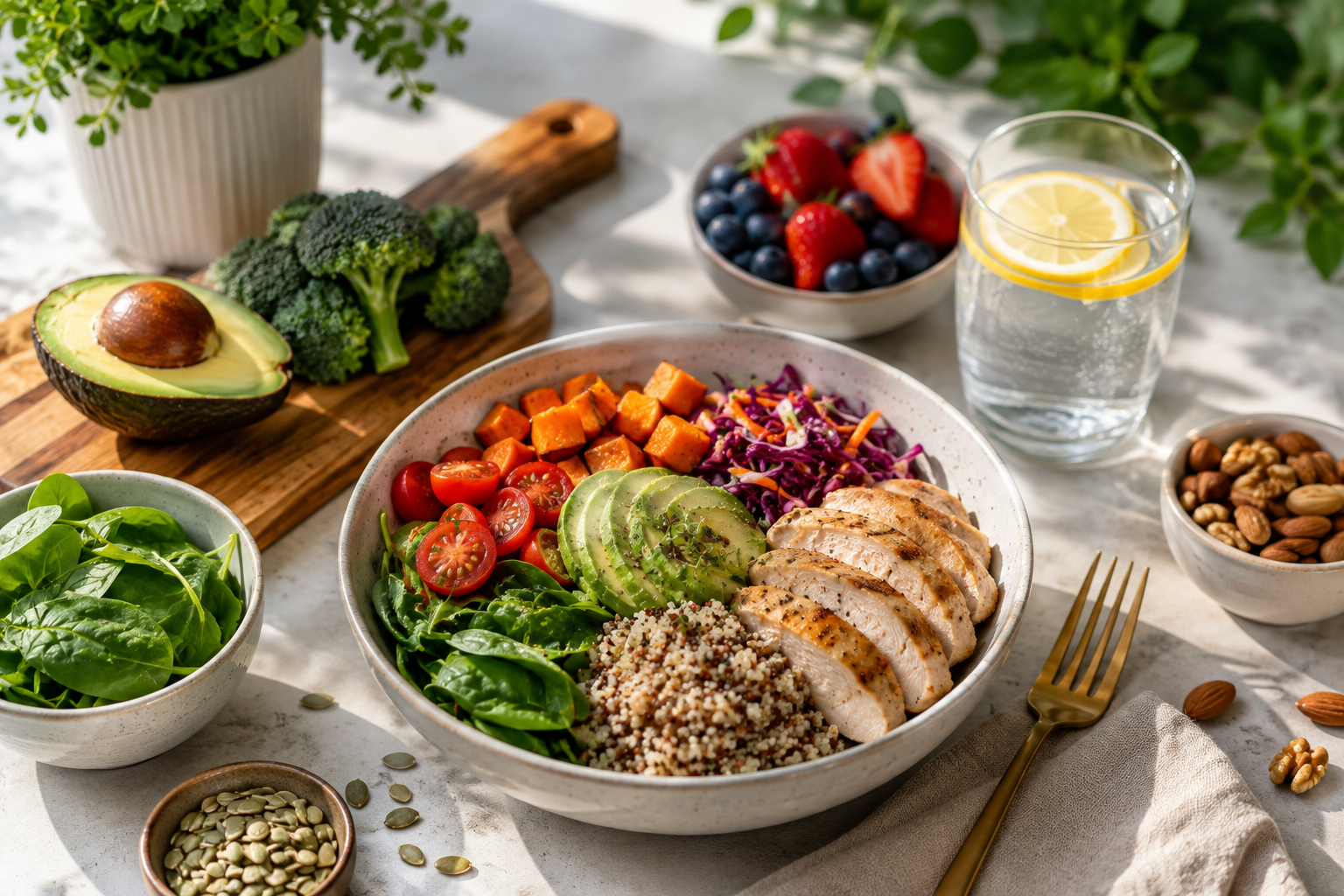
A simple formula is:
Protein + high-fiber carbohydrate + vegetables or fruit + healthy fat
For example:
Breakfast
Eggs + whole-grain toast + avocado + berries
Lunch
Grilled chicken + brown rice + roasted vegetables + olive oil-based dressing
Snack
Greek yogurt + berries + nuts
Dinner
Salmon + sweet potato + broccoli + avocado
This isn’t a rigid meal plan.
It’s simply a framework you can adapt to your preferences.
- Limit Highly Processed Foods Without Making Them Forbidden
You don’t have to completely eliminate cookies, pizza, ice cream, chips, or other foods you enjoy to have a healthy diet.
A restrictive mindset can make healthy eating unnecessarily difficult.
Instead, make nutrient-dense foods the foundation of your diet and enjoy less nutritious foods in moderation.
Think:
More often: vegetables, fruits, lean proteins, whole grains, beans, nuts, seeds, and other minimally processed foods.
Less often: foods high in added sugars, sodium, saturated fat, or refined carbohydrates.
This approach allows room for enjoyment without letting highly processed foods dominate your diet.
- Pay Attention to Added Sugar
Sugar itself isn’t something women need to fear.
The bigger issue is frequently consuming large amounts of foods and drinks containing added sugars.
Common sources include:
- Sugary drinks
- Candy
- Sweetened coffee beverages
- Desserts
- Some breakfast cereals
- Sweetened baked goods
- Some packaged snacks
You don’t have to eliminate these foods.
Instead, learn to recognize where added sugars are coming from and choose how often you want them in your diet.
For example, water or unsweetened beverages can replace sugary drinks most of the time while leaving room for an occasional dessert.
- Eating for Fitness Is Different From Dieting
Fitness isn’t simply about being thin.
A fit woman can have curves, muscle, a larger body, a smaller body, or many different body shapes.
Fitness is more closely connected with factors such as:
- Strength
- Cardiovascular fitness
- Mobility
- Physical function
- Recovery
- Healthy body composition
- Adequate nutrition
Your diet should support your physical activity rather than leave you too depleted to exercise.
If you’re strength training, prioritize adequate protein and overall energy intake.
If you’re performing endurance exercise, carbohydrates can provide important fuel.
If you’re doing a mixture of activities, a varied diet can help support both energy and recovery.
- Adjust Your Nutrition as You Age
Women’s nutritional needs don’t remain exactly the same throughout life.
During the reproductive years, iron may receive greater attention because of menstrual blood loss.
During pregnancy and breastfeeding, nutrient and energy needs change substantially.
As women approach menopause, maintaining muscle and bone health becomes increasingly important.
This makes strength training, adequate protein, calcium-rich foods, vitamin D, and an overall nutrient-dense eating pattern increasingly valuable.
There is no single “women’s diet.”
Your nutritional needs should reflect your age, activity level, reproductive stage, health status, and individual circumstances.
- Combine Nutrition With Exercise
A healthy diet is only one piece of staying fit.
Regular physical activity provides benefits that food alone cannot provide.
Adults should aim for a combination of aerobic activity and muscle-strengthening activity, with specific recommendations varying according to age and health status.
Strength training is particularly valuable for women because resistance exercise can help maintain and build muscle and support bone health.
Examples include:
- Squats
- Lunges
- Push-ups
- Rows
- Hip hinges
- Resistance-band exercises
- Weight training
You don’t need an expensive gym membership to begin.
Walking, dancing, bodyweight exercises, cycling, swimming, and other activities can also contribute to physical fitness.
- Make Healthy Eating Convenient
The healthiest choice isn’t always the choice you’ll make when you’re exhausted and hungry.
Preparation can make a huge difference.
Keep convenient foods available, such as:
- Hard-boiled eggs
- Greek yogurt
- Fresh or frozen fruit
- Pre-cut vegetables
- Nuts
- Hummus
- Cooked chicken
- Beans
- Whole-grain wraps
- Frozen vegetables
Preparing a few ingredients ahead of time can make it much easier to assemble balanced meals during busy days.
- Don’t Chase Every Nutrition Trend
Every few months, a new diet seems to promise effortless weight loss, hormone balance, or perfect health.
One week it’s cutting carbohydrates.
The next week it’s eliminating dairy.
Then it’s fasting, detoxes, juice cleanses, or a supplement that supposedly “resets” your metabolism.
Be cautious.
A healthy diet doesn’t need to be constantly reinvented.
The fundamentals—adequate nutrition, variety, fiber, protein, fruits and vegetables, healthy fats, hydration, and reasonable portions—remain important regardless of the latest trend.
A Simple Healthy Eating Formula for Women
If you don’t know what to put on your plate, start here:
Fill about half your plate with vegetables and/or fruit.
Choose a variety of colors.
Add a source of protein.
Examples include chicken, fish, eggs, beans, lentils, tofu, Greek yogurt, or lean meat.
Add a high-fiber carbohydrate.
Try sweet potatoes, brown rice, oats, quinoa, beans, lentils, or whole grains.
Include a source of healthy fat.
Avocado, nuts, seeds, olive oil, or fatty fish can work well.
Add water or another appropriate beverage.
Then adjust portions based on your hunger, activity level, goals, and individual nutritional needs.
The Bottom Line
A healthy diet for women isn’t about eating the least amount of food possible.
It’s about feeding your body well.
Build meals around nutrient-dense foods. Eat adequate protein. Include fruits and vegetables. Choose high-fiber carbohydrates. Don’t eliminate healthy fats. Pay attention to calcium and iron. Drink enough fluids. Limit excessive added sugar and highly processed foods. And combine good nutrition with regular physical activity.
Most importantly, don’t let the pursuit of fitness turn into a constant battle with food.
You don’t need to eat perfectly to be healthy.
You need an eating pattern that is nutritious, enjoyable, flexible, and sustainable enough to follow for years—not just a few weeks.
Your body deserves nourishment, not punishment.
Healthy eating isn’t about becoming smaller. It’s about becoming stronger, healthier, and better supported by the food you eat.