
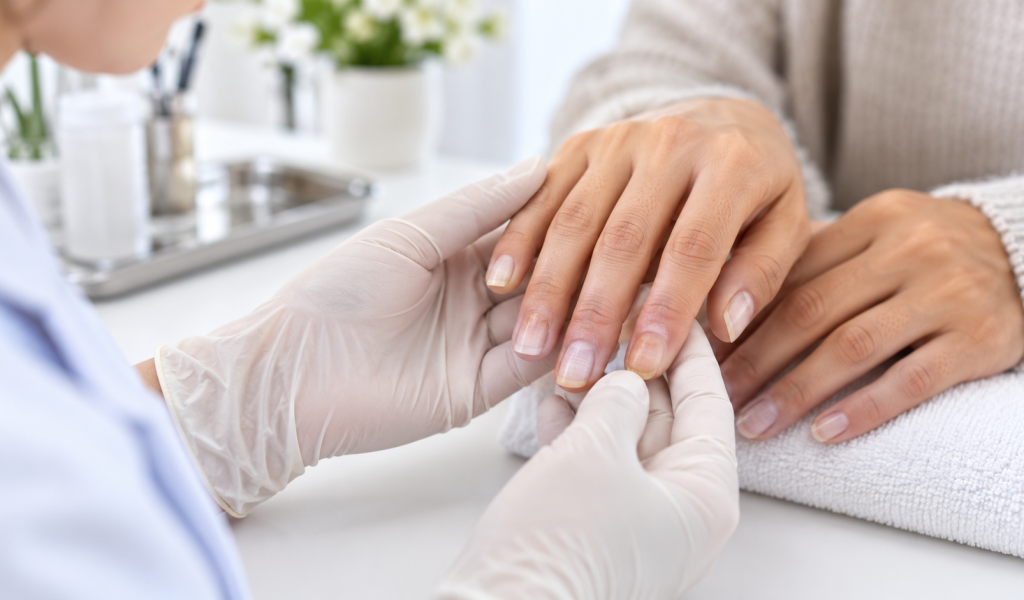


Your nails may seem like a small part of your body, but changes in their color, texture, thickness, or shape can sometimes provide clues about what is happening with your health.
Healthy fingernails and toenails are generally smooth, relatively uniform in color, and firmly attached to the nail bed. However, nails naturally change with age, and everyday activities such as manicures, cleaning, nail polish, injury, and repeated exposure to water can also affect their appearance.
That means a strange-looking nail does not automatically mean you have a disease.
Still, certain nail changes deserve attention—especially when they appear suddenly, affect several nails, continue getting worse, or occur alongside other symptoms.
Understanding the difference between common cosmetic changes and possible signs of disease can help you know when simple nail care is enough and when it is time to see a healthcare professional.
What Are Nails Made Of?
Your fingernails and toenails are primarily made from layers of a hardened protein called keratin, the same type of protein found in your hair and the outer layer of your skin.
The visible nail plate grows from an area beneath the skin called the nail matrix.
Because nails grow slowly, changes in your nails can sometimes reflect something that happened to your body weeks or even months earlier.
Fingernails generally grow faster than toenails, which is one reason toenail problems may take a long time to completely grow out.
According to MedlinePlus, healthy nails are usually smooth and consistent in color, although harmless vertical ridges and occasional white spots are common.
What Do Healthy Nails Look Like?
Healthy nails usually have:
- A relatively smooth surface
- Consistent coloring
- Firm attachment to the nail bed
- No persistent swelling or redness around the nail
- No unusual thickening or crumbling
- No unexplained pain
You may have natural differences in nail shape or color, and these can vary between individuals.
As you age, your nails may also become:
- More brittle
- Slightly thicker
- More ridged
- Slower growing
These changes are not necessarily signs of illness.
White Spots on the Nails
White spots on fingernails are extremely common.
Many people have heard myths claiming that every white spot means:
“You have a calcium deficiency.”
That usually is not the case.
Small isolated white spots frequently result from minor injury to the nail matrix—even an injury you do not remember happening.
Because nails grow slowly, the white mark may not become visible until well after the injury occurred.
White spots and vertical ridges can often be harmless variations.
However, widespread or unusual white discoloration affecting several nails may have other causes and should be evaluated if it persists.
Brittle or Splitting Nails
Brittle nails are another very common complaint among women.
Your nails may:
- Peel
- Split
- Crack
- Break easily
- Feel thin or fragile
Sometimes this is simply caused by repeated exposure to water, cleaning chemicals, nail polish remover, or frequent manicures.
Aging can also contribute.
However, brittle nails can occasionally occur with medical conditions, including thyroid disorders and nutritional problems.
If your nails suddenly become extremely brittle without an obvious explanation—especially if you also have symptoms such as unusual fatigue, hair changes, feeling unusually cold or hot, or significant weight changes—mention it to your healthcare provider.
Can Nutrition Affect Your Nails?
Yes, nutrition contributes to normal nail growth, but nail appearance should not be used to diagnose a nutrient deficiency by itself.
Your body needs adequate:
- Protein
- Iron
- Zinc
- B vitamins
- Other vitamins and minerals
to support normal tissue growth.
Iron deserves particular attention in women because iron deficiency and iron-deficiency anemia are relatively common.
A particular nail shape known as koilonychia, or spoon nails, has been associated with iron-deficiency anemia. The nails become thin and curve inward, producing a spoon-like appearance.
However, having weak or brittle nails does not automatically mean you need an iron supplement.
If a deficiency is suspected, proper testing is better than guessing.
Eating an overall nutritious diet can help provide the nutrients your body needs. For more ideas, read our guide to a Healthy Diet for Women to Stay Fit.
You can also use our guide to Foods to Buy for Healthy Eating when planning your grocery list.
Spoon-Shaped Nails
Spoon nails curve upward around the edges and may develop a depression in the center.
The medical term is koilonychia.
Iron deficiency is one possible cause, but it is not the only explanation.
If you notice a significant change in your nail shape, especially across several nails, it is worth discussing with a healthcare professional rather than assuming you simply need more iron.
Nail Pitting
Tiny dents or pits across the surface of the nail can resemble marks made by the tip of a pin.
Pitting may be associated with conditions including:
- Psoriasis
- Alopecia areata
- Atopic dermatitis
Nail psoriasis can also cause discoloration, crumbling, buildup beneath the nail, and separation of the nail from the nail bed.
Interestingly, some people develop nail psoriasis even without obvious psoriasis on the skin.
If you repeatedly develop nail pits—especially along with joint pain or skin changes—consider seeing a dermatologist.
Ridges Across the Nails
Vertical ridges running from the base toward the tip of the nail are common and often become more noticeable with age.
Horizontal grooves are different.
Deep horizontal grooves across the nails are known as Beau’s lines.
They can develop when nail growth temporarily slows or stops.
Possible triggers include:
- Serious illness
- High fever
- Physical injury
- Chemotherapy
- Major physiological stress
Because fingernails grow slowly, Beau’s lines can appear after you have recovered from the event that caused them.
If several nails suddenly develop deep horizontal grooves and you do not know why, talk with your healthcare provider.
Nails Separating From the Nail Bed
When part of the nail lifts away from the skin underneath it, the condition is called onycholysis.
The separated area may appear white.
Possible causes include:
- Nail trauma
- Aggressive manicures
- Fungal infection
- Psoriasis
- Certain medications
- Some thyroid conditions
The American Academy of Dermatology recommends having a nail that is unexpectedly lifting evaluated because the underlying cause may need treatment.
Avoid digging underneath the separated nail with sharp objects, which can cause additional injury or introduce infection.
Fungal Nail Infections
Nail fungus, also called onychomycosis, is particularly common in toenails.
A fungal infection may cause a nail to become:
- Yellow
- White
- Brown
- Thick
- Brittle
- Crumbly
- Misshapen
- Partially separated from the nail bed
Buildup can also develop underneath the nail.
The CDC reports that fungal nail infections can affect both fingernails and toenails, although toenails are much more commonly affected.
Do not assume every yellow or thickened toenail is fungus, however.
Other conditions can look similar.
A healthcare professional may need to examine or test the nail before recommending treatment.
Redness and Swelling Around a Nail
Red, swollen, painful skin around a nail may indicate paronychia, an infection or inflammation around the nail fold.
It may develop after:
- Cutting or damaging the cuticle
- Biting nails
- Picking at hangnails
- Manicures
- Repeated exposure to water
- Small injuries around the nail
Bacterial infection can sometimes produce pain, tenderness, pus, or even greenish-black discoloration.
If redness or swelling continues to worsen, becomes very painful, or produces pus, have it evaluated.
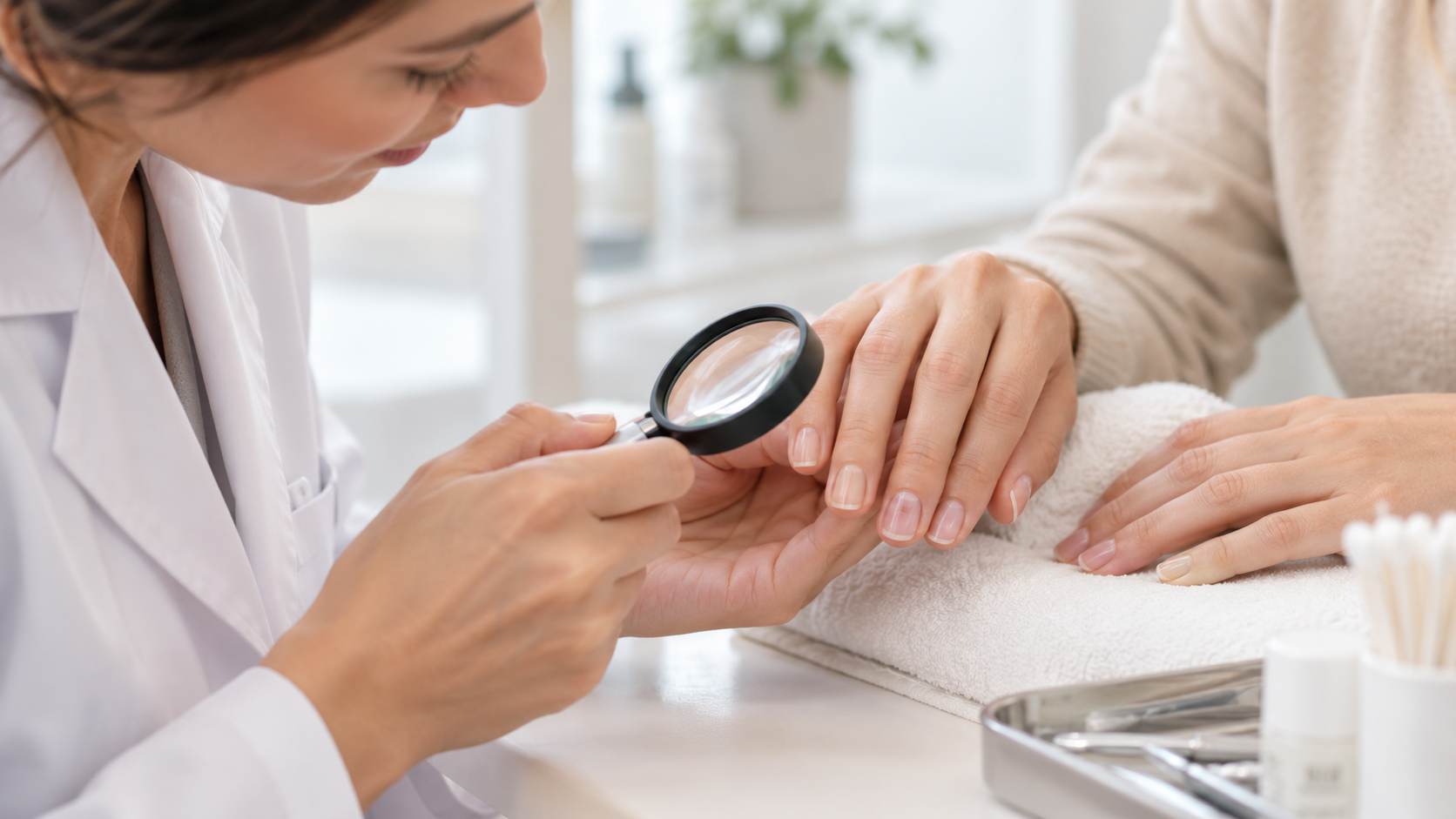
Yellow Nails
Yellow nails have several possible causes.
Sometimes the explanation is simple.
Dark nail polish can temporarily stain the nail.
Smoking can also contribute to discoloration.
A fungal nail infection is another common cause, particularly when the nail also becomes thick or crumbly.
More rarely, yellow nails accompanied by abnormal thickening and very slow nail growth may occur with yellow nail syndrome, which can be associated with other medical conditions.
Persistent yellow nails deserve evaluation, particularly when the cause is unclear.
Pale Nails
Very pale nails may sometimes occur with anemia.
Anemia means the blood does not have enough healthy red blood cells or hemoglobin to adequately transport oxygen.
Iron-deficiency anemia is particularly relevant for women, especially those who experience heavy menstrual bleeding.
However, nail color alone cannot diagnose anemia.
Symptoms such as:
- Fatigue
- Weakness
- Shortness of breath
- Dizziness
- Headaches
- Pale skin
combined with unusually pale nails may give your healthcare provider a reason to investigate further.
A blood test is necessary for proper diagnosis.
Blue Nails
Bluish nails can sometimes indicate that the blood is not carrying enough oxygen.
Cold temperatures can temporarily make fingers look blue or purple, so context matters.
However, suddenly blue nails—particularly with:
- Shortness of breath
- Chest pain
- Confusion
- Severe weakness
- Blue lips
can signal a potentially serious problem and warrants urgent medical attention.
Clubbing of the Nails
Nail clubbing occurs when the fingertips enlarge and the nails curve downward around them.
This appearance develops gradually.
Clubbing can sometimes be associated with disorders involving the:
- Lungs
- Heart
- Liver
- Gastrointestinal system
MedlinePlus also notes that conditions affecting oxygen levels can sometimes cause clubbing.
If you notice your fingertips and nails gradually becoming noticeably more rounded or curved, have them evaluated.
Dark Lines Under a Nail
A dark stripe running from the base toward the tip of a nail deserves special attention.
There are several possible explanations for nail pigmentation, and not every dark streak is cancer.
Pigmented nail streaks can occur normally, particularly in people with darker skin tones.
But melanoma can also develop underneath or around a nail.
The American Academy of Dermatology recommends having a new or changing dark streak examined by a dermatologist because, in some cases, it can be a sign of melanoma.
Pay particular attention to:
- A new streak
- A stripe becoming wider
- Changing color
- Irregular borders
- Pigment spreading onto surrounding skin
- Nail distortion
Do not try to diagnose a suspicious nail streak from photos on the internet.
A dermatologist can determine whether further testing is necessary.
Your Manicure Habits Matter
Some nail problems have nothing to do with internal disease.
Frequent:
- Acrylic nails
- Gel manicures
- Nail extensions
- Filing
- Buffing
- Acetone exposure
- Cuticle cutting
can weaken or irritate nails and surrounding skin.
The cuticle serves as a protective barrier between the nail and surrounding skin.
Removing or aggressively cutting it can increase the risk of infection.
MedlinePlus recommends keeping nails clean, dry, and trimmed and advises against removing the cuticle.
If you visit a nail salon, make sure tools are properly sanitized and avoid allowing damaged or infected skin to be worked on.
Simple Ways to Keep Your Nails Healthy
You do not need expensive supplements or elaborate nail treatments.
Start with basic habits:
- Keep nails clean and reasonably dry.
- Trim nails regularly.
- Cut toenails straight across.
- Avoid biting or picking at nails.
- Do not tear hangnails.
- Moisturize nails and surrounding skin.
- Wear gloves when repeatedly using water or cleaning chemicals.
- Avoid excessively aggressive manicures.
- Do not share nail clippers or other personal grooming tools.
- Wear properly fitting shoes.
- Treat athlete’s foot, since fungal infections of the feet can spread to toenails.
A balanced diet that provides adequate protein, vitamins, and minerals also supports normal tissue growth.
Should You Take Biotin for Your Nails?
Biotin supplements are frequently marketed for stronger hair and nails.
But more is not automatically better.
Biotin deficiency is uncommon in people eating a varied diet, and taking large doses simply because your nails are brittle may not address the real cause.
High-dose biotin can also interfere with certain laboratory tests.
Instead of automatically purchasing a “hair, skin and nails” supplement, consider discussing persistent nail changes with a healthcare professional.
The problem could be external damage, infection, psoriasis, anemia, thyroid disease, or another condition that a supplement will not correct.
When Should You See a Doctor About Your Nails?
Consider seeing a dermatologist or healthcare provider if you notice:
- A new or changing dark streak
- Nail clubbing
- Persistent blue nails
- A nail unexpectedly separating from the nail bed
- Significant nail pitting
- Severe thickening or crumbling
- Persistent yellow or unusual discoloration
- Deep horizontal grooves across several nails
- Painful nails
- Swelling, redness, or pus around a nail
- A nail abnormality that continues getting worse
- Significant changes affecting several nails at once
The American Academy of Dermatology emphasizes that while some nail changes are harmless, changes in color, shape, or texture can sometimes signal conditions that require treatment.
The Bottom Line
Your nails can provide clues about your health—but they are clues, not diagnostic tests.
A white spot does not automatically mean you are deficient in calcium.
Brittle nails do not automatically mean you have a thyroid disorder.
A yellow toenail does not automatically mean fungus.
And a dark stripe does not automatically mean melanoma.
Many nail changes have completely harmless explanations.
Others can be associated with infections, skin disorders, nutritional deficiencies, anemia, thyroid conditions, heart or lung problems, and, more rarely, skin cancer.
The most important thing is to pay attention to changes from what is normal for you.
Keep your nails clean and protected.
Eat a nutritious, balanced diet.
Avoid excessively aggressive manicures.
Do not cut away your cuticles unnecessarily.
And if a nail suddenly changes color, shape, thickness, or texture—or simply does not look right for an extended period—have a healthcare professional take a look.
Sometimes a nail problem is simply a nail problem.
But occasionally, your nails may be giving you a reason to look a little deeper at your health.
This article is for general educational purposes and is not intended to diagnose or treat a medical condition. Nail abnormalities can have many possible causes. Consult a qualified healthcare professional or dermatologist if you develop persistent, unexplained, painful, or concerning nail changes.