Change Your Diet to Lower Your Cholesterol: A Woman’s Guide to Heart-Healthy Eating
You open your lab results and see the words:
High cholesterol.
Suddenly, every egg, piece of cheese, and hamburger you have eaten seems suspicious.
Should you stop eating all fat?
Give up meat?
Never eat eggs again?
Buy a cholesterol supplement?
Fortunately, lowering cholesterol through diet does not require living on salads or eliminating every food you enjoy.
One of the most effective dietary strategies is much more practical:
Eat less of the foods that tend to raise LDL cholesterol and replace them with foods that actively support heart health.
The Centers for Disease Control and Prevention recommends limiting saturated and trans fats while emphasizing foods such as vegetables, fruits, whole grains, beans, seafood, nuts, and unsaturated fats. These changes can help prevent and manage elevated LDL cholesterol.
Let’s turn that advice into actual food.
First, What Exactly Is Cholesterol?
Cholesterol is a waxy substance your body needs.
It helps your body make:
- Hormones
- Vitamin D
- Cell membranes
- Other important substances
Your liver produces the cholesterol your body needs.
The problem is not that cholesterol exists.
The problem occurs when certain cholesterol-containing particles become too high in your bloodstream.
LDL Cholesterol
LDL is commonly called “bad” cholesterol.
High levels can contribute to fatty deposits inside arteries. Over time, these deposits can narrow the arteries and contribute to cardiovascular disease.
HDL Cholesterol
HDL is often called “good” cholesterol because it helps transport cholesterol back toward the liver.
But cholesterol numbers should be interpreted as part of your entire cardiovascular picture, which may also include:
- Triglycerides
- Blood pressure
- Diabetes
- Smoking
- Family history
- Age
- Other medical conditions
Your healthcare professional can help you understand what your numbers mean for you.
The Biggest Dietary Target: Saturated Fat
If you want to lower LDL cholesterol through food, one of the most important places to start is saturated fat.
The American Heart Association identifies reducing saturated and trans fat as a major dietary strategy for lowering cholesterol.
Foods that can contain significant saturated fat include:
- Fatty cuts of beef
- Sausage
- Bacon
- Butter
- Lard
- Full-fat cheese
- Cream
- Ice cream
- Whole-fat dairy products
- Coconut oil
- Palm oil
- Many pastries and desserts
This does not necessarily mean you can never eat these foods.
It means they should not dominate your diet.
The American Heart Association recommends that people trying to lower cholesterol aim for a dietary pattern containing less than about 6% of calories from saturated fat. On a 2,000-calorie diet, that works out to roughly 13 grams per day.
Rather than obsessing over one number, start with food swaps.
Replace—Don’t Just Remove
This is where cholesterol-friendly eating becomes much easier.
Instead of asking:
“What can’t I eat?”
ask:
“What can I eat instead?”
For example:
Instead of butter on toast, try avocado or a nut butter.
Instead of fatty sausage every morning, try eggs with vegetables or another leaner protein.
Instead of a heavily marbled steak, choose fish, beans, skinless poultry, or a leaner cut of meat more often.
Instead of cooking everything in butter, use an unsaturated vegetable oil such as olive oil.
The American Heart Association’s 2026 cardiovascular nutrition guidance specifically emphasizes choosing unsaturated fats in place of saturated fats.
That word—replace—matters.
Adding olive oil, nuts, and avocado to a diet that is already overloaded with calories and saturated fat is different from using those foods instead of less heart-friendly choices.
Eat More Soluble Fiber
If saturated fat is one major target, soluble fiber is another valuable tool.
Soluble fiber forms a gel-like substance in the digestive tract and can reduce the absorption of cholesterol.
The National Heart, Lung, and Blood Institute specifically recommends increasing soluble fiber as part of its Therapeutic Lifestyle Changes approach to lowering LDL cholesterol.
Great sources include:
- Oatmeal
- Oat bran
- Beans
- Lentils
- Chickpeas
- Apples
- Pears
- Certain other fruits and vegetables
This gives you several easy meal ideas.
Breakfast
Oatmeal topped with berries and walnuts.
Lunch
Lentil soup with a side salad.
Dinner
Black-bean bowl with vegetables, brown rice, and avocado.
Snack
Apple with a small amount of peanut or almond butter.
That is cholesterol-friendly eating without a single “diet food.”
Beans Deserve a Bigger Place on Your Plate
Beans are especially useful because they provide:
Soluble fiber + plant protein + minerals
while containing very little saturated fat.
Try:
- Black beans
- Kidney beans
- Pinto beans
- Chickpeas
- Lentils
- Lima beans
You can add them to:
Salads.
Soups.
Chili.
Rice bowls.
Tacos.
Wraps.
Pasta dishes.
CDC specifically identifies oatmeal and beans as useful high-fiber foods for managing cholesterol.
Nuts Can Fit Into a Cholesterol-Lowering Diet
Almonds, walnuts, pistachios, pecans, and other nuts contain unsaturated fats, plant protein, fiber, and other beneficial nutrients.
The American Heart Association includes nuts among healthy protein and fat sources in a heart-friendly eating pattern.
A reasonable snack might be:
Apple + small handful of walnuts
rather than:
Cookies + sweetened coffee drink
Remember, nuts are calorie-dense.
You do not need half a container at once to receive their nutritional benefits.
Choose Whole Grains More Often
Whole grains provide more fiber than many refined grain products.
Options include:
- Oatmeal
- Brown rice
- Whole-wheat bread
- Whole-grain pasta
- Barley
- Quinoa
- Whole-grain cereal
The American Heart Association’s updated 2026 dietary guidance recommends foods made mostly with whole grains instead of refined grains as part of a heart-healthy dietary pattern.
Instead of eliminating carbohydrates, improve the types you eat.
For example:
White toast → whole-grain toast.
Sugary cereal → oatmeal.
White rice every day → alternate with brown rice, quinoa, or other whole grains.
Fish Can Replace Higher-Saturated-Fat Meat
Fish is another useful swap.
Fatty fish such as:
- Salmon
- Sardines
- Trout
provide omega-3 fatty acids.
Omega-3s are particularly useful for cardiovascular health and can help lower triglyceride levels, although they are not a magical treatment for high LDL.
The bigger dietary advantage can sometimes be what fish replaces.
Salmon instead of sausage.
Grilled fish instead of fried chicken.
Fish tacos instead of a large fatty burger.
Small changes repeated often matter.
What About Eggs?
Eggs often get blamed whenever cholesterol is discussed.
The current conversation around cholesterol is more nuanced than:
“Eggs contain cholesterol, so eggs are bad.”
For most people, the overall dietary pattern—especially the amount and sources of saturated fat—is a more important cardiovascular target than obsessing over cholesterol in one individual food.
The American Heart Association’s 2026 dietary guidance specifically notes that dietary cholesterol is no longer a primary cardiovascular risk-reduction target for most people.
That does not mean dietary cholesterol is irrelevant for everyone.
If your doctor has given you individualized instructions because of very high LDL, diabetes, familial hypercholesterolemia, or another medical condition, follow that guidance.
But you generally do not need to treat one egg as though it destroyed your entire diet.
Be Careful With “Healthy” Coconut Oil
Coconut oil has developed a wellness reputation.
But coconut oil is high in saturated fat.
If your goal is reducing LDL cholesterol, routinely replacing olive or other unsaturated oils with large amounts of coconut oil may work against that goal.
The American Heart Association recommends non-tropical vegetable oils and specifically identifies coconut and palm oils as saturated-fat sources to limit.
For everyday cooking, consider oils such as:
- Olive oil
- Canola oil
- Other liquid non-tropical vegetable oils
What About Plant Sterols and Stanols?
Plants naturally contain substances called sterols and stanols.
They have a structure similar to cholesterol and can reduce cholesterol absorption in the digestive tract.
NHLBI includes plant stanols and sterols as one strategy that can further lower LDL cholesterol. They are naturally present in small amounts in plant foods and are also added to some fortified foods.
You do not necessarily need a special fortified product.
Begin with a broadly plant-rich diet containing:
- Whole grains
- Nuts
- Seeds
- Beans
- Fruits
- Vegetables
- Plant oils
If your cholesterol remains high, ask your healthcare provider or registered dietitian whether foods specifically fortified with plant sterols or stanols make sense for you.
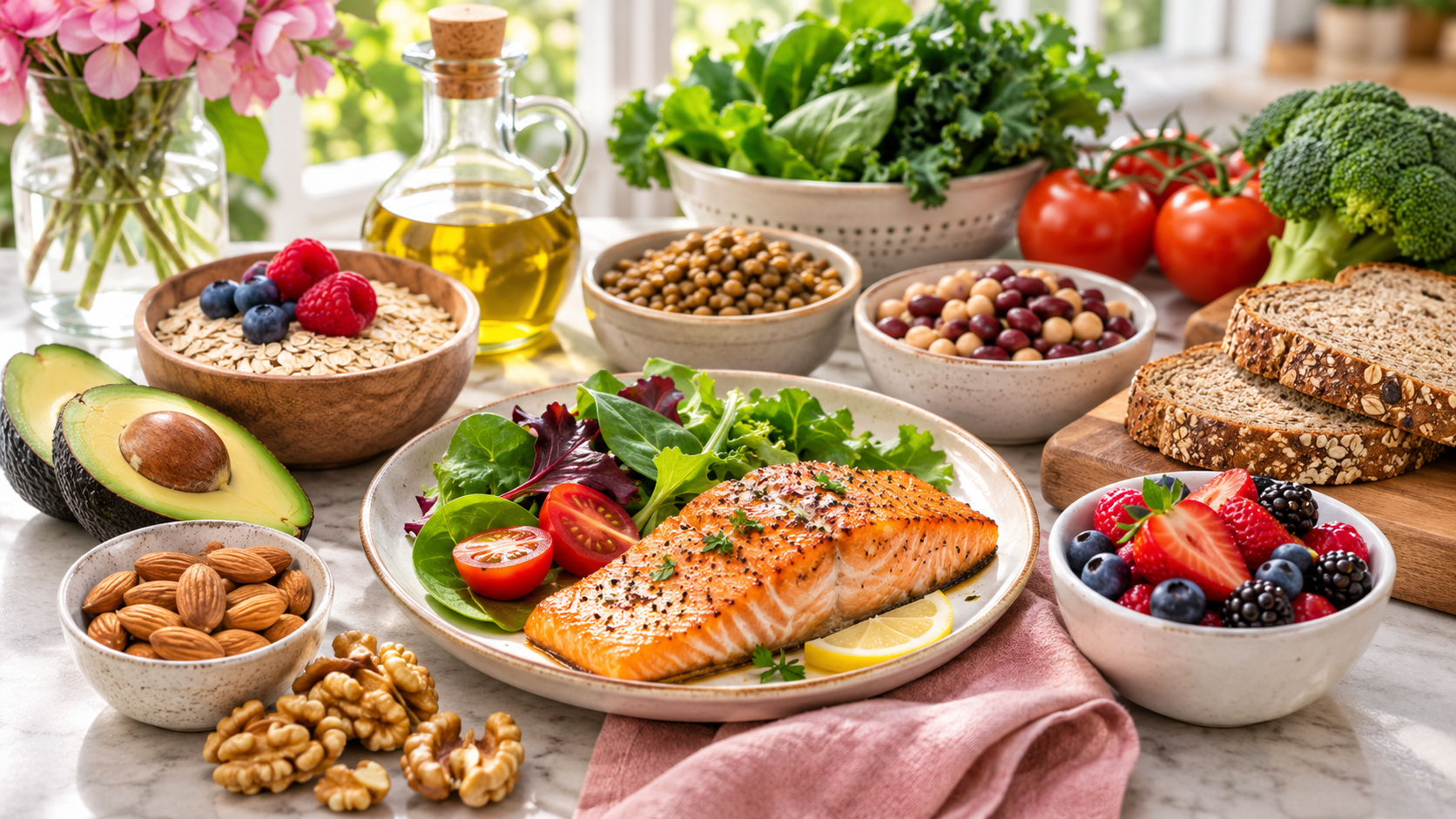
Build a Cholesterol-Friendly Plate
You do not need a complicated formula.
Try building many meals around:
Half the plate
Vegetables and/or fruit.
One quarter
Lean or plant-based protein.
Examples:
Fish.
Skinless poultry.
Beans.
Lentils.
Tofu.
One quarter
Whole-grain or high-fiber carbohydrate.
Examples:
Brown rice.
Quinoa.
Whole-grain pasta.
Sweet potato.
Then add an appropriate amount of unsaturated fat such as:
Olive oil.
Avocado.
Nuts.
Seeds.
For more help building balanced meals, see our Healthy Diet for Women to Stay Fit.
And if your grocery cart needs an overhaul, our Foods to Buy for Healthy Eating guide can help you stock foods that make healthier meals easier.
A Sample Day of Cholesterol-Friendly Eating
Here is one example.
Breakfast
Oatmeal cooked with low-fat milk or fortified soy milk
Blueberries
Walnuts
Cinnamon
Snack
Apple
Small amount of peanut butter
Lunch
Grilled chicken and chickpea salad
Mixed greens
Tomatoes
Cucumber
Olive-oil-based dressing
Whole-grain crackers
Snack
Low-fat Greek yogurt
Berries
Dinner
Baked salmon
Brown rice
Broccoli
Roasted carrots
Optional evening snack
Air-popped popcorn or fruit
Your calorie and portion needs may be completely different from someone else’s.
That is why a heart-healthy diet should still be individualized.
If you want an eating and exercise routine built around your goals, food preferences, schedule, and lifestyle, learn more about our Custom Women’s Diet & Fitness Plan.
Do You Have to Become Vegetarian?
No.
A cholesterol-friendly diet can include animal foods.
The key is choosing them strategically.
Choose more often:
- Fish
- Skinless poultry
- Lean meat
- Low-fat dairy
Choose less often or smaller portions of:
- Fatty red meat
- Sausage
- Bacon
- Bologna
- Salami
- Full-fat dairy
- Butter
- Cream
You might also make some meals completely plant-based.
For example:
Monday: salmon.
Tuesday: lentil chili.
Wednesday: chicken.
Thursday: black-bean tacos.
You do not need an extreme diet.
Can Weight Loss Help Cholesterol?
If you have overweight or obesity, losing some excess weight may improve cholesterol and other cardiovascular risk factors.
CDC notes that excess body fat can increase LDL cholesterol partly by affecting how efficiently the body removes LDL from the bloodstream.
But crash dieting is not necessary.
A sustainable eating pattern combined with regular physical activity is more useful than repeatedly losing and regaining weight through extreme diets.
Diet May Not Be Enough for Everyone
This is extremely important.
Some people can make major dietary changes and still have high LDL cholesterol.
Why?
Because cholesterol is influenced by more than food.
Factors include:
- Genetics
- Age
- Menopause
- Diabetes
- Thyroid disease
- Kidney disease
- Certain medications
- Body weight
- Smoking
- Physical activity
Some people have inherited conditions such as familial hypercholesterolemia, which can produce extremely high LDL levels.
In those situations, medication may be necessary in addition to lifestyle changes.
Do not stop cholesterol medication because you started eating oatmeal.
And do not view medication as a personal failure.
Diet and medication can work together.
Make Changes You Can Keep
You do not need to completely rebuild your refrigerator overnight.
Start with three changes.
For example:
Week 1: Replace butter with olive oil more often.
Week 2: Eat oatmeal three mornings.
Week 3: Replace two meat-heavy meals with beans or fish.
Then continue building.
The American Heart Association recommends focusing on the overall dietary pattern, not chasing individual “superfoods.”
That is what makes the biggest difference over time.
The Bottom Line
Changing your diet can be a powerful part of lowering high cholesterol—especially LDL cholesterol.
You do not need to survive on salads.
You do not need to eliminate every carbohydrate.
And you do not need to fear every food containing cholesterol.
Instead:
Eat less saturated and trans fat.
Replace saturated fats with unsaturated fats.
Eat more soluble fiber.
Choose oats, beans, lentils, vegetables, fruits, and whole grains.
Include nuts and seeds in sensible portions.
Eat fish regularly if appropriate for you.
Choose leaner proteins.
Use olive and other unsaturated oils more often than butter or tropical oils.
Limit highly processed meats and foods high in saturated fat.
And think about your entire eating pattern rather than labeling individual foods “good” or “bad.”
Most importantly, know your numbers.
High cholesterol often causes no obvious symptoms.
You cannot look in the mirror and know what your LDL is.
Get your cholesterol checked as recommended, discuss the results with your healthcare professional, and ask what your personal target should be.
Changing your diet may significantly improve your cholesterol.
But if lifestyle changes are not enough, additional medical treatment may be necessary.
The goal is not to win a contest for the world’s cleanest diet.
The goal is much more meaningful:
Protect your arteries, protect your heart, and build an eating pattern you can actually live with.
This article is for general educational purposes and is not intended to diagnose or treat high cholesterol or cardiovascular disease. Speak with a qualified healthcare professional about your cholesterol results, cardiovascular risk, medications, and individualized nutrition needs.