Nuts: Health Benefits for Women and the Best Nuts to Eat
Almonds. Walnuts. Pistachios. Pecans. Cashews. Brazil nuts.
These small foods pack a surprising amount of nutrition.
Nuts provide a combination of healthy unsaturated fats, plant protein, fiber, vitamins, minerals, and antioxidants. The American Heart Association includes unsalted nuts such as almonds, walnuts, pistachios, pecans, and hazelnuts among foods that can support a heart-healthy eating pattern.
For women, nuts can be especially useful because they are portable, filling, easy to add to meals, and rich in nutrients important throughout adulthood.
But nuts are also calorie-dense, and some varieties have unique nutritional characteristics worth knowing about.
So how much should you eat? Which nuts are healthiest? And can nuts really help with heart health, blood sugar, and weight management?
Here is what women should know.
Why Nuts Are So Nutritious
Different nuts provide different amounts of individual nutrients, but most contain some combination of:
- Monounsaturated fats
- Polyunsaturated fats
- Plant protein
- Fiber
- Magnesium
- Vitamin E
- Zinc
- Copper
- Selenium
- Other antioxidants and plant compounds
This makes nuts an easy way to improve the nutritional quality of meals and snacks.
For example, instead of eating crackers by themselves, you might pair fruit with a small handful of almonds.
Or add walnuts to oatmeal.
Sprinkle pistachios over Greek yogurt.
Add cashews to a stir-fry.
Use nut butter on whole-grain toast.
Small changes like these can help make meals more satisfying without requiring complicated recipes.
If you are working on improving your overall diet, our Healthy Diet for Women to Stay Fit guide can help you build more balanced everyday meals.
Nuts Can Support Heart Health
Heart health should be a major priority for women.
Nuts contain mostly unsaturated fats rather than the large amounts of saturated fat found in some animal foods and highly processed snacks.
The American Heart Association notes that nuts contain healthy fats, fiber, protein, vitamins, minerals, and antioxidants and includes them as part of a heart-healthy eating pattern.
Research on almonds, for example, has found that diets containing nuts can help reduce total and LDL cholesterol, particularly when nuts replace foods high in saturated fat or refined carbohydrates.
The key word is replace.
Adding a handful of nuts on top of an already calorie-heavy diet is different from replacing:
Chips.
Cookies.
Processed meats.
Or other less nutritious foods
with nuts.
Try:
Apple + almonds instead of cookies
or
Walnuts in oatmeal instead of a sugary pastry
or
Pistachios instead of chips
The overall eating pattern matters.
Nuts Provide Healthy Fats
Fat is not something women need to eliminate from their diets.
Your body needs dietary fat for many normal functions, including helping absorb fat-soluble vitamins such as vitamins A, D, E, and K.
The type of fat matters.
Nuts are particularly rich in unsaturated fats.
Harvard’s Nutrition Source notes that polyunsaturated fats from foods such as nuts and seeds can be part of a dietary pattern associated with better metabolic health.
This does not mean you need an enormous serving.
A small portion provides plenty.
Walnuts Provide Plant-Based Omega-3 Fat
Walnuts stand out from many other nuts because they contain relatively high amounts of alpha-linolenic acid, or ALA.
ALA is a plant-based omega-3 fatty acid.
The American Heart Association specifically notes that walnuts are particularly rich in omega-3 fats compared with many other nuts.
Walnuts can easily be added to:
- Oatmeal
- Yogurt
- Salads
- Smoothie bowls
- Homemade trail mix
- Whole-grain cereal
Keep in mind that plant-based ALA is not identical to the EPA and DHA omega-3 fats found in fatty fish.
You do not necessarily have to choose one or the other.
Both walnuts and seafood can have a place in a healthy diet.
Almonds Are Rich in Vitamin E
Almonds are among the better food sources of vitamin E.
Vitamin E acts as an antioxidant and helps protect cells from oxidative damage. It also contributes to immune function and other normal cellular processes. The NIH lists almonds among notable food sources of vitamin E.
Almonds are easy to use as:
- A portable snack
- An oatmeal topping
- A yogurt topping
- A salad topping
- Almond butter
- An ingredient in homemade trail mix
Choose unsalted or lightly salted varieties more often if you are watching sodium intake.
Nuts Can Help Make Meals More Filling
One common concern is:
“Aren’t nuts fattening?”
Nuts are calorie-dense.
That part is true.
Fat contains more calories per gram than protein or carbohydrate, so a large amount of nuts can add substantial calories quickly.
However, this does not mean nuts automatically cause weight gain.
Their combination of:
- Fat
- Protein
- Fiber
can make them satisfying.
Research summarized by Harvard has found that nut consumption is not consistently associated with greater weight gain and, in some studies, has actually been associated with less long-term weight gain and lower obesity risk.
This does not mean eating unlimited nuts causes weight loss.
Portions still matter.
But nuts can fit comfortably into a weight-management eating plan.
For women who want help structuring calories, protein, portions, meals, and exercise around an individual weight goal, our Custom Women’s Diet & Fitness Plan is designed around your goals, schedule, food preferences, and lifestyle.
What Is a Serving of Nuts?
Because nuts are calorie-dense, portion awareness can be helpful.
The American Heart Association considers approximately:
1 ounce of whole nuts
or
2 tablespoons of nut butter
a serving.
One ounce is roughly a small handful, although the exact number of nuts depends on the variety.
You do not necessarily need to weigh your nuts every day.
But there is a big difference between:
A small handful
and
Eating directly from a large container while watching television.
If portion control is difficult, place the amount you plan to eat into a small bowl instead of eating from the package.
Nuts and Blood Sugar
Nuts can also be useful when constructing meals that support blood-sugar management.
Because nuts contain fat, fiber, and protein while being relatively low in digestible carbohydrate, pairing them with carbohydrate-containing foods may create a more balanced snack.
For example:
Instead of:
Apple alone
you might try:
Apple + almonds
Instead of:
Toast alone
try:
Whole-grain toast + peanut or almond butter
Instead of:
Banana alone
try:
Banana + walnuts
Harvard’s Nutrition Source includes nuts among sources of healthful unsaturated fats in dietary patterns associated with lower type 2 diabetes risk.
Nuts are not a treatment for diabetes, however.
Women with diabetes who use insulin or glucose-lowering medications should follow individualized guidance from their healthcare team.
Nuts May Be Especially Useful Around Menopause
Women often notice changes in body composition and weight during the years surrounding menopause.
Nutrition alone does not prevent every menopause-related change.
However, healthy dietary patterns can help.
A 2026 study involving more than 38,000 women in the Nurses’ Health Study II found that dietary patterns emphasizing minimally processed plant foods—including nuts, legumes, fruits, vegetables, and whole grains—were associated with less weight gain and lower obesity risk around menopause.
That does not prove that eating walnuts by themselves prevents menopause weight gain.
It reinforces a broader point:
Nuts can be one useful part of a high-quality overall diet.
Pistachios
Pistachios provide:
- Protein
- Fiber
- Unsaturated fat
- Potassium
- Other vitamins and minerals
They also have one practical advantage.
If you buy pistachios in the shell, eating them takes time.
That can naturally slow down snacking compared with quickly eating from a bag of chips or candy.
Try adding pistachios to:
- Salads
- Yogurt
- Oatmeal
- Grain bowls
or simply eat a small serving as a snack.
Cashews
Cashews have a creamy texture and work especially well in both sweet and savory dishes.
They provide unsaturated fat, protein, and minerals.
You can use cashews in:
- Stir-fries
- Trail mix
- Oatmeal
- Yogurt bowls
- Homemade sauces
Cashew butter is another option.
As with other nut butters, check labels.
Some products contain significant amounts of:
- Added sugar
- Added oils
- Sodium
A simple ingredient list containing mostly nuts is often a good choice.
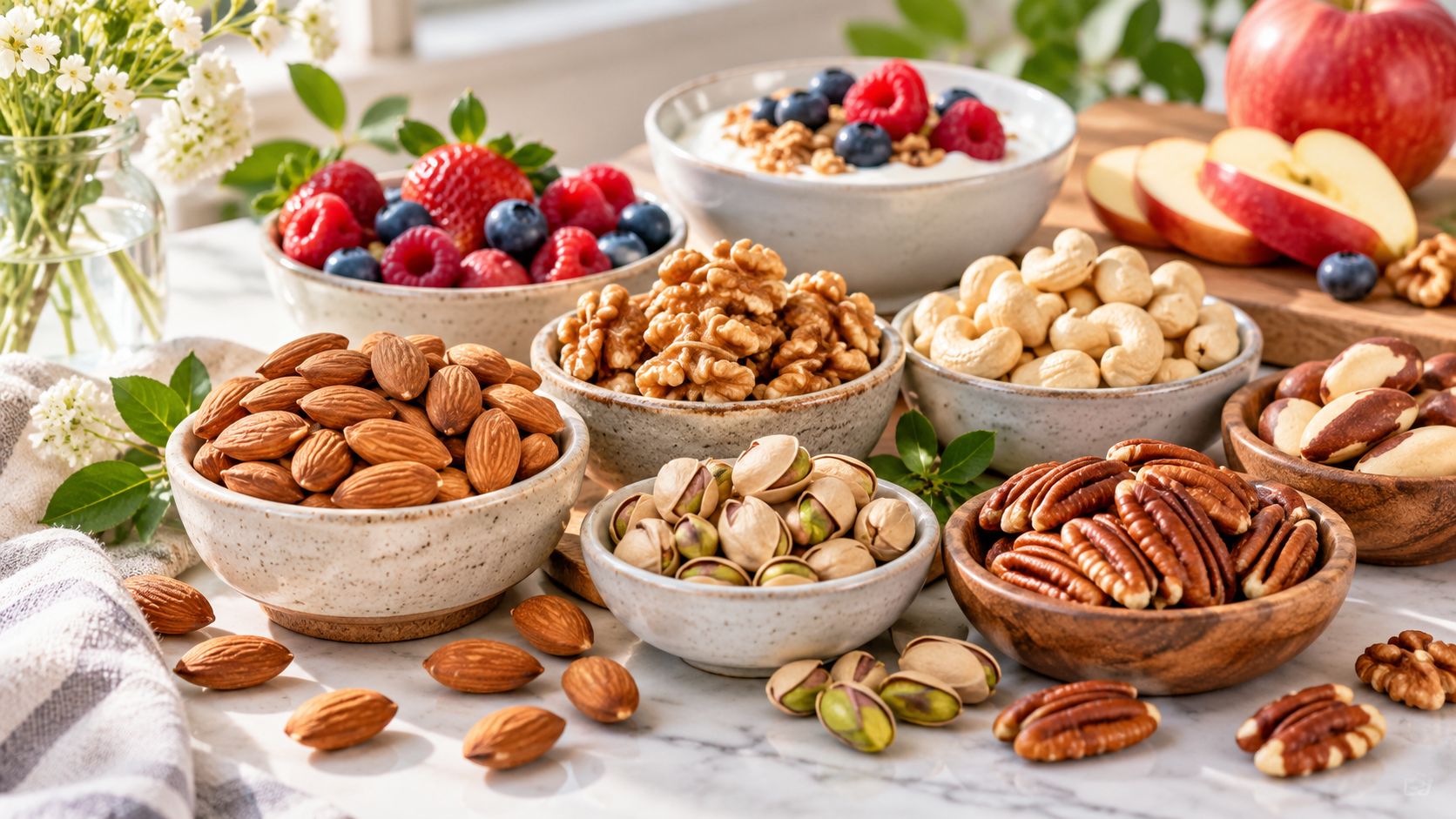
Pecans
Pecans contain unsaturated fats along with fiber and plant compounds.
They work particularly well in:
- Oatmeal
- Salads
- Yogurt
- Roasted vegetables
- Homemade snack mixes
The problem usually is not the pecan itself.
It is what sometimes comes with it.
A handful of plain pecans is very different nutritionally from a giant slice of pecan pie loaded with sugar and syrup.
Food preparation matters.
Brazil Nuts: Healthy—but Do Not Overdo Them
Brazil nuts deserve special attention.
They are exceptionally rich in selenium.
Selenium is an essential mineral involved in thyroid function, reproduction, DNA production, and antioxidant defenses.
But Brazil nuts contain so much selenium that eating large quantities regularly can result in excessive intake.
The NIH reports that a single Brazil nut may contain approximately 68 to 91 micrograms of selenium, while the adult upper intake level in the United States is 400 micrograms per day.
Too much selenium over time can cause problems including:
- Hair loss
- Brittle nails
- Nausea
- Metallic taste
- Skin changes
- Nervous-system symptoms
So Brazil nuts are a perfect example of:
Healthy does not mean unlimited.
You do not need to eat a handful every day.
What About Peanuts?
Technically, peanuts are legumes, not tree nuts.
They are related botanically to foods such as beans and lentils.
Nutritionally, however, peanuts have many similarities to tree nuts.
They provide:
- Protein
- Unsaturated fat
- Fiber
- Vitamins
- Minerals
The American Heart Association includes peanuts alongside tree nuts in its healthy-nut recommendations.
Peanut butter can therefore be an inexpensive way to incorporate many of the nutritional benefits associated with nuts.
Look for varieties without excessive added sugar, sodium, or unnecessary added fats.
Nut Butter Can Be Healthy Too
Nut butter can be especially convenient.
Options include:
- Peanut butter
- Almond butter
- Cashew butter
- Mixed-nut butter
A simple nut butter might contain:
Peanuts
or
Almonds + salt
Some commercial varieties contain larger amounts of added sugar or oils.
Check the Nutrition Facts label and ingredient list.
Nut butter can be paired with:
- Apple slices
- Bananas
- Whole-grain toast
- Oatmeal
- Yogurt
- Smoothies
Raw or Roasted?
Both raw and roasted nuts can fit into a healthy diet.
The bigger issue is often what has been added.
Honey-roasted, candied, chocolate-covered, or heavily salted nuts can contain considerably more:
- Added sugar
- Sodium
- Calories
than plain varieties.
That does not mean you can never eat them.
But for everyday use, options such as:
Raw
Dry roasted
Unsalted
or
Lightly salted
can make it easier to enjoy the nutritional benefits without lots of extras.
Nuts Are Easy to Add to a Healthy Grocery List
One reason nuts are so useful is that they are convenient.
They last longer than many fresh foods and require virtually no preparation.
Add them to your grocery list alongside:
- Vegetables
- Fruits
- Whole grains
- Beans
- Eggs
- Fish
- Yogurt
- Lean proteins
For more ideas, use our Foods to Buy for Healthy Eating guide.
Easy Ways to Eat More Nuts
You do not have to sit down and eat plain nuts every day.
Try:
Breakfast
Oatmeal + berries + walnuts
Greek yogurt + almonds
Whole-grain toast + peanut butter + banana
Lunch
Chicken salad + pecans
Grain bowl + pistachios
Snack
Apple + almond butter
Banana + peanut butter
Small handful of mixed nuts + fruit
Dinner
Vegetable stir-fry + cashews
Salad + walnuts
Roasted vegetables + chopped almonds
Simple combinations work.
Watch for Nut Allergies
Tree-nut and peanut allergies can cause serious allergic reactions in susceptible people.
If you know you have an allergy, avoid the responsible food and follow the emergency plan provided by your healthcare professional.
Symptoms of a severe allergic reaction can include:
- Difficulty breathing
- Throat tightness
- Swelling
- Wheezing
- Dizziness
- Widespread hives
A severe allergic reaction requires urgent medical treatment.
And remember:
A peanut allergy does not necessarily mean someone is allergic to every tree nut, and a tree-nut allergy does not necessarily mean every nut causes a reaction.
An allergist can provide individualized evaluation.
The Bottom Line
Nuts may be small, but they can contribute a lot to a woman’s diet.
They provide combinations of:
- Unsaturated fats
- Protein
- Fiber
- Vitamin E
- Magnesium
- Selenium
- Zinc
- Other nutrients and antioxidants
Eating nuts as part of a balanced diet can support cardiovascular health and can provide a satisfying alternative to many highly processed snacks.
Different nuts offer different nutritional advantages.
Walnuts provide plant-based omega-3 ALA.
Almonds are especially rich in vitamin E.
Pistachios provide protein, fiber, and healthy fats.
Cashews and pecans offer additional variety.
Brazil nuts contain exceptionally high amounts of selenium—but should be eaten in moderation because excessive selenium can be harmful.
You do not need one “perfect” nut.
Variety works beautifully.
Keep portions reasonable.
Choose unsalted or lightly salted varieties often.
Limit heavily candied or sugar-coated nuts.
Use nut butters with simple ingredient lists.
And think of nuts as one component of a larger healthy eating pattern.
If you want help creating meals around your individual nutrition, weight, fitness, schedule, and lifestyle needs, learn more about our Custom Women’s Diet & Fitness Plan.
Healthy eating does not require complicated foods.
Sometimes one of the easiest upgrades to your diet really can fit in the palm of your hand.
This article is for general educational purposes and is not intended to diagnose or treat medical conditions. Women with nut allergies, kidney disease, specialized dietary restrictions, or medical conditions requiring individualized nutrition guidance should consult an appropriate healthcare professional.