
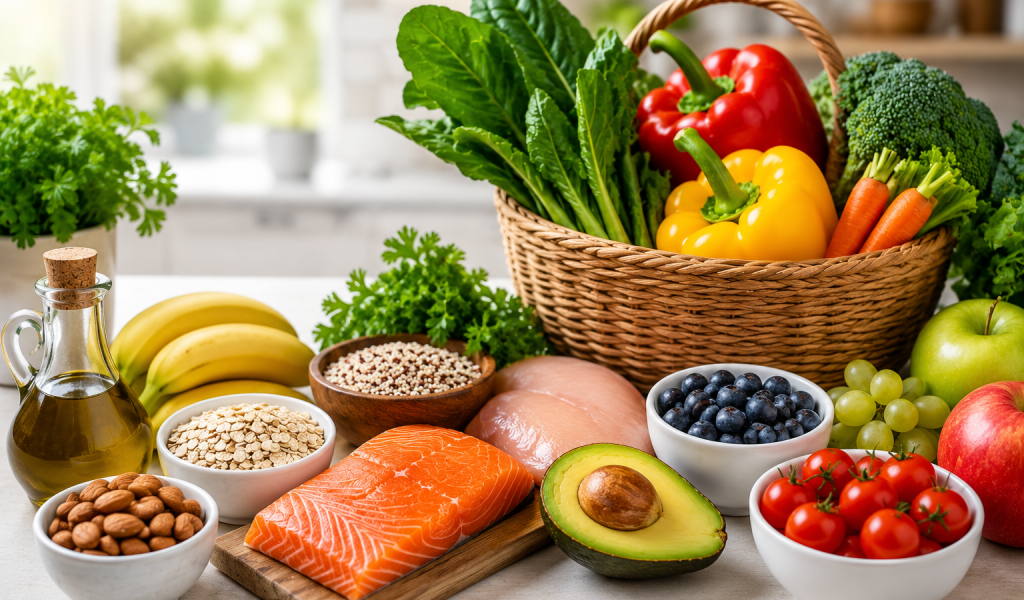


Healthy eating starts long before you sit down at the table. It begins at the grocery store.
What you bring home determines many of the choices available to you throughout the week. When your kitchen is stocked with nutritious, versatile foods, it becomes much easier to prepare balanced meals, make healthier snacks, and avoid relying on takeout or highly processed convenience foods every time you’re hungry.
But healthy grocery shopping doesn’t mean filling your cart with expensive “superfoods” or buying everything labeled organic, natural, keto, low-carb, or fat-free. You can build a nutritious grocery list with ordinary foods found at most supermarkets.
The key is knowing what foods are worth keeping on hand and how to combine them into balanced meals.
What Should Be on a Healthy Grocery List?
A well-rounded grocery cart should contain foods from several major categories:
- Protein-rich foods
- Vegetables
- Fruits
- Whole grains and other high-fiber carbohydrates
- Healthy fats
- Dairy or fortified alternatives
- Herbs and spices
- Convenient foods that make healthy eating easier
- Water and other nutritious beverages
You don’t need every food on this list every week. Choose the foods you enjoy, fit your budget, and can realistically prepare.
Let’s break it down.
1. Stock Up on Protein-Rich Foods
Protein is an important part of a healthy diet. It helps maintain and repair tissues and supports muscle.
For women who exercise or are trying to maintain muscle while losing body fat, having convenient protein sources available can make it easier to build balanced meals.
Foods to consider buying:
- Chicken breast or thighs
- Turkey
- Lean beef
- Fish
- Salmon
- Tuna
- Shrimp
- Eggs
- Greek yogurt
- Cottage cheese
- Milk
- Tofu
- Tempeh
- Beans
- Lentils
- Chickpeas
- Edamame
You don’t have to buy expensive cuts of meat. Eggs, beans, lentils, canned tuna, and Greek yogurt can be affordable ways to add protein to your meals.
Grocery-shopping tip
If you’re short on time, keep a few quick protein options available.
For example, canned tuna, eggs, Greek yogurt, and canned beans can become the foundation of a quick meal without requiring extensive preparation.
2. Buy Plenty of Vegetables
Vegetables should have a regular place on your grocery list because they provide fiber, vitamins, minerals, and numerous plant compounds.
Instead of buying only one or two vegetables, try purchasing several colors.
Green vegetables
- Spinach
- Kale
- Broccoli
- Green beans
- Collard greens
- Brussels sprouts
- Cabbage
- Zucchini
Red and orange vegetables
- Tomatoes
- Red bell peppers
- Carrots
- Sweet potatoes
- Pumpkin
- Butternut squash
Other options
- Cauliflower
- Mushrooms
- Onions
- Cucumbers
- Eggplant
Fresh vegetables are wonderful, but frozen vegetables are also an excellent option. They can be less expensive, last longer, and require very little preparation.
Don’t feel like you have to buy fresh produce exclusively to eat healthy.
3. Keep Fruit Available
Fruit is another easy food to keep around for breakfast, snacks, smoothies, or dessert.
Consider buying:
- Apples
- Bananas
- Oranges
- Berries
- Grapes
- Pineapple
- Mango
- Peaches
- Pears
- Melons
- Kiwi
Frozen fruit can be particularly useful for smoothies.
You can also use frozen berries as a topping for oatmeal or Greek yogurt.
Whole fruit provides fiber and other nutrients along with naturally occurring sugars.
4. Choose High-Fiber Carbohydrates
Carbohydrates aren’t something you need to eliminate to eat healthy.
Your body uses carbohydrates as an important source of energy, particularly during physical activity.
The goal is to choose nutritious carbohydrate sources regularly.
Add these to your cart:
- Oatmeal
- Brown rice
- Quinoa
- Barley
- Whole-grain bread
- Whole-grain tortillas
- Whole-grain pasta
- Sweet potatoes
- Potatoes
- Corn
- Beans
- Lentils
Beans and lentils are particularly useful because they provide both carbohydrates and plant-based protein.
Don’t automatically assume “whole grain” means healthy
When purchasing packaged grain products, look at the ingredient list and nutrition facts rather than relying solely on words such as “multigrain” or “wheat.”
A product can sound healthy on the front of the package while still containing significant amounts of added sugar or refined ingredients.
5. Add Healthy Fats to Your Cart
Dietary fat is an essential nutrient.
Healthy fat sources can add flavor and help make meals satisfying.
Good options include:
- Avocados
- Extra-virgin olive oil
- Nuts
- Seeds
- Natural nut butters
- Chia seeds
- Flaxseeds
- Pumpkin seeds
- Olives
- Fatty fish
You don’t need to pour large amounts of oil over everything.
A little can go a long way.
For example, olive oil can be used to roast vegetables, make a salad dressing, or sauté ingredients.
6. Don’t Forget Calcium-Rich Foods
Calcium is important for maintaining strong bones and supporting normal muscle and nerve function.
Women should pay particular attention to bone health throughout life.
Foods to consider include:
- Milk
- Greek yogurt
- Regular yogurt
- Cheese
- Calcium-fortified plant milk
- Calcium-set tofu
- Canned salmon with bones
- Canned sardines with bones
If you don’t consume dairy, look for fortified alternatives that provide calcium.
7. Keep Healthy Snack Foods Available
One of the easiest ways to improve your eating habits is to make nutritious snacks convenient.
When you’re extremely hungry and have nothing available, you’re more likely to grab whatever is easiest.
Consider keeping these foods available:
- Fresh fruit
- Greek yogurt
- Cottage cheese
- Hard-boiled eggs
- Nuts
- Seeds
- Hummus
- Vegetables with dip
- Air-popped popcorn
- Whole-grain crackers
- Cheese
- Nut or seed butter
You don’t have to snack every day.
But if you enjoy snacks or have long periods between meals, having nutritious options available can make healthy eating easier.
8. Buy Foods That Make Breakfast Easy
Breakfast doesn’t have to be complicated.
A few staple foods can give you plenty of options.
Keep foods such as:
- Eggs
- Oatmeal
- Greek yogurt
- Fruit
- Whole-grain bread
- Avocado
- Cottage cheese
- Nut or seed butter
- Chia seeds
For example, you could make:
Eggs + whole-grain toast + fruit
or
Greek yogurt + berries + chia seeds
or
Oatmeal + banana + nuts
The goal is to start your day with food that provides nourishment rather than relying entirely on sugary breakfast foods.
9. Stock Your Pantry With Healthy Staples
A healthy kitchen isn’t only about fresh food.
Your pantry can contain ingredients that help you create meals quickly.
Pantry staples:
- Brown rice
- Oats
- Quinoa
- Whole-grain pasta
- Canned beans
- Canned lentils
- Canned tomatoes
- Tuna
- Low-sodium broth
- Olive oil
- Vinegar
- Herbs
- Spices
- Garlic
- Onions
- Seeds
- Unsweetened applesauce
Canned foods can be especially helpful when fresh ingredients aren’t available.
If you’re watching sodium intake, compare labels and choose lower-sodium options when available. You can also drain and rinse canned beans to reduce some of their sodium.
10. Don’t Forget Herbs and Spices
Healthy food doesn’t have to taste bland.
Herbs and spices can transform simple ingredients into flavorful meals.
Consider keeping:
- Garlic powder
- Onion powder
- Paprika
- Black pepper
- Cinnamon
- Turmeric
- Oregano
- Basil
- Thyme
- Rosemary
- Cumin
- Chili powder
- Parsley
You can also buy fresh garlic, ginger, cilantro, parsley, and other herbs if you enjoy cooking with them.
Flavor is important because a healthy eating pattern is much easier to maintain when you actually enjoy your meals.
11. Keep Healthy Convenience Foods in the Freezer
Your freezer can be one of your best tools for healthy eating.
Frozen foods can save time and reduce food waste.
Consider keeping:
- Frozen vegetables
- Frozen berries
- Frozen fruit
- Frozen edamame
- Frozen fish
- Frozen chicken
- Frozen whole-grain foods
- Frozen brown rice
Frozen vegetables can be microwaved or quickly cooked on the stove when you don’t have time to chop fresh produce.
That makes it easier to put together a nutritious meal even on a busy day.
12. Choose Beverages Wisely
What you drink can contribute a significant amount of added sugar and calories without necessarily making you feel full.
Make water your primary beverage when possible.
Other options include:
- Unsweetened tea
- Sparkling water
- Unsweetened coffee
- Milk
- Unsweetened fortified plant milk
You don’t have to eliminate every sweet beverage you enjoy.
Instead, consider making water and other low-sugar beverages your everyday choices while enjoying sugary drinks less frequently.
13. Read Food Labels
Healthy grocery shopping isn’t just about knowing what foods to buy.
It’s also about learning how to evaluate packaged foods.
When comparing products, look at:
Serving size
The nutrition information applies to the listed serving size, which may be smaller than the amount you typically eat.
Protein
Compare products if you’re looking for a higher-protein option.
Fiber
Foods with more fiber can contribute to digestive health and help meals feel more satisfying.
Added sugars
Check how much sugar has been added to the product.
Sodium
This can be especially important when purchasing canned soups, sauces, frozen meals, and processed foods.
Ingredient list
Ingredients are listed by weight, from greatest to least.
You don’t need to become obsessed with reading every label. But understanding basic nutrition information can help you make more informed choices.
14. Build Your Grocery Cart Around Meals
One of the biggest mistakes people make is buying a bunch of “healthy foods” without knowing what they’re going to do with them.
Instead, think about the meals you want to make.
For example, if you plan to make grilled chicken bowls, buy:
- Chicken
- Brown rice
- Broccoli
- Bell peppers
- Avocado
- Olive oil
- Seasonings
Now those individual ingredients have a purpose.
Before shopping, choose several breakfasts, lunches, dinners, and snacks for the coming week.
Then build your grocery list around those meals.
This can reduce food waste and make it easier to stick with your eating goals.
15. Don’t Let the Grocery Store Make You Feel Guilty
You don’t need a cart filled entirely with vegetables and lean protein.
Healthy eating can include foods you simply enjoy.
Cookies, chips, chocolate, ice cream, and other treats can have a place in a balanced eating pattern.
The goal isn’t perfection.
Instead, focus on making nutritious foods the foundation of your grocery cart while allowing room for foods that provide enjoyment.
A healthy relationship with food is about more than nutrients.
Food is also culture, celebration, comfort, tradition, and pleasure.
A Simple Healthy Grocery List
If you want a straightforward starting point, use this basic list:
Protein
- Eggs
- Chicken
- Fish
- Greek yogurt
- Cottage cheese
- Beans
- Lentils
- Tuna
- Tofu
Vegetables
- Spinach
- Broccoli
- Bell peppers
- Carrots
- Tomatoes
- Cucumbers
- Sweet potatoes
- Green beans
- Frozen mixed vegetables
Fruit
- Apples
- Bananas
- Berries
- Oranges
- Pineapple
- Grapes
High-Fiber Carbohydrates
- Oats
- Brown rice
- Quinoa
- Whole-grain bread
- Whole-grain tortillas
- Potatoes
- Beans
Healthy Fats
- Avocados
- Olive oil
- Almonds
- Walnuts
- Chia seeds
- Flaxseeds
- Natural nut or seed butter
Flavor
- Garlic
- Onion
- Cinnamon
- Paprika
- Black pepper
- Oregano
- Cumin
- Turmeric
Beverages
- Water
- Unsweetened tea
- Coffee
- Unsweetened fortified milk or plant milk
How to Shop Healthy on a Budget
Healthy eating doesn’t have to be expensive.
Some of the most nutritious foods are also budget-friendly.
Beans, lentils, oats, eggs, potatoes, bananas, frozen vegetables, canned fish, and brown rice can provide a lot of nutritional value without requiring a large grocery budget.
Try these strategies:
Buy frozen produce.
Frozen fruits and vegetables can be less expensive and last much longer than fresh produce.
Compare unit prices.
The largest package isn’t always the cheapest option.
Buy store brands.
Many store-brand products provide similar nutritional value to more expensive name brands.
Plan your meals.
Buying only what you need can reduce food waste.
Use leftovers.
Cooked chicken, vegetables, rice, or beans can become tomorrow’s lunch.
Buy seasonal produce.
Prices often vary depending on the season.
Don’t chase expensive health foods.
You don’t need exotic powders, detox drinks, or expensive supplements to build a nutritious diet.
Your Healthy Grocery Cart Doesn’t Have to Be Perfect
The next time you walk into a grocery store, don’t think:
“What foods will make me lose weight?”
Instead ask:
“What foods will help me nourish my body this week?”
That small change in mindset can completely change the way you shop.
Fill your cart with protein-rich foods, colorful vegetables, fruits, high-fiber carbohydrates, healthy fats, and convenient ingredients that make cooking easier.
Buy foods you genuinely enjoy.
Plan a few meals before you shop.
Keep nutritious snacks available.
And remember that healthy eating doesn’t require perfection.
The Bottom Line
The best foods to buy for healthy eating are the foods that provide important nutrients and that you will actually eat.
A nutritious grocery cart can include fresh produce, frozen vegetables, whole grains, beans, lean proteins, healthy fats, dairy or fortified alternatives, herbs, spices, and convenient staples.
You don’t need an expensive shopping list.
You need a smart one.
When your kitchen is stocked with nutritious foods, healthy choices become easier—not because you have more willpower, but because you’ve created an environment that supports your goals.
Shop with a plan. Stock your kitchen with foods that nourish you. And make healthy eating something you can enjoy for life.