


Simple Tips to Build Nutritious Eating Habits That Last
Healthy eating doesn’t have to be complicated, expensive, or time-consuming. In fact, some of the healthiest meals are made with simple, wholesome ingredients that are easy to prepare at home. Whether your goal is to improve your energy, support hormone health, maintain a healthy weight, or simply feel your best, learning how to choose healthier meals is one of the most valuable skills you can develop.
Many women struggle with busy schedules, family responsibilities, and limited time to cook. As a result, it’s easy to rely on fast food, processed meals, or takeout. While there’s nothing wrong with enjoying these foods occasionally, making nutritious choices more often can have a positive impact on your overall health.
This guide will help you understand how to choose healthier meals, prepare them with confidence, and build eating habits that support long-term wellness.
Why Healthy Meals Matter
The food you eat provides your body with the nutrients it needs to function properly. A balanced diet can help support:
- Healthy energy levels
- Brain function and concentration
- Heart health
- Bone strength
- Muscle maintenance
- Immune function
- Digestive health
- Hormone production
- Healthy skin and hair
Eating a variety of nutrient-rich foods also helps your body obtain essential vitamins, minerals, antioxidants, fiber, healthy fats, and protein.
Start with Whole Foods
One of the easiest ways to improve your meals is to choose more whole foods.
Whole foods are foods that are minimally processed and close to their natural form.
Examples include:
- Fresh fruits
- Vegetables
- Whole grains
- Beans
- Lentils
- Nuts
- Seeds
- Eggs
- Fish
- Chicken
- Plain Greek yogurt
- Sweet potatoes
These foods often contain more nutrients and fiber than heavily processed alternatives.
Build a Balanced Plate
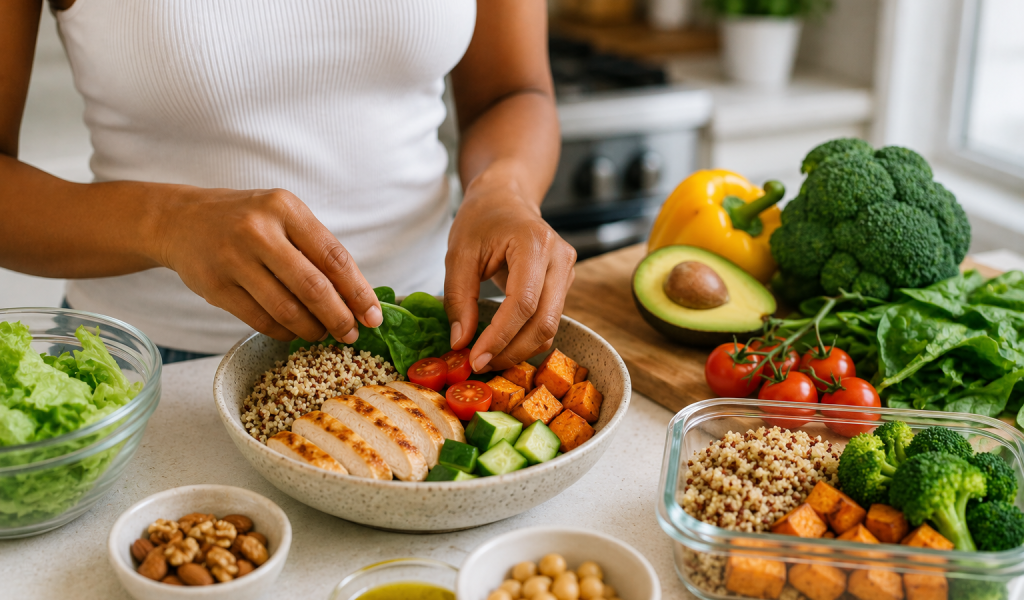
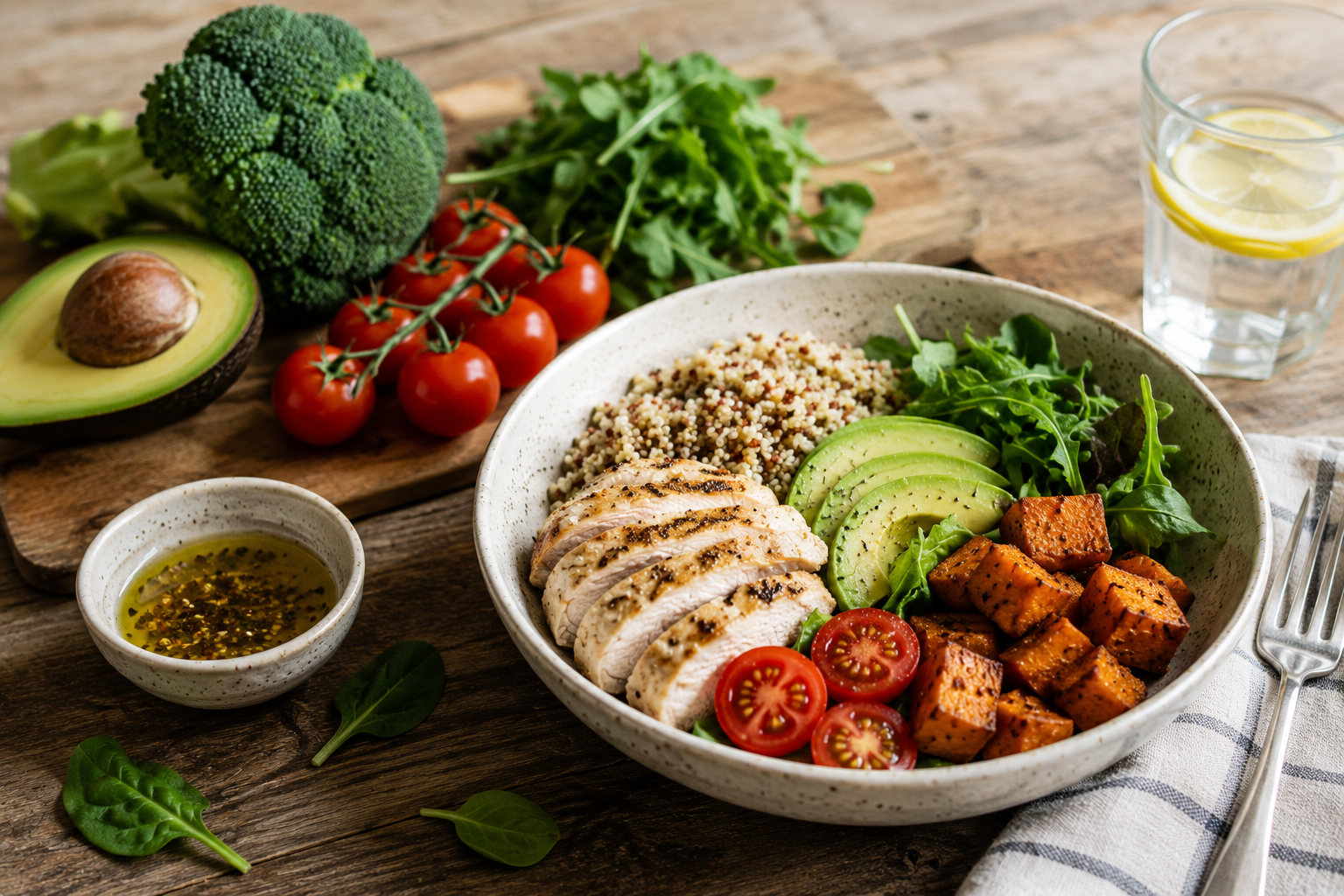
A simple way to create healthier meals is to divide your plate into sections.
Aim for:
- Half your plate: Colorful vegetables and fruits
- One-quarter: Lean protein
- One-quarter: Whole grains or starchy vegetables
Healthy fats can be added in moderate amounts through foods such as:
- Avocados
- Olive oil
- Nuts
- Seeds
This balanced approach helps provide protein, fiber, vitamins, minerals, and satisfying healthy fats.
Choose Lean Protein
Protein plays an important role in building and repairing tissues while helping you stay full between meals.
Healthy protein options include:
- Salmon
- Tuna
- Chicken breast
- Turkey
- Eggs
- Greek yogurt
- Cottage cheese
- Tofu
- Lentils
- Black beans
- Chickpeas
Including protein with meals and snacks may help reduce hunger and support muscle health.
Fill Up on Colorful Vegetables
Different colored vegetables provide different nutrients.
Try including vegetables like:
- Spinach
- Broccoli
- Bell peppers
- Carrots
- Tomatoes
- Brussels sprouts
- Green beans
- Cauliflower
- Zucchini
- Kale
Eating a variety of colors throughout the week helps increase the diversity of nutrients in your diet.
Choose Smart Carbohydrates
Carbohydrates provide your body with energy, but not all carbohydrate sources are equally nutritious.
Instead of refined grains, choose:
- Brown rice
- Quinoa
- Oats
- Whole wheat bread
- Whole wheat pasta
- Barley
- Sweet potatoes
Whole grains contain more fiber, which supports digestion and helps you feel satisfied longer.
Include Healthy Fats
Healthy fats are important for hormone production, brain health, and absorbing certain vitamins.
Good choices include:
- Olive oil
- Avocados
- Almonds
- Walnuts
- Chia seeds
- Flaxseeds
- Natural peanut butter
A little goes a long way since healthy fats are calorie-dense.
Read Food Labels
Reading nutrition labels can help you make informed decisions.
Look for foods that are:
- Lower in added sugars
- Lower in sodium
- Higher in fiber
- Rich in protein
- Made with recognizable ingredients
Pay attention to serving sizes, as they may be smaller than expected.
Plan Your Meals
Meal planning helps reduce stress and makes healthy eating more convenient.
Start by choosing a few meals for the week.
Make a grocery list based on those meals to avoid unnecessary purchases and reduce food waste.
Simple meal ideas include:
- Grilled salmon with roasted vegetables
- Chicken stir-fry with brown rice
- Turkey chili
- Greek yogurt with berries and granola
- Vegetable omelet with whole-grain toast
- Quinoa salad with grilled chicken
Prepare Healthy Meals at Home
Cooking at home gives you more control over ingredients and portion sizes.
Healthy cooking methods include:
- Baking
- Grilling
- Roasting
- Steaming
- Air frying
- Sautéing with small amounts of olive oil
These methods often require less added fat than deep frying.
Keep Healthy Ingredients on Hand
Stock your kitchen with nutritious staples such as:
- Frozen vegetables
- Frozen fruit
- Brown rice
- Quinoa
- Oats
- Canned beans
- Tuna
- Eggs
- Olive oil
- Herbs and spices
- Nuts
- Seeds
Having healthy ingredients readily available makes preparing meals much easier.
Make Healthy Swaps
Small substitutions can improve the nutritional value of your meals.
Try swapping:
Instead of white rice → Brown rice
Instead of sour cream → Plain Greek yogurt
Instead of sugary cereal → Oatmeal
Instead of chips → Roasted chickpeas
Instead of soda → Sparkling water with fruit
Instead of creamy dressings → Olive oil and vinegar
These simple changes can add up over time.
Watch Portion Sizes
Even nutritious foods can contribute to excess calorie intake if portions become too large.
Helpful tips include:
- Use smaller plates.
- Eat slowly.
- Stop eating when comfortably satisfied.
- Avoid eating directly from large packages.
- Portion snacks into small containers.
Listening to your hunger and fullness cues may help prevent overeating.
Stay Hydrated
Water supports nearly every function in the body.
Aim to drink water regularly throughout the day.
You can also increase hydration by eating foods with high water content such as:
- Cucumbers
- Watermelon
- Strawberries
- Celery
- Oranges
- Lettuce
Sometimes thirst can be mistaken for hunger.
Healthy Snacks Matter Too
Nutritious snacks can help maintain energy between meals.
Healthy options include:
- Apple slices with peanut butter
- Greek yogurt with berries
- Cottage cheese with pineapple
- Mixed nuts
- Hummus and vegetables
- Hard-boiled eggs
- Roasted chickpeas
- Homemade energy bites
Combining protein and fiber often helps snacks feel more satisfying.
Don’t Aim for Perfection
Healthy eating isn’t about eliminating your favorite foods forever.
Instead, focus on consistency.
Enjoy treats occasionally while making nutritious choices most of the time.
A balanced lifestyle is more sustainable than following strict or overly restrictive diets.
Frequently Asked Questions
What is the healthiest meal I can eat?
There’s no single healthiest meal. A balanced meal that includes lean protein, vegetables, whole grains, and healthy fats is a great choice for most people.
Is cooking at home healthier?
Often, yes. Preparing meals at home allows you to control ingredients, cooking methods, sodium, added sugars, and portion sizes.
How can I eat healthy on a budget?
Choose affordable staples like beans, oats, eggs, frozen vegetables, canned tuna, brown rice, and seasonal produce. Buying in bulk and planning meals can also help save money.
Do I have to give up desserts?
No. Enjoying desserts in moderation can fit into a healthy eating pattern. Choosing healthier versions made with whole-food ingredients can also be a satisfying option.
What’s the easiest healthy meal for beginners?
A simple grilled chicken breast with roasted vegetables and brown rice is easy to prepare, balanced, and nutritious. Baked salmon with broccoli and quinoa is another excellent beginner-friendly meal.
Final Thoughts
Choosing healthier meals doesn’t require perfection or complicated recipes. Small, consistent changes—like filling your plate with colorful vegetables, choosing lean proteins, cooking more meals at home, and planning ahead—can make a meaningful difference over time.
Remember that healthy eating is a journey, not a destination. Every nutritious meal is an opportunity to nourish your body and support your long-term health. By making thoughtful choices and preparing simple, balanced meals, you can build habits that help you feel energized, confident, and well for years to come.