



Federal surveillance highlights the burden of diabetes among women as new diagnoses rise nationally.
During National Diabetes Month, the CDC’s November 2026 statistics update offers a reminder that diabetes can remain unrecognized. National examination survey estimates put age-adjusted diabetes prevalence among adult women at 12.4% in 2021–2023, including cases not previously diagnosed.
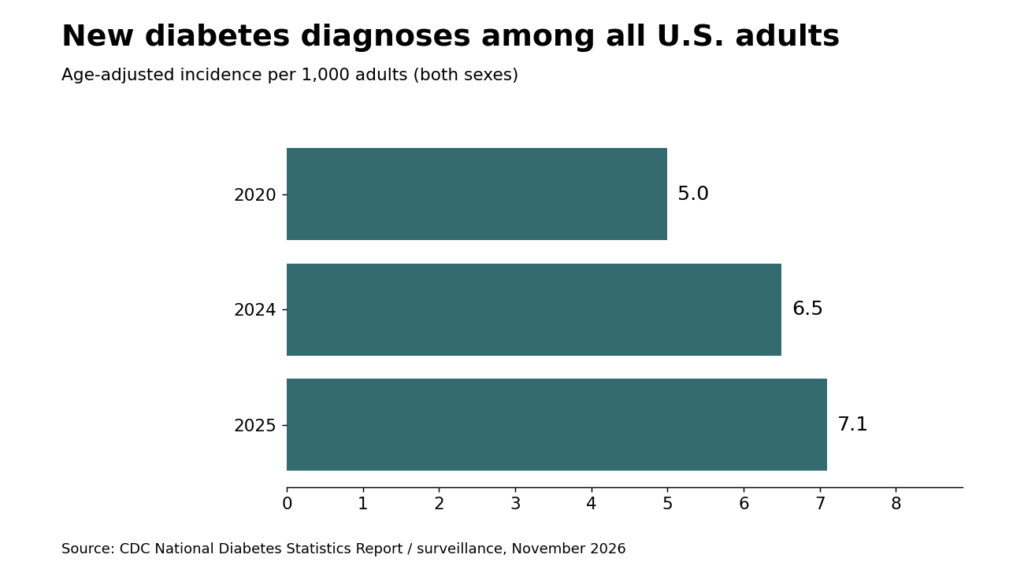
A separate CDC surveillance update released November 17 reports increasing incidence among adults overall. The two datasets measure different things and should not be confused.
- Estimated total diabetes prevalence among adult women: 12.4%.
- Diagnosed diabetes prevalence among women: 9.1%.
- Undiagnosed diabetes prevalence among women: 3.3%.
- New diagnoses among adults overall reached 7.1 per 1,000 in 2025, compared with 5.0 in 2020.
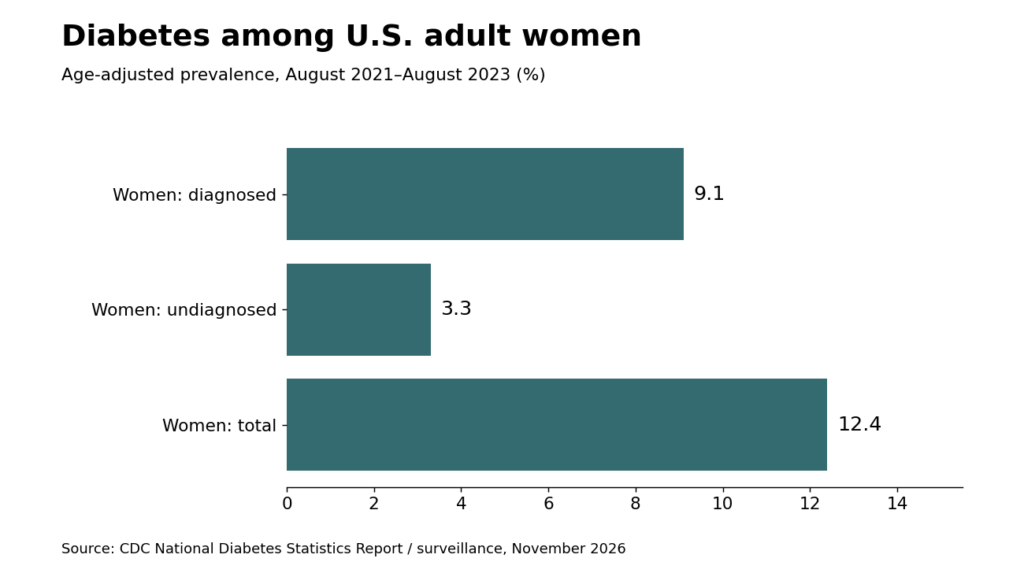
Source: CDC National Diabetes Statistics Report, updated November 2, 2026; NHANES August 2021–August 2023.
Why undiagnosed diabetes matters
These estimates illustrate why conversations about screening matter even when someone feels well. Individual risk and appropriate tests should be discussed with a qualified clinician. Population estimates cannot diagnose an individual.
New diagnoses are rising nationally
The CDC reports an increase in age-adjusted incidence from 2020 through 2025. These figures cover adults of both sexes, not women alone. Changes in screening and detection may contribute; the CDC says further research is needed to explain the increase.
Practical questions for your next appointment
Ask whether diabetes screening is appropriate given your age, family history and medical history, including any previous gestational diabetes. Discuss sustainable eating and movement habits and any barriers to accessing care. Do not change prescribed medication without medical guidance.
About the Data
Prevalence estimates come from the nationally representative National Health and Nutrition Examination Survey, which combines interviews and examinations of the civilian noninstitutionalized population. Estimates cover adults aged 18 and older and are age-adjusted. The reported 95% confidence interval for total prevalence among women is 10.3%–14.7%. Diagnosed and undiagnosed categories reflect survey definitions, not individualized clinical diagnoses. The cited summary table does not specify the analytic sample count. The separate incidence series describes new diagnoses among adults overall and does not establish a women-specific trend or its causes.
Sources
- CDC National Diabetes Statistics Report (November 2, 2026 update)
- CDC Trends in Newly Diagnosed Diabetes (November 17, 2026)
About Women’s Health & Diet: An independent women’s wellness publication covering nutrition, fitness and public health research.