Best Herbal Teas for Weight Loss: What Actually Works and What’s Just Hype?
Imagine this familiar scene:
You finish dinner, walk into the kitchen, and suddenly want something sweet.
Instead of reaching for cookies, you make a warm cup of cinnamon tea.
Later that week, you replace your 200-calorie coffee-shop drink with unsweetened green tea.
Those changes may actually help your weight-loss efforts.
But did the tea burn belly fat?
Probably not.
The internet is overflowing with claims about the “best herbal teas for weight loss,” including teas supposedly capable of melting fat, shrinking your waist, detoxifying your body, or making pounds disappear while you sleep.
The scientific reality is much less dramatic.
No herbal tea has been proven to produce major, lasting weight loss by itself.
Some teas contain compounds that have been studied for metabolism, appetite, blood sugar, or body composition. Others may simply help because they are low-calorie beverages that can replace soda, sweet tea, alcohol, dessert drinks, or mindless evening snacking.
That distinction matters.
So instead of asking which tea magically burns fat, let’s ask a better question:
Which teas can realistically fit into a healthy weight-loss routine?
First, Tea Is a Tool—not a Weight-Loss Treatment
Weight loss generally occurs when your body consistently uses more energy than you consume over time.
Tea cannot override an eating pattern that regularly provides more calories than your body needs.
It also cannot compensate for:
Poor sleep.
Very little physical activity.
Constant snacking.
Large portions.
Frequent sugary beverages.
Or a medical condition affecting weight.
However, tea can sometimes make healthy habits easier.
A warm unsweetened beverage may help you replace a high-calorie drink.
It can provide flavor without much sugar.
It may create an evening ritual that replaces dessert.
And certain teas contain plant compounds being studied for metabolic effects.
If you are trying to put all of those pieces together, our guide on How to Create a Personalized Meal Plan for Weight Loss explains how calorie needs, protein, fiber, portions, work schedules, and food preferences can be combined into a sustainable weight-loss plan.
Now let’s talk tea.
1. Green Tea: The Most Studied “Weight-Loss Tea”
Let’s clear up one technical detail first.
Green tea is not actually an herbal tea.
True green tea comes from the Camellia sinensis plant—the same plant used to produce black, white, and oolong tea. Herbal teas are usually infusions made from other plants, flowers, roots, or spices.
But because almost every search for the best herbal teas for weight loss includes green tea, it deserves a place in this discussion.
Green tea contains compounds called catechins, including EGCG, as well as caffeine.
Researchers have studied whether these compounds increase calorie expenditure and fat oxidation.
The answer?
Maybe—but not by much.
NIH’s Office of Dietary Supplements concludes that if green tea helps with weight loss, the effect appears to be small and unlikely to be clinically significant on its own. NCCIH similarly says green tea catechins and caffeine may have a modest effect on body weight.
A 2024 network meta-analysis also found a small weight-loss effect from green tea, but the evidence was rated low to very low certainty.
So drinking three cups of green tea while changing nothing else is unlikely to transform your body.
But replacing a 250-calorie sweetened beverage with unsweetened green tea every afternoon?
That is a meaningful behavioral change.
Important Green Tea Warning
Drinking ordinary green tea is very different from swallowing concentrated green tea extract.
Green tea extracts marketed as fat burners have been associated with side effects and, rarely, liver injury.
For most women simply looking for a beverage, brewed tea makes far more sense than high-dose extract pills.
2. Ginger Tea: Great Flavor, Interesting Research—but Not a Fat Burner
Fresh ginger steeped in hot water makes one of the simplest herbal teas you can prepare.
Ginger has been researched extensively for metabolic health and body composition.
A 2024 systematic review of 27 randomized trials found that ginger interventions may influence certain body-composition measurements. However, research varies widely in the forms and amounts of ginger used, and supplementation studies cannot automatically be translated into claims about an ordinary cup of ginger tea.
A newer analysis involving adults with type 2 diabetes found small improvements in BMI and body-fat percentage but no significant reduction in actual body weight or waist circumference.
So ginger tea earns a place on this list for a different reason.
It is:
Naturally flavorful.
Usually caffeine-free.
Easy to drink without sugar.
And a pleasant replacement for sweetened beverages.
Try fresh ginger slices with hot water and a squeeze of lemon.
Just don’t turn it into a dessert by adding several tablespoons of honey.
3. Hibiscus Tea: Beautiful, Tart—and Overhyped for Weight Loss
Hibiscus tea has a gorgeous deep red color and naturally tart flavor.
It is frequently marketed as a metabolism or weight-loss tea.
But the newest evidence is not impressive.
A systematic review and meta-analysis examining six randomized trials found no clinically meaningful benefit of hibiscus for reducing body weight, BMI, or waist circumference.
Does that mean hibiscus tea is useless?
Not at all.
Unsweetened hibiscus can still be a refreshing alternative to:
Soda.
Fruit punch.
Sweet tea.
Sugary lemonade.
Try brewing it hot or chilling it over ice with lemon, orange, or berries.
The weight-management advantage may come primarily from what hibiscus replaces, not from hibiscus magically burning fat.
That is an important theme you will notice throughout this article.
4. Peppermint Tea: Helpful for the Routine, Not Proven for Fat Loss
Peppermint tea frequently appears on lists claiming it suppresses appetite and causes weight loss.
There is not convincing evidence that ordinary peppermint tea causes meaningful weight loss.
Still, it can have a useful role.
Peppermint is:
Caffeine-free.
Naturally flavorful.
Refreshing.
Easy to drink without sweeteners.
For women who routinely want dessert after dinner, making peppermint tea can become a behavioral signal:
“Dinner is finished.”
That does not mean peppermint chemically shuts down your appetite.
It means a new ritual may help replace an old one.
And sometimes weight management is less about discovering another “fat-burning ingredient” and more about creating routines you can repeat.
5. Cinnamon Tea: A Sweet-Tasting Option Without the Sugar
Cinnamon is another spice widely marketed for weight loss and blood-sugar control.
Some research using cinnamon supplements has reported small reductions in body-weight measurements. One meta-analysis of randomized trials reported modest decreases in body weight, BMI, and waist circumference.
But again, there is a critical difference:
Cinnamon supplementation research is not proof that cinnamon tea melts fat.
A cup of cinnamon tea may contain far less cinnamon than experimental supplement doses.
Its biggest practical benefit may be flavor.
Cinnamon naturally gives tea a slightly sweet impression without requiring sugar.
Try:
Cinnamon stick + hot water.
Cinnamon + ginger.
Cinnamon + decaffeinated tea.
Or cinnamon + apple slices.
If that replaces a sugary latte every morning, the calorie difference can become substantial over time.
6. Chamomile Tea: Not a Weight-Loss Tea—but Potentially Useful at Night
Chamomile does not burn fat.
Let’s make that clear.
It is traditionally used as a calming evening beverage, although research on chamomile specifically treating insomnia remains inconsistent. NCCIH says there is not enough reliable evidence to conclude that chamomile treats insomnia.
So why include it in an article about weight management?
Because your evening habits matter.
Imagine your normal routine is:
9:30 p.m.
Television.
Ice cream.
Cookies.
Sweet wine.
Or mindless snacking.
Replacing some of those nights with an unsweetened cup of chamomile tea creates a completely different routine.
The tea itself is not causing weight loss.
The behavioral swap may help reduce unnecessary calories.
That distinction is much more believable than calling chamomile a “nighttime fat burner.”
What About Rooibos Tea?
Rooibos is a naturally caffeine-free herbal tea originating from South Africa.
You will sometimes see it promoted online as a belly-fat tea.
There is currently not strong clinical evidence showing that drinking rooibos produces meaningful weight loss in humans.
Still, unsweetened rooibos can work beautifully as a replacement beverage because it has a naturally smooth flavor and contains virtually no calories when brewed without added sugar.
Try it plain, with cinnamon, or with a splash of milk.
Again:
The beverage swap may matter more than the herb itself.
The Biggest Tea Trick for Weight Loss Has Nothing to Do With Metabolism
Suppose every afternoon you drink:
A 250-calorie sweet coffee.
Seven days a week.
That equals approximately 1,750 calories per week.
Now imagine replacing several of those drinks with:
Green tea.
Peppermint tea.
Ginger tea.
Hibiscus tea.
Rooibos.
All unsweetened.
You have changed your calorie intake substantially without eating less food.
That is one of the smartest ways tea can fit into weight management.
Tea works best when it replaces calories, not when you simply add it on top of everything you are already consuming.
The same principle applies to snacks. If tea helps you reduce unnecessary grazing, pair intentional snacks with satisfying foods such as fruit and nuts rather than relying on highly processed snacks. Our Nuts: Health Benefits for Women and the Best Nuts to Eat article explains how nuts can fit into weight management without treating them as unlimited “healthy” food.
Be Careful With Sugar, Honey, and Cream
Your herbal tea can quietly become dessert.
Plain tea may contain virtually no calories.
Then you add:
Two tablespoons honey.
Sugar.
Flavored syrup.
Sweetened creamer.
Whipped cream.
Suddenly your “weight-loss tea” contains hundreds of calories.
Honey may sound more natural than white sugar, but it still provides calories and added sugar.
You do not necessarily have to drink every tea completely plain.
Instead, experiment with flavor.
Try:
Lemon.
Fresh mint.
Ginger.
Cinnamon.
Orange peel.
A small amount of milk.
Frozen berries in iced tea.
You may gradually become accustomed to less sweetness.
Please Stay Away From “Detox” and “Flat-Tummy” Teas
This is where tea culture becomes potentially dangerous.
Commercial products with names such as:
“Skinny Tea.”
“Flat Belly Tea.”
“28-Day Detox.”
“Colon Cleanse Tea.”
“Rapid Slimming Tea.”
may contain laxatives, strong stimulants, diuretics, or complicated herbal blends.
A 2026 review of diet and detox teas found very limited evidence for meaningful weight-loss benefits and documented reports of serious adverse effects including electrolyte disturbances, abnormal heart rhythms, liver injury, and other complications. Researchers also reported concerns about undeclared pharmaceutical ingredients and misleading labeling in some products.
If a laxative tea makes the scale drop tomorrow morning, that does not mean you lost body fat.
You likely lost:
Water.
Stool.
Or both.
That weight can return quickly.
Your colon does not need to be punished for you to lose fat.
Tea Should Fit Into the Bigger Weight-Loss Picture
A successful weight-management routine may include:
Protein-rich meals.
Fiber.
Vegetables and fruit.
Reasonable portions.
Strength training.
Walking or other physical activity.
Adequate sleep.
Stress management.
And beverages that do not quietly deliver hundreds of extra calories.
Tea can fit beautifully into that picture.
It just should not become the entire picture.
For women after menopause, weight distribution and metabolic priorities may also change. Our Women’s Diet After Menopause: What to Eat for Heart, Bone, Muscle & Metabolic Health explains why protein, muscle preservation, calcium, fiber, and cardiovascular health deserve additional attention in midlife.
And because weight and cardiovascular health often overlap, women with high cholesterol may also benefit from our Change Your Diet to Lower Your Cholesterol: A Woman’s Guide to Heart-Healthy Eating.
Who Should Be More Careful With Herbal Tea?
Herbs are biologically active substances.
“Natural” does not automatically mean harmless.
Talk with your healthcare professional or pharmacist before regularly using medicinal-strength herbal teas or concentrated extracts if you:
Are pregnant or breastfeeding.
Take prescription medications.
Take blood thinners.
Have liver disease.
Have kidney disease.
Have heart-rhythm problems.
Have uncontrolled high blood pressure.
Are undergoing cancer treatment.
Or use several supplements.
Tea made as an ordinary beverage is often very different from concentrated herbal extracts.
Pregnancy deserves particular caution because some herbs commonly used by nonpregnant adults have not been adequately studied during pregnancy.
So, What Is the Best Tea for Weight Loss?
There isn’t one champion.
If we are talking strictly about evidence for a direct effect on body weight, green tea has been studied far more extensively than most herbal teas, but even its effect appears small.
For practical everyday use:
Green tea may provide a small metabolic effect and works well as a replacement for sweetened beverages.
Ginger tea offers bold flavor without sugar.
Hibiscus makes an excellent unsweetened iced drink, but has not demonstrated meaningful weight-loss effects.
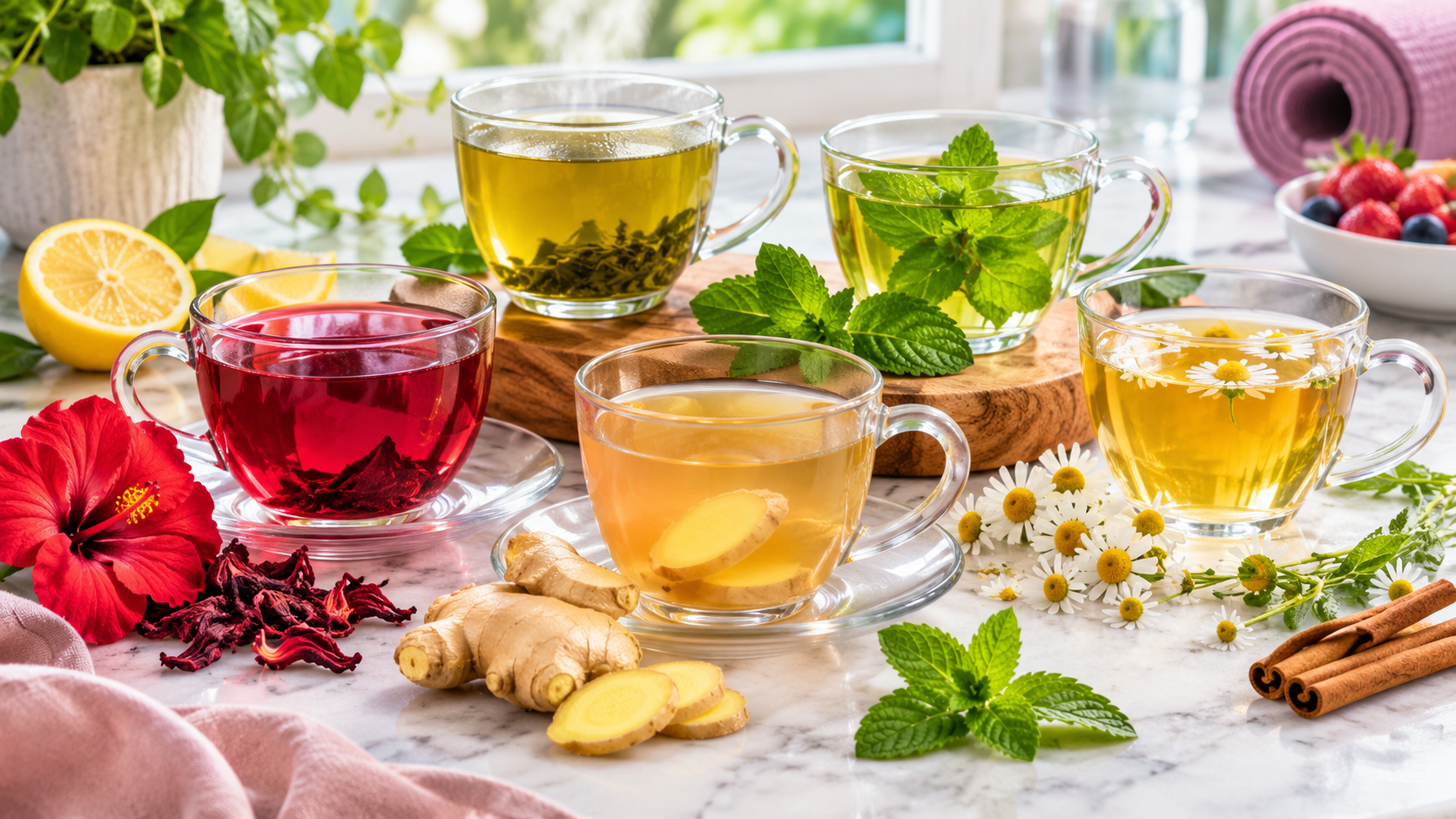
Peppermint can create a refreshing after-meal routine.
Cinnamon can satisfy your desire for a warm, sweet-tasting beverage without adding sugar.
Chamomile or rooibos can provide caffeine-free evening alternatives to calorie-heavy nighttime drinks.
The “best” one is often simply the tea you enjoy enough to drink without turning it into liquid dessert.
The Bottom Line
Herbal teas can absolutely have a place in a weight-loss plan.
But they should not be sold as magic.
Tea cannot:
Melt belly fat overnight.
Detox fat out of your body.
Replace a calorie deficit.
Cancel overeating.
Or permanently suppress your appetite.
What tea can do is much more realistic—and still useful.
It can replace sugary beverages.
It can provide a nearly calorie-free source of flavor.
It can become an alternative to evening snacking.
It can create a comforting routine.
And in the case of green tea, research suggests there may be a small additional effect on body weight—but nothing remotely comparable to the dramatic claims found in many advertisements.
So enjoy your tea.
Brew it hot.
Pour it over ice.
Add lemon.
Add ginger.
Add cinnamon.
Make it part of your routine.
Just don’t expect the teabag to do the job that your entire lifestyle needs to do.
The best weight-loss tea is not the one promising to melt fat. It is the one that helps you build healthier habits you can actually keep.
This article is for general educational purposes and is not intended to diagnose or treat obesity or other medical conditions. Herbal products may interact with medications and may not be appropriate during pregnancy, breastfeeding, or certain medical conditions. Talk with an appropriate healthcare professional before using concentrated herbal products or weight-loss supplements.