



Menopause may mark the end of monthly periods, but it is certainly not the end of paying attention to nutrition.
In fact, the years after menopause are an important time to rethink what is on your plate.
Your body is changing.
Estrogen levels are lower.
Bone loss can accelerate.
Muscle becomes increasingly important to preserve.
LDL cholesterol may rise.
Body fat may become more concentrated around the abdomen.
And blood-sugar control may become more challenging for some women.
The Menopause Society notes that cardiovascular disease becomes increasingly important after menopause, while recent American Heart Association guidance highlights changes involving cholesterol, blood pressure, blood sugar, and body composition around the menopause transition.
That does not mean menopause has doomed you to weight gain, weak bones, high cholesterol, or diabetes.
It means your nutritional priorities deserve an update.
Here is how to build a diet after menopause that supports the next stage of your life.
Stop Looking for a Special “Menopause Diet”
There is no one magical menopause diet.
You do not need to:
Cut out every carbohydrate.
Go keto.
Fast all day.
Avoid fruit.
Eliminate dairy.
Buy hormone-balancing powders.
Or survive on salads.
The strongest dietary strategy after menopause looks surprisingly familiar:
Eat plenty of vegetables and fruits.
Choose whole grains more often.
Include adequate protein.
Eat beans and legumes.
Choose fish, nuts, seeds, and other sources of unsaturated fat.
Limit excessive saturated fat, sodium, added sugar, and highly processed foods.
The American Heart Association’s updated 2026 dietary guidance emphasizes these same principles for long-term cardiovascular health.
The difference after menopause is that some nutrients—and some health goals—deserve even more attention.
Protein Becomes More Important, Not Less
Women sometimes focus so heavily on calories after menopause that they forget about protein.
That can be a mistake.
Maintaining muscle becomes increasingly important with age.
Muscle supports:
- Strength
- Balance
- Mobility
- Metabolic health
- Independence
- Healthy aging
Protein-rich foods include:
- Eggs
- Greek yogurt
- Cottage cheese
- Chicken
- Turkey
- Fish
- Lean beef
- Beans
- Lentils
- Tofu
- Tempeh
- Edamame
Instead of eating most of your protein at dinner, try distributing it throughout the day.
Breakfast
Eggs + Greek yogurt + berries
Lunch
Chicken, salmon, tofu, or lentils over a vegetable-rich bowl
Snack
Greek yogurt, cottage cheese, nuts, or hummus
Dinner
Fish, poultry, beans, tofu, or lean meat with vegetables
You do not need to turn every meal into a bodybuilding diet.
But a breakfast consisting only of coffee and toast may not be doing much to support muscle maintenance.
Calcium Deserves Serious Attention After Menopause
Estrogen helps protect bone.
After menopause, declining estrogen levels contribute to increased bone loss.
NIH reports that postmenopausal women absorb and retain less calcium, and bone mineral density declines after menopause. Women older than 50 are generally advised to get about 1,200 mg of calcium per day.
Good calcium sources include:
- Milk
- Yogurt
- Cheese
- Fortified soy milk
- Fortified almond milk
- Calcium-set tofu
- Sardines with bones
- Certain leafy green vegetables
- Calcium-fortified foods
If you do not consume dairy, pay particular attention to fortified alternatives.
Check the label.
Some plant milks provide substantial calcium.
Others provide very little.
Our article on Essential Minerals for Hormonal Balance in Women explains calcium, magnesium, zinc, selenium, and several other minerals in greater detail. Read Essential Minerals for Hormonal Balance in Women
Don’t Forget Vitamin D
Calcium gets most of the attention, but vitamin D is also important for bone health because it helps your body absorb calcium.
Food sources include:
- Fatty fish
- Egg yolks
- Fortified milk
- Fortified plant beverages
- Other fortified foods
Some women may require supplementation, particularly if vitamin D levels are low.
But do not assume everyone needs enormous doses.
Ask your healthcare provider whether testing or supplementation is appropriate for you.
Bone health involves more than supplements.
NIH emphasizes a combination of adequate calcium, vitamin D, protein, and physical activity—particularly weight-bearing exercise.
Build Your Diet Around Your Heart Too
Women often think breast cancer is their greatest health threat.
Heart disease deserves just as much attention.
Cardiovascular risk increases with age, and cholesterol often rises during the early years after menopause.
A heart-supportive diet after menopause should emphasize:
- Vegetables
- Fruits
- Beans
- Whole grains
- Fish
- Nuts
- Seeds
- Olive oil
- Lean proteins
while limiting excessive amounts of:
- Butter
- Fatty processed meats
- Full-fat high-saturated-fat foods
- Fried foods
- Highly processed snacks
- Added sugar
- Excess sodium
Think substitution rather than deprivation.
Instead of:
Butter → try olive oil.
Chips → try nuts or roasted chickpeas.
Fatty sausage → try eggs, fish, beans, or lean poultry more often.
Refined cereal → try oatmeal.
A diet rich in fiber and unsaturated fats can support healthier cholesterol levels.
Nuts Are Particularly Useful After Menopause
Nuts give you several useful nutrients at once:
Protein.
Fiber.
Unsaturated fat.
Magnesium.
Vitamin E.
Plant compounds.
Walnuts provide plant-based omega-3 ALA.
Almonds contain vitamin E.
Pistachios provide protein, fiber, and healthy fats.
And research discussed in your existing nuts article found that plant-rich dietary patterns containing nuts, legumes, vegetables, fruits, and whole grains were associated with less weight gain around menopause.
For a deeper breakdown, see Nuts: Health Benefits for Women and the Best Nuts to Eat. Read the guide to nuts for women
Just remember:
Nuts are nutritious and calorie-dense.
A small handful may be appropriate.
Half a jar of cashews while watching television is a different story.
Fiber Can Work Hard for You
Fiber becomes a powerful nutritional ally after menopause.
Fiber-rich foods support digestive health and can help meals feel satisfying.
They can also be useful for cholesterol and blood-sugar management.
Good sources include:
- Oatmeal
- Beans
- Lentils
- Chickpeas
- Berries
- Apples
- Pears
- Vegetables
- Whole grains
- Nuts
- Seeds
Instead of asking:
“How can I eat less?”
sometimes ask:
“How can I make this meal more filling?”
Add beans.
Add vegetables.
Add berries.
Choose whole grains.
Include protein.
A more satisfying meal can make portion control easier without leaving you feeling deprived.
Pay Attention to Abdominal Weight Gain—But Don’t Panic
Some women notice that their body shape changes after menopause.
Even when the scale does not change dramatically, more fat may begin accumulating around the abdomen.
Current American Heart Association guidance notes that abdominal and visceral fat may increase around menopause.
That matters because visceral fat is associated with metabolic and cardiovascular risk.
But the answer is not starvation.
Aggressive dieting can lead to:
Muscle loss.
Hunger.
Nutrient deficiencies.
Repeated weight regain.
Instead, focus on:
Adequate protein.
Fiber-rich foods.
Reasonable portions.
Strength training.
Regular movement.
Adequate sleep.
Consistency.
If your life is already hectic, our Healthy Eating for Busy Women guide offers practical ways to build meals without turning food preparation into a second job. Read Healthy Eating for Busy Women
Don’t Automatically Keep Taking High-Iron Supplements
This is a change many women overlook.
Before menopause, menstruating women lose iron through monthly bleeding.
After periods permanently stop, iron needs usually decrease.
NIH lists the iron RDA as 18 mg daily for women ages 19–50, compared with 8 mg daily for adults age 51 and older.
That does not mean women after menopause cannot become iron deficient.
They can.
But it does mean you should not automatically continue taking a high-dose iron supplement simply because you took one when you were younger.
Excess supplemental iron can also cause problems.
If you think you may be deficient, have your iron status evaluated.
What About Soy After Menopause?
Soy foods can absolutely fit into a healthy postmenopausal diet.
Examples include:
- Tofu
- Tempeh
- Edamame
- Soy milk
- Soybeans
They provide plant protein and other useful nutrients.
But soy should not be marketed as a guaranteed natural hormone replacement.
Research examining soy specifically for hot flashes has produced inconsistent results, and The Menopause Society does not currently consider soy supplements an established treatment for vasomotor symptoms.
That does not mean soy foods are bad.
It means:
Eat tofu because it can be a nutritious protein—not because someone promised it will “reset your estrogen.”
If hot flashes are still bothering you, read our complete guide What Helps Hot Flashes? Treatments and Relief for Menopause. Read the hot-flash treatment guide
Alcohol Is Worth Reconsidering
For years, women heard that a glass of wine was practically a health food.
Current guidance is much more cautious.
Alcohol adds calories without providing much nutritional value and is associated with several health risks.
The American Heart Association’s current dietary guidance says that if you do not drink alcohol, do not start for health reasons; if you do drink, limit intake.
You may also notice that alcohol worsens:
- Hot flashes
- Night sweats
- Sleep
- Appetite control
Pay attention to your own response.
Your Plate Can Be Surprisingly Simple
You do not need a special menopause meal-delivery service.
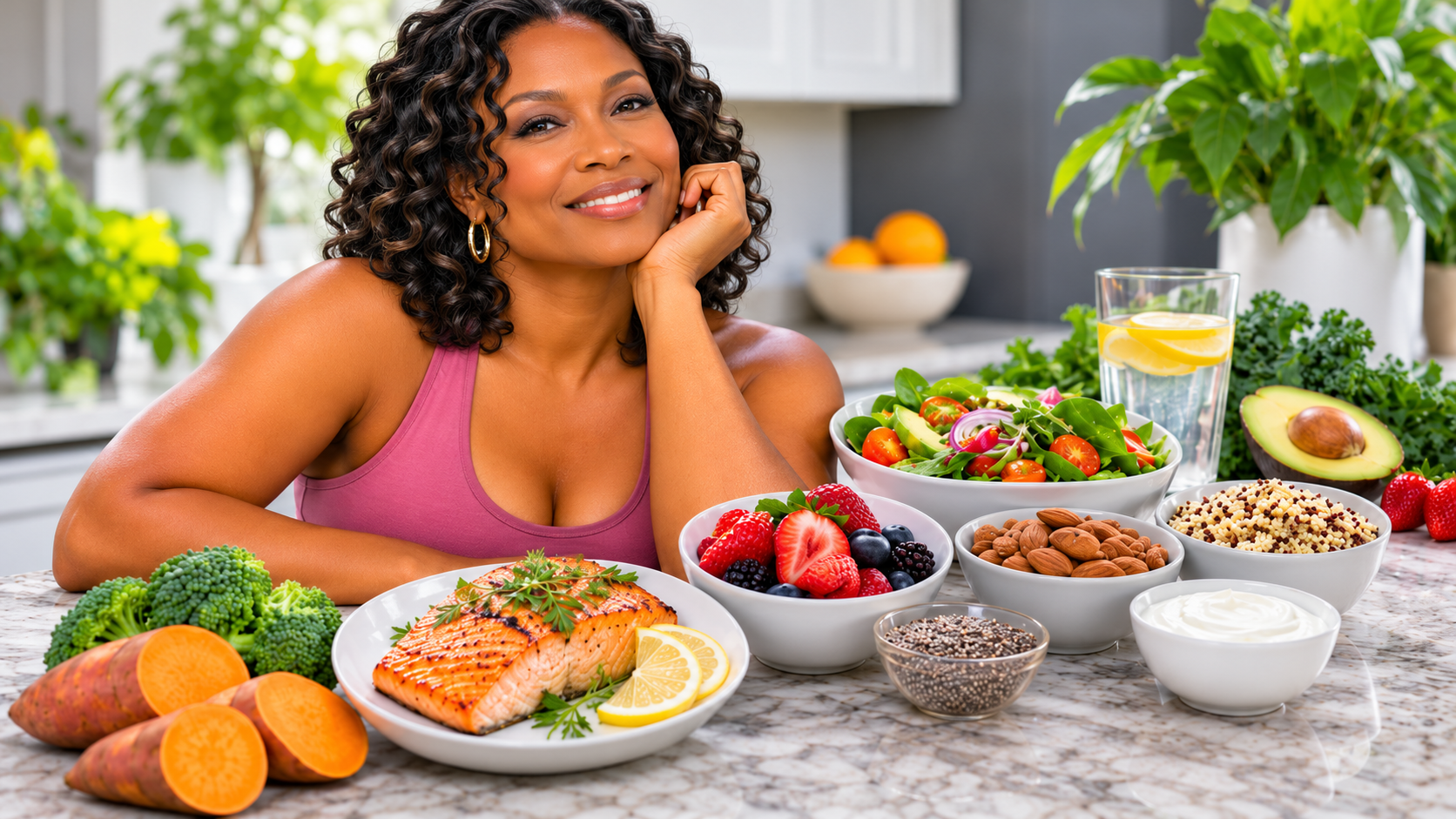
Try this basic structure:
Half your plate
Vegetables.
One quarter
Protein.
Examples:
Salmon.
Chicken.
Tofu.
Beans.
Lean beef.
One quarter
High-fiber carbohydrate.
Examples:
Brown rice.
Quinoa.
Sweet potato.
Beans.
Whole-grain pasta.
Then add a modest amount of:
Olive oil.
Avocado.
Nuts.
Seeds.
And include calcium-rich foods throughout the day.
A Sample Day of Eating After Menopause
Here is one example—not a calorie prescription.
Breakfast
Greek yogurt
Berries
Oatmeal
Walnuts
Snack
Apple
Peanut butter
Lunch
Salmon or chickpea bowl
Mixed greens
Quinoa
Tomatoes
Cucumber
Olive-oil vinaigrette
Snack
Cottage cheese or fortified soy yogurt
Fruit
Dinner
Grilled chicken or tofu
Roasted broccoli
Sweet potato
Side salad
Evening option
Warm milk, fortified soy milk, or a small yogurt if hungry
Notice what the day contains repeatedly:
Protein.
Fiber.
Plants.
Calcium.
Unsaturated fats.
No detox.
No starvation.
No weird menopause powder.
Supplements Should Fill Gaps—not Replace Food
Supplement marketing becomes aggressive around menopause.
You may see products promising:
“Menopause metabolism support.”
“Estrogen detox.”
“Cortisol reset.”
“Bone formula.”
“Hormone balancing minerals.”
Be cautious.
A supplement may be useful when you actually need the nutrient.
But swallowing ten different pills does not automatically make you healthier.
Food supplies combinations of nutrients that work together.
Use supplements strategically and discuss them with your healthcare provider, particularly if you take prescription medication or have osteoporosis, kidney disease, thyroid disease, cardiovascular disease, or another medical condition.
The Bottom Line
Your diet after menopause should not be about fighting your body.
It should be about supporting the body you have now.
Your priorities have shifted.
Protect muscle with adequate protein.
Protect bones with calcium, vitamin D, protein, and strength-building activity.
Support your heart with vegetables, fruits, whole grains, beans, fish, nuts, and unsaturated fats.
Eat enough fiber.
Watch excessive saturated fat, sodium, and added sugars.
Reconsider whether you still need supplemental iron.
Do not fall for every “hormone-balancing” supplement marketed to women over 50.
And do not assume weight gain is inevitable.
Menopause is not an expiration date.
For many women, decades of life remain after their final period.
The food choices you make now are not simply about fitting into your old jeans.
They are about helping you remain:
Strong.
Mobile.
Independent.
Energetic.
Heart healthy.
Bone healthy.
And metabolically healthy
for the decades ahead.
You do not need to eat like you did at 25.
You need to eat for the woman you are becoming.
And that can be one of the most empowering nutrition changes you make.
This article is for general educational purposes and is not intended to diagnose or treat menopause-related conditions, osteoporosis, high cholesterol, diabetes, or other medical conditions. Women with specialized medical or nutritional needs should discuss dietary changes and supplements with an appropriate qualified healthcare professional.