



New final federal birth statistics show an age divide: birth rates fell among younger women but rose among women ages 30–44 in 2025.
U.S. births totaled 3,612,012 in 2025, down less than 1% from 2024, according to a National Center for Health Statistics (NCHS) report published October 21, 2026. The latest numbers show a shift in birth patterns by maternal age, even as the national general fertility rate edged lower.
The findings come from final birth certificate records in the National Vital Statistics System, not a poll or a projection. They describe births, not the reasons individual women choose to have children at different ages.
- The United States recorded 3,612,012 births in 2025, less than 1% below 2024.
- The general fertility rate was 53.2 births per 1,000 females ages 15–44, a 1% decrease from 2024.
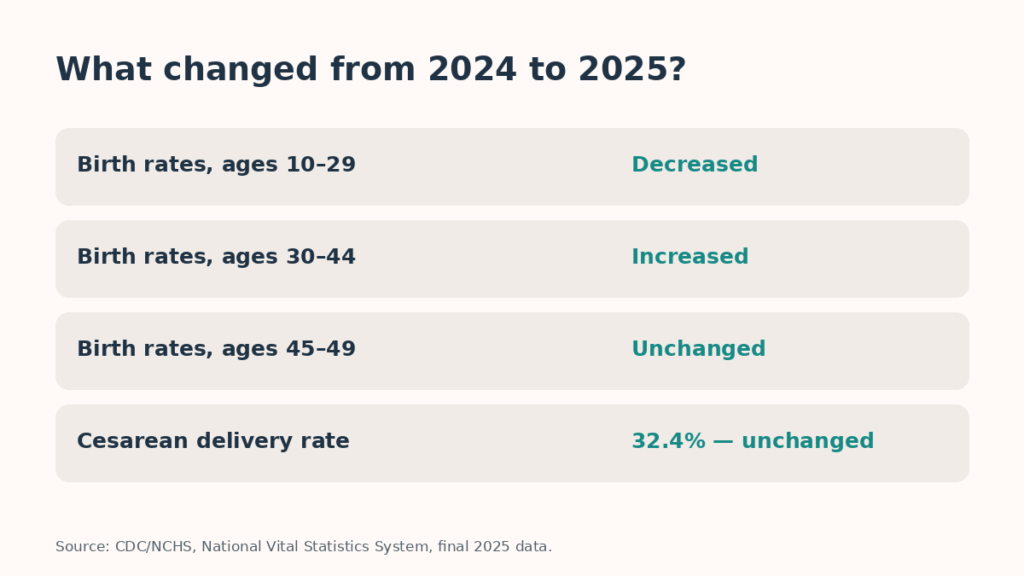
- Birth rates decreased among females ages 10–29 and increased among women ages 30–44; rates for women ages 45–49 were unchanged.
- First-trimester prenatal care rose to 76.3% of mothers in 2025.
- The cesarean delivery rate was 32.4%, unchanged from 2024.
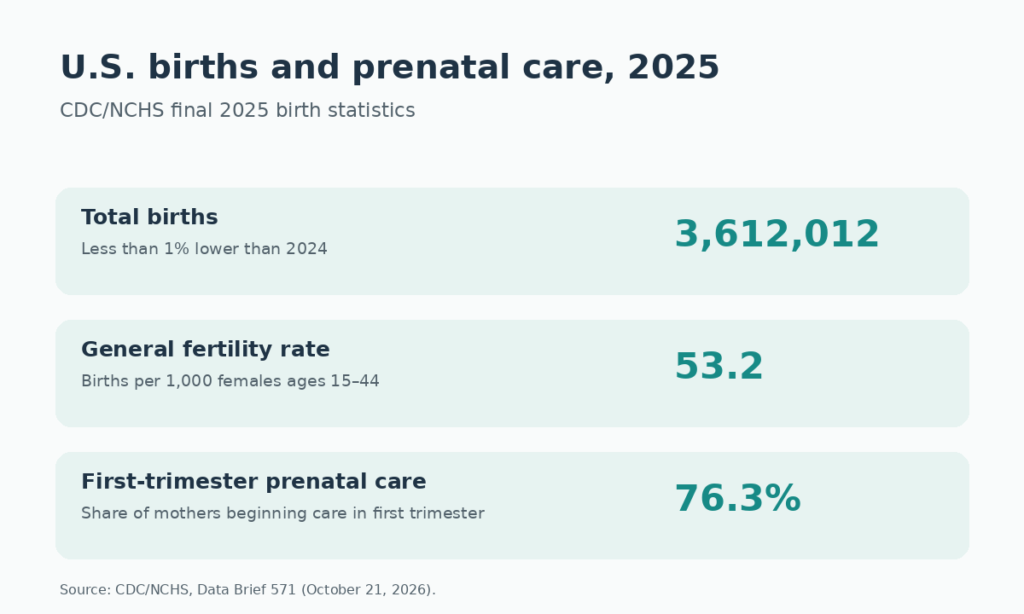
Source: CDC/NCHS, Births in the United States, 2025, Data Brief No. 571 (October 21, 2026).
Birth patterns diverged by maternal age
The overall birth count moved slightly lower, but the age-specific picture was different. CDC researchers reported lower birth rates for females ages 10–29 and higher rates for women ages 30–44 compared with 2024. Birth rates for women ages 45–49 did not change. Those patterns are population-level measures and do not identify the causes of the shifts.
Prenatal care began earlier for more mothers
In 2025, 76.3% of mothers began prenatal care during the first trimester, an increase from the previous year. The report notes increases among mothers younger than 40. Early prenatal care is an important measure of access and timing, but the percentage alone does not show whether care was affordable, continuous, or met every patient’s needs.
Cesarean delivery rate held steady
Nationally, 32.4% of deliveries were by cesarean section, unchanged from 2024. The report found a decline in the cesarean delivery rate among mothers ages 20–29. Differences in medical circumstances, patient preferences, and clinical practices cannot be determined from these headline figures alone.
What the new numbers mean for women
The results offer a timely snapshot of how births are distributed across age groups and how early prenatal care is changing. They do not measure infertility, pregnancy intentions, or whether a pregnancy was planned. Women considering pregnancy or seeking prenatal care should discuss their individual circumstances with a qualified clinician rather than interpreting national averages as a personal prediction.
About the Data
This analysis summarizes the CDC National Center for Health Statistics Data Brief No. 571, based on final 2025 National Vital Statistics System birth registration data, with comparisons to 2024. Birth certificates provide national population counts and rates rather than a sample survey. The general fertility rate uses females ages 15–44 as the denominator. The report is descriptive and cannot establish why age-specific rates or prenatal-care timing changed. Figures in the accompanying visuals are drawn from the report’s published key findings.
Sources
- CDC/NCHS, Births in the United States, 2025 (Data Brief 571; October 21, 2026)
- National Center for Health Statistics
About Women’s Health & Diet: Women’s Health & Diet publishes accessible, evidence-based reporting and practical information on women’s wellness, nutrition, and health.