Nearly Half of U.S. Women Ages 40–60 Report Menopausal Symptoms, New CDC Data Show
New federal survey estimates put the scale of midlife symptoms at about 16.7 million U.S. women, while highlighting differences by age and the limits of prescription-use data.
Nearly half of U.S. women ages 40–60 who were not pregnant, postpartum, or in surgical menopause reported symptoms associated with menopause during the previous year, according to a CDC National Center for Health Statistics report published October 20, 2026. The 49.4% estimate represents approximately 16.7 million women in the population studied.
Drawing on the 2025 National Health Interview Survey (NHIS), the report offers a timely snapshot of how frequently women report symptoms such as hot flashes, night sweats, sleep disturbances, irregular menstrual cycles, and vaginal dryness. These are self-reported experiences, not clinically confirmed diagnoses or proof that menopause caused each symptom.
- 49.4% of eligible women ages 40–60 reported menopausal symptoms during the previous 12 months.
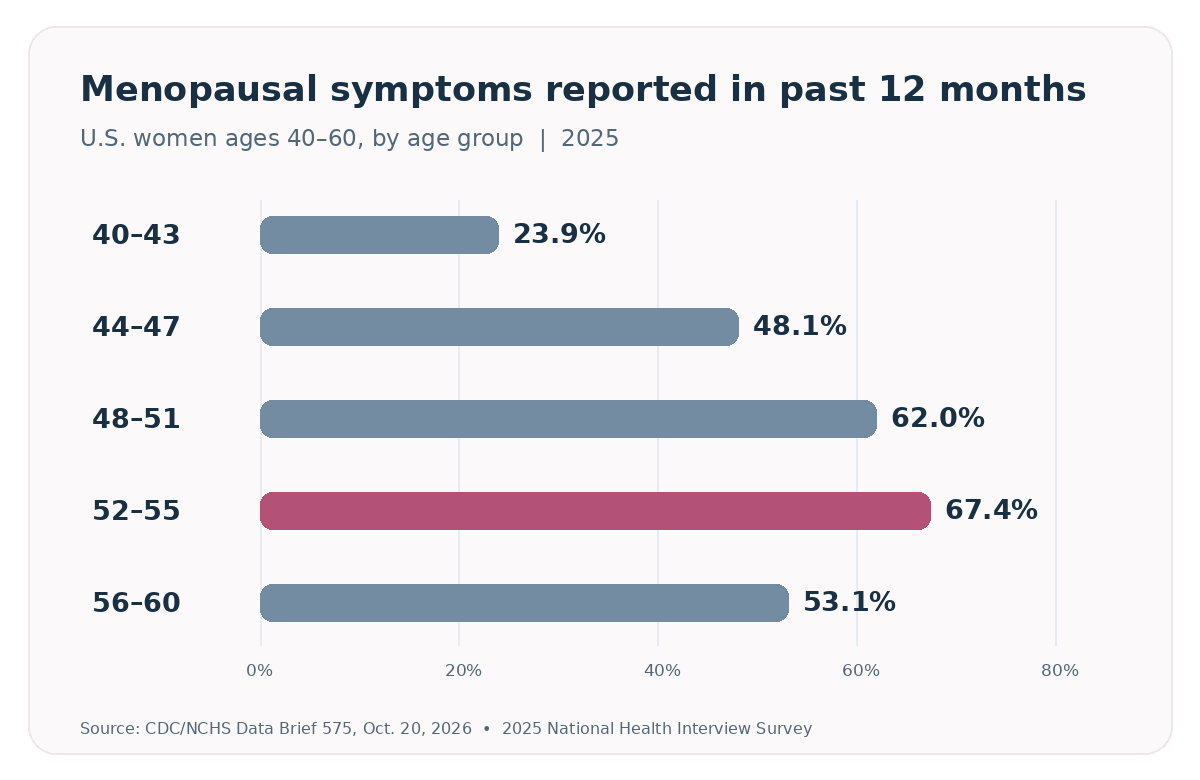
- Reported symptoms were most common at ages 52–55 (67.4%), compared with 23.9% at ages 40–43.
- Women ages 48–51 reported symptoms at a rate of 62.0%; the rate was 53.1% at ages 56–60.
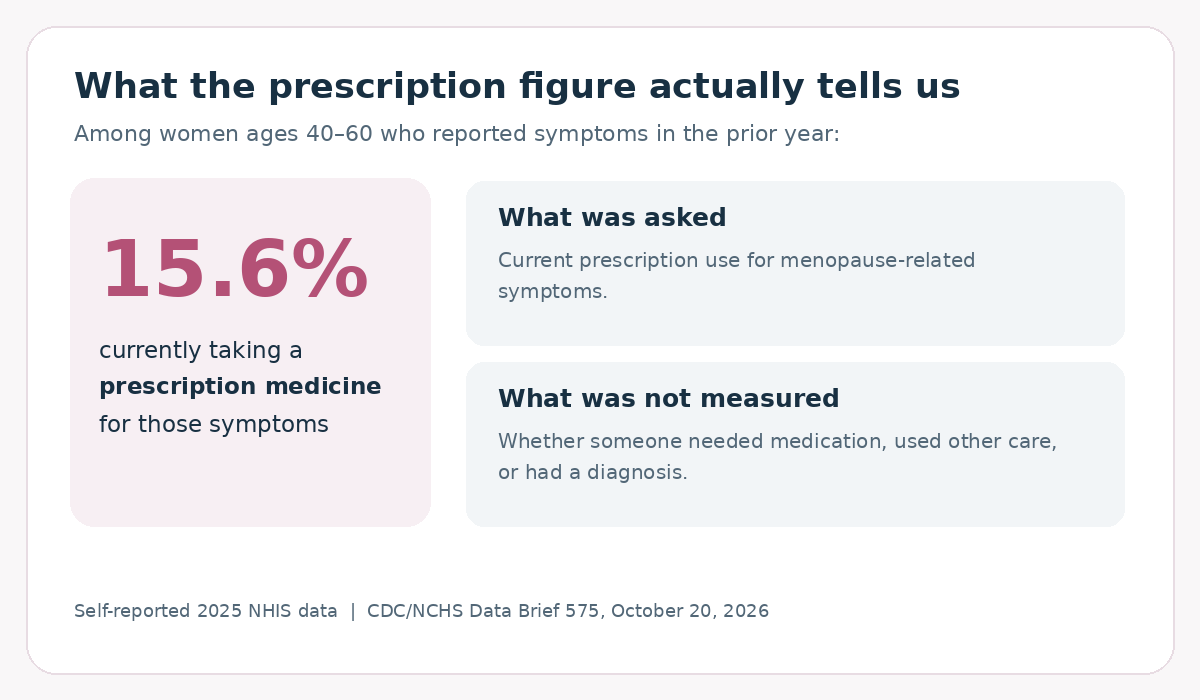
- Among women who reported symptoms, 15.6% said they were currently taking prescription medication for those symptoms.
- Symptom reporting varied by race and ethnicity, education, and urbanization level; the survey does not establish what caused those differences.
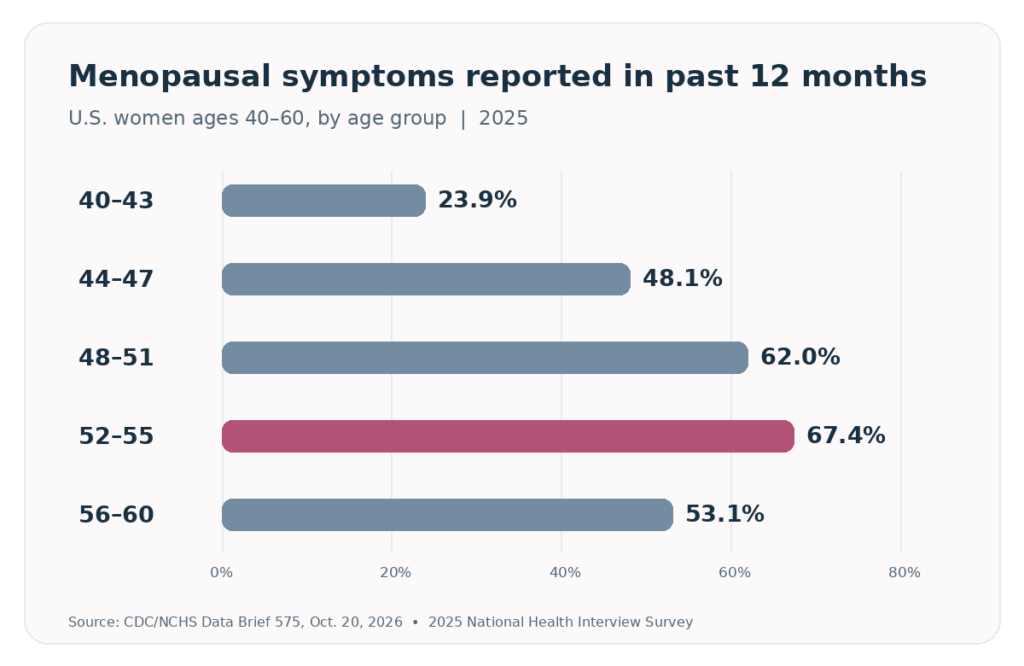
Source: CDC/NCHS, Characteristics of Women Ages 40–60 with Menopausal Symptoms: United States, 2025, Data Brief No. 575, published October 20, 2026; 2025 NHIS. Values shown are self-reported past-year symptoms among eligible women.
Symptoms Were Most Common in the Early-to-Mid 50s
Symptom reporting rose across the younger age groups, from 23.9% at ages 40–43 to 48.1% at ages 44–47 and 62.0% at ages 48–51. The highest estimate was 67.4% among women ages 52–55, followed by 53.1% at ages 56–60. The survey provides population-level estimates; it cannot predict when any individual woman will experience symptoms or how severe they may be.
Prescription Use Was Reported by 15.6% of Women With Symptoms
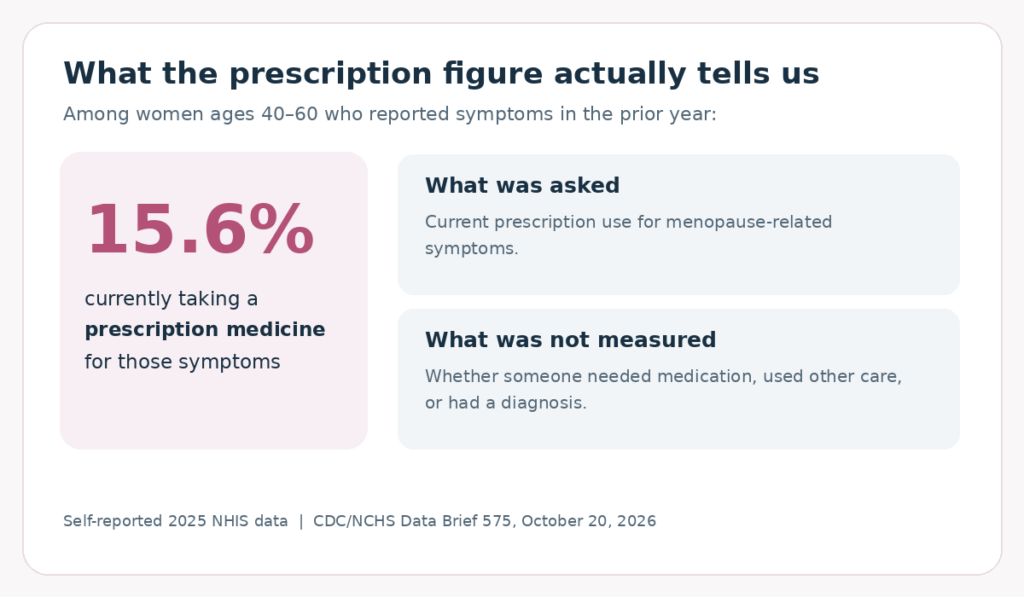
Among eligible women who reported symptoms in the prior year, 15.6% said they were currently taking prescription medication for those symptoms. The corresponding estimate was 21.9% at ages 52–55 and 9.9% at ages 44–47. These percentages refer to women reporting symptoms, not to all women ages 40–60.
That 15.6% figure is not a measure of an untreated population. The survey question did not establish who needed medication, who sought clinical advice, who used nonprescription approaches, or whether a particular treatment was appropriate. Decisions about evaluating and managing symptoms are individualized.
Differences Across Population Groups Need Careful Interpretation
In the report, 54.3% of White non-Hispanic women reported symptoms, compared with 45.3% of Black non-Hispanic women, 44.3% of Hispanic women, and 36.1% of Asian non-Hispanic women. The report identified statistically significant differences between White non-Hispanic women and the other listed groups, but not between every pair of groups. Differences in self-reporting do not establish differences in biology, symptom severity, access to care, or cause.
By residence, estimates ranged from 46.0% in large central metropolitan areas to 52.8% in medium and small metropolitan areas. These descriptive findings may help journalists and public-health organizations identify questions for further research, but should not be treated as causal explanations.
What Women Can Take From the Findings
The figures underscore that midlife symptoms are common and worth discussing openly with a qualified healthcare professional, especially when they disrupt sleep, daily functioning, or quality of life. Because symptoms such as irregular bleeding or sleep changes can have more than one cause, self-diagnosis from a survey statistic is not a substitute for medical assessment. The report does not test treatments or establish which interventions work best.
About the Data
The analysis was published by the CDC’s National Center for Health Statistics on October 20, 2026, using the 2025 National Health Interview Survey, a nationally representative household survey of the civilian, noninstitutionalized U.S. population. It focuses on women ages 40–60 who were not currently pregnant, postpartum, or in surgical menopause. Respondents were asked whether they had experienced specified symptoms associated with menopause during the previous 12 months; those who said yes were asked about current prescription medication use for those symptoms.
All estimates were based on self-report. NCHS used methods accounting for the survey’s complex sample design and evaluated differences using statistical tests. The data are cross-sectional and do not diagnose menopause, establish causation, measure symptom severity, capture all types of treatment, or demonstrate whether medication was medically indicated. The report’s eligible population and survey definitions matter when interpreting or comparing percentages.
Sources
- CDC/NCHS: Characteristics of Women Ages 40–60 with Menopausal Symptoms: United States, 2025 (Data Brief 575, October 20, 2026).
- CDC/NCHS: Full report PDF, including confidence intervals, definitions, and methods.
- CDC: National Health Interview Survey (NHIS).
About Women’s Health & Diet: Women’s Health & Diet publishes evidence-informed women’s nutrition, fitness, and wellness reporting, including accessible explanations of public-health research and statistics.