Severe Obesity Is Nearly Twice as Prevalent Among U.S. Women as Men, CDC Data Show
New federal data show a striking sex difference in severe obesity among U.S. adults, even as overall obesity prevalence was similar for women and men.
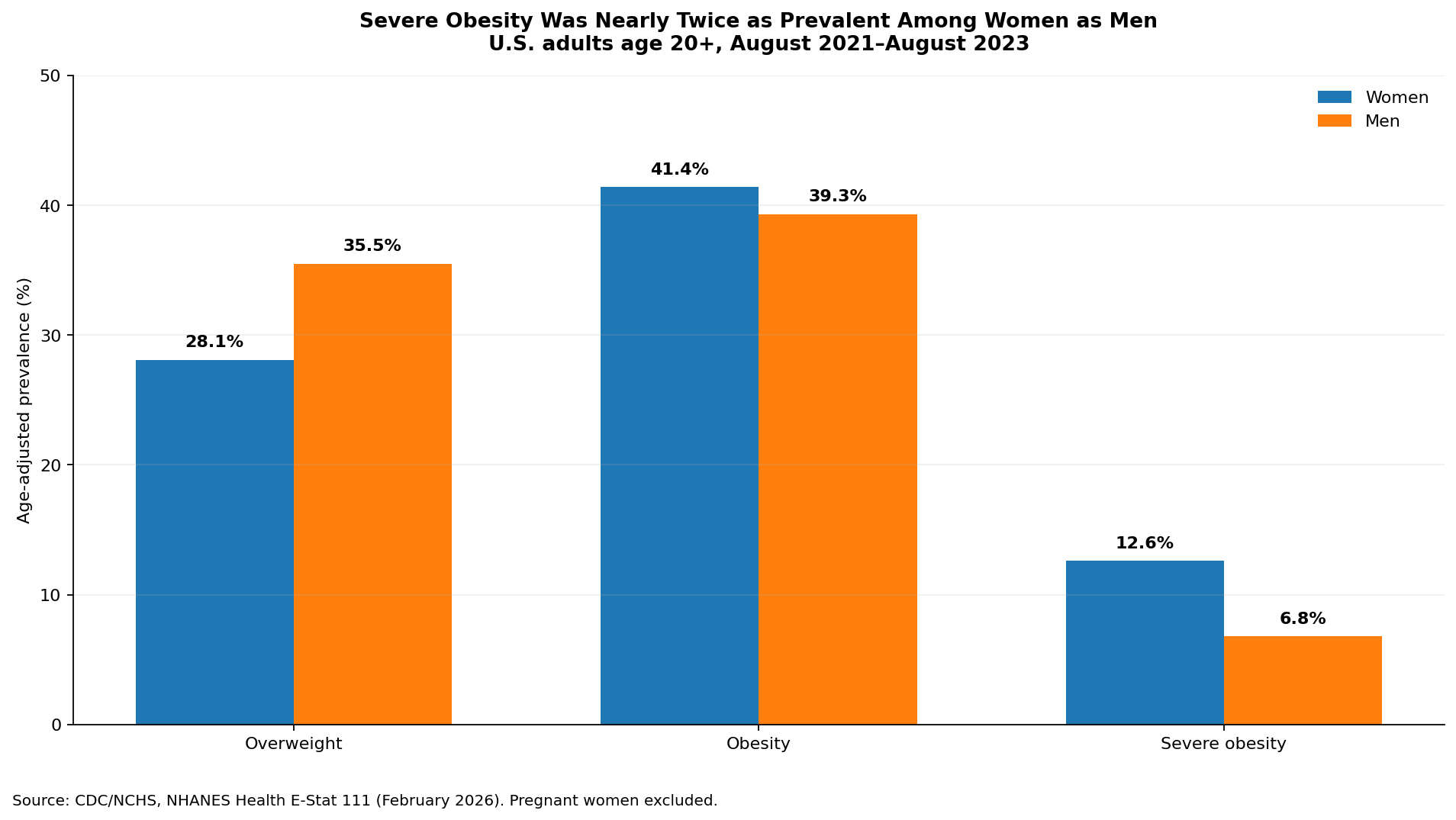
CDC’s National Center for Health Statistics reported that, during August 2021-August 2023, age-adjusted severe obesity prevalence was 12.6% among women and 6.8% among men age 20 and older. The estimates are based on measured height and weight from the National Health and Nutrition Examination Survey.
The findings provide a current national benchmark for journalists and health organizations tracking weight-related population trends. They describe prevalence at the population level and do not establish why the difference exists or determine any individual’s health.
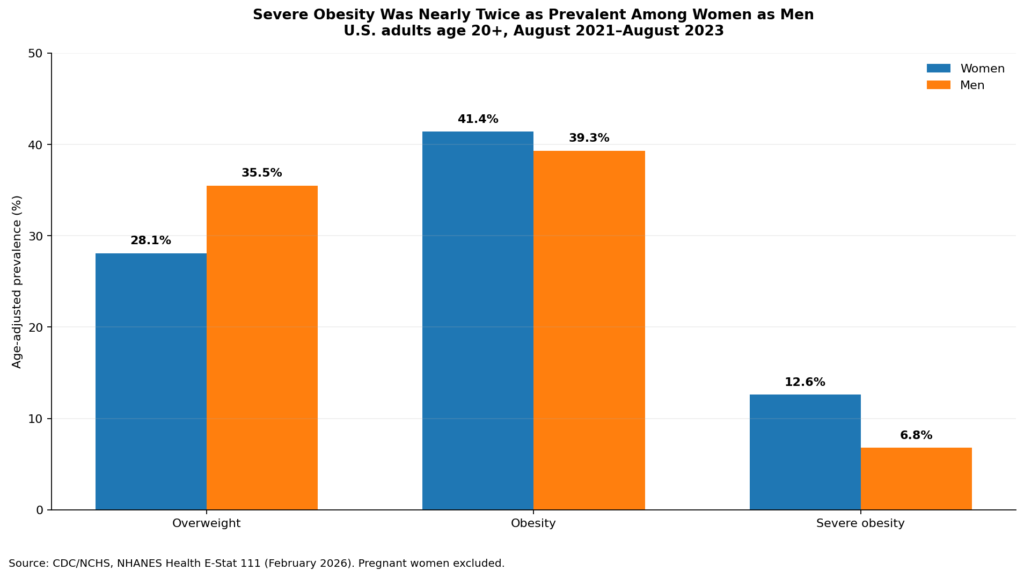
- Severe obesity prevalence was 12.6% among women versus 6.8% among men.
- Overall obesity prevalence was 41.4% among women and 39.3% among men.
- Overweight prevalence was 28.1% among women and 35.5% among men.
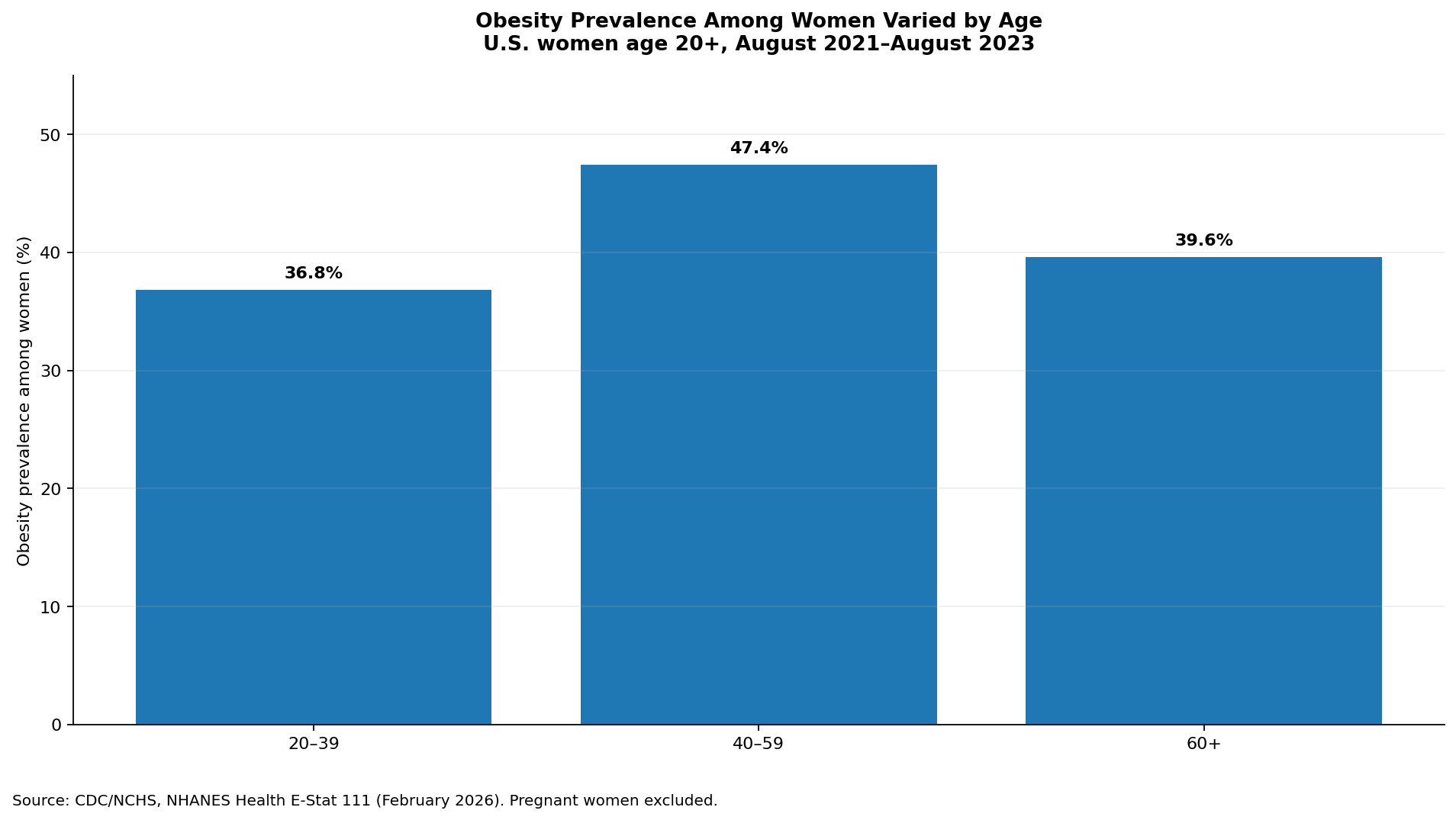
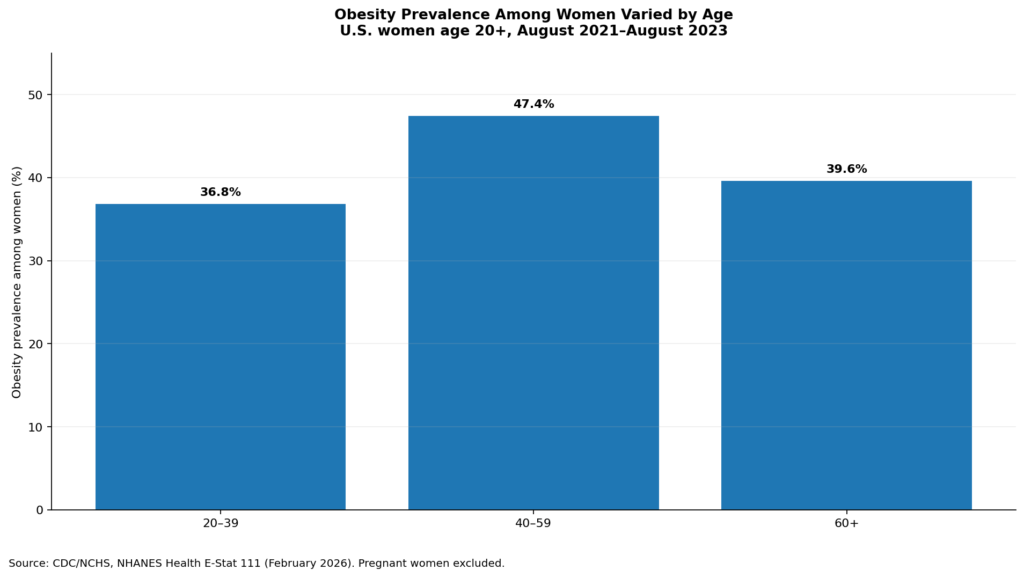
- Among women, obesity prevalence was 36.8% at ages 20-39, 47.4% at ages 40-59, and 39.6% at age 60 and older.
Source: CDC/NCHS, National Health and Nutrition Examination Survey, August 2021-August 2023; Health E-Stat 111, February 2026.
The Largest Sex Gap Appeared in Severe Obesity
Overall obesity prevalence was broadly similar for women and men in the NCHS estimates, but severe obesity showed a substantially larger difference. The 12.6% prevalence among women was about 1.9 times the 6.8% prevalence among men. That comparison is descriptive and should not be interpreted as evidence that sex alone causes severe obesity.
Women’s Obesity Prevalence Varied by Age
Among women, obesity prevalence was highest in the 40-59 age group at 47.4%, compared with 36.8% among women ages 20-39 and 39.6% among women age 60 and older. These population estimates can help frame reporting on weight management and prevention, but they do not explain the biological, social, economic, behavioral or environmental factors that may contribute to the observed patterns.
Why Measured National Data Matter
NHANES uses standardized physical examinations rather than relying only on self-reported height and weight. That makes the survey an important source for nationally representative estimates of overweight and obesity. Body mass index is a population screening measure and does not by itself diagnose an individual’s health, body composition or disease risk.
Get a personalized Women’s Health & Diet plan designed around your goals, schedule, food preferences, and fitness level.
About the Data
The estimates come from CDC/NCHS Health E-Stat 111, published in February 2026, using National Health and Nutrition Examination Survey data collected from August 2021 through August 2023. Adults age 20 and older were classified using body mass index calculated from measured height and weight; pregnant women were excluded. Estimates were age adjusted where reported to support population comparisons. The analysis describes prevalence in the U.S. civilian noninstitutionalized adult population. It does not establish causes for differences by sex or age, predict outcomes for individuals, or substitute for individualized medical assessment. BMI is a screening measure and has recognized limitations when applied to individuals.
Sources
- CDC/NCHS: Prevalence of Overweight, Obesity, and Severe Obesity Among Adults Age 20 and Older: United States, August 2021-August 2023
- CDC: National Health and Nutrition Examination Survey (NHANES)
About Women’s Health & Diet: Women’s Health & Diet publishes practical, evidence-informed nutrition, fitness and wellness content for women, including research-driven insights that make public health data easier to understand and use.