
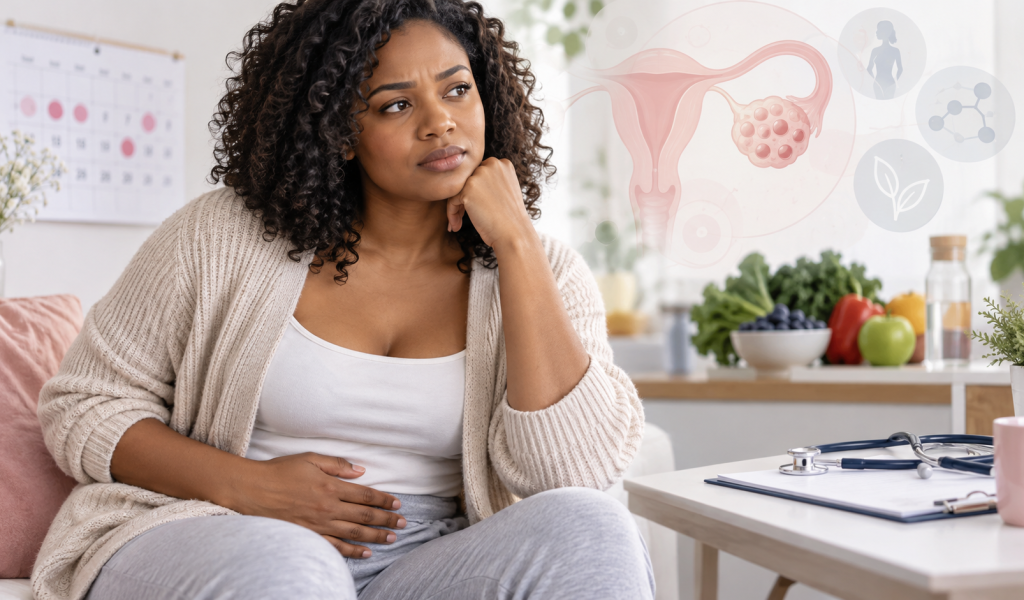


Irregular periods. Acne that refuses to go away. Facial hair. Difficulty getting pregnant. Weight changes. Dark patches of skin.
These symptoms may seem unrelated, but for some women they are connected by a common hormonal and metabolic condition known as polycystic ovary syndrome, or PCOS.
PCOS is one of the most common hormonal conditions affecting women of reproductive age.
Despite the name, PCOS is not simply a condition involving ovarian cysts.
It can affect:
- Menstrual cycles
- Ovulation
- Fertility
- Hormone levels
- Skin and hair
- Insulin regulation
- Metabolic health
- Cardiovascular health
- Mental health
And PCOS can look very different from one woman to another.
One woman may struggle mainly with irregular periods and infertility.
Another may have acne and unwanted facial hair.
Another may have insulin resistance and weight-management difficulties.
And some women with PCOS do not have all of these symptoms.
Understanding what PCOS actually is—and what it is not—can make the condition much less confusing.
What Does PCOS Mean?
PCOS stands for polycystic ovary syndrome.
You may also begin seeing the term polyendocrine metabolic ovarian syndrome, or PMOS, used to describe the condition. The newer terminology reflects the fact that PCOS involves much more than the appearance of the ovaries.
Regardless of which name is used, the important point is this:
PCOS is a hormonal and metabolic syndrome, not simply a problem involving cysts on the ovaries.
Women with PCOS commonly have problems involving ovulation and higher-than-expected androgen activity.
Androgens are hormones that are sometimes called “male hormones,” but women naturally produce them too.
When androgen levels or activity become elevated, symptoms can include:
- Increased facial or body hair
- Acne
- Oily skin
- Scalp hair thinning
PCOS can also interfere with normal ovulation, leading to irregular or absent menstrual periods.
Do You Have to Have Cysts to Have PCOS?
No.
This is one of the biggest misconceptions about PCOS.
The word polycystic makes it sound as though a woman must have ovarian cysts in order to have the condition.
She does not.
What may appear on an ultrasound in PCOS are often numerous small ovarian follicles—structures containing immature eggs—rather than the larger ovarian cysts people commonly imagine.
More importantly, some women can meet the diagnostic criteria for PCOS without having polycystic-appearing ovaries at all.
So:
No ovarian “cysts” does not automatically mean no PCOS.
And having polycystic-appearing ovaries on an ultrasound does not, by itself, necessarily mean you have PCOS.
Diagnosis requires looking at the bigger picture.
Does Having an Ovarian Cyst Mean You Have PCOS?
No.
Having one ovarian cyst—or even multiple ovarian cysts—does not automatically mean that you have PCOS.
This is an extremely important distinction because ovarian cysts are common and can develop for many reasons that have nothing to do with PCOS.
An ovarian cyst is generally a fluid-filled sac that develops on or inside an ovary.
Some cysts develop as part of the normal menstrual cycle. Others may be associated with conditions such as endometriosis or other ovarian problems.
PCOS is different.
The ovarian appearance associated with PCOS usually involves an increased number of small follicles that have not progressed normally through development. These follicles can give the ovaries a “polycystic” appearance on ultrasound, but they are not necessarily the same thing as having one or several ordinary ovarian cysts.
So, for example:
One ovarian cyst + regular ovulation + no signs of elevated androgens does not, by itself, mean you have PCOS.
Even being told that you have “cysts on your ovaries” does not automatically establish a PCOS diagnosis.
Healthcare professionals diagnose PCOS by looking at a combination of features, including:
- Whether you ovulate regularly
- Whether your menstrual cycles are irregular
- Whether you have elevated androgen levels or symptoms of higher androgen activity
- Whether your ovaries have the characteristic follicle pattern associated with PCOS
- Whether another medical condition could explain your symptoms
In adults, commonly used diagnostic approaches generally look for at least two of three major PCOS features after other possible causes have been excluded:
- Irregular or absent ovulation
- Elevated androgens or signs of increased androgen activity
- Characteristic polycystic ovarian morphology
This also means the opposite can happen:
A woman can have PCOS without having ovarian cysts.
So if an ultrasound report says you have an ovarian cyst, do not immediately assume:
“I have PCOS.”
And if your ultrasound does not show cysts, do not assume:
“I definitely don’t have PCOS.”
Your menstrual history, hormone-related symptoms, laboratory results, and other findings all matter.
What Are the Symptoms of PCOS?
PCOS symptoms vary significantly.
Common signs and symptoms can include:
Irregular periods
Your periods may:
- Come infrequently
- Skip several months
- Become unpredictable
- Occasionally be very heavy
Irregular menstruation commonly occurs because ovulation is not happening regularly.
Difficulty getting pregnant
Because PCOS can interfere with ovulation, it is a common cause of infertility.
But having PCOS does not mean you cannot become pregnant.
Many women with PCOS conceive naturally or with fertility treatment.
Excess facial or body hair
Increased hair growth is called hirsutism.
Hair may become more noticeable on areas such as:
- Chin
- Upper lip
- Chest
- Abdomen
- Back
- Upper thighs
This can occur because of increased androgen activity.
Acne
PCOS may contribute to persistent or severe acne, particularly acne that continues well beyond adolescence or does not respond well to usual treatments.
Oily skin
Higher androgen activity may increase oil production.
Thinning scalp hair
Some women develop thinning similar to androgen-related hair loss.
Darkened patches of skin
Some women with PCOS develop acanthosis nigricans.
These patches can look:
- Darker than surrounding skin
- Thickened
- Velvety
They often occur around areas such as the:
- Neck
- Armpits
- Groin
Acanthosis nigricans can be associated with insulin resistance.
What Causes PCOS?
Scientists still do not know one single cause of PCOS.
Current evidence suggests that genetic, hormonal, metabolic, and environmental factors contribute to its development.
PCOS often runs in families, supporting a significant genetic component.
Insulin may also play an important role for many women.
What Does Insulin Resistance Have to Do With PCOS?
Insulin is a hormone produced by the pancreas.
Its job includes helping glucose move from your bloodstream into your cells, where it can be used for energy.
With insulin resistance, the body’s cells do not respond to insulin as effectively as they should.
The pancreas may compensate by producing more insulin.
Higher insulin levels can encourage the ovaries to produce more androgens, which can contribute to PCOS symptoms and interfere with normal ovulation.
Insulin resistance can also increase the long-term risk of:
- Prediabetes
- Type 2 diabetes
- Other metabolic problems
However, not every woman with PCOS has the exact same degree of insulin resistance.
And PCOS is not simply caused by eating too much sugar.
That explanation is far too simplistic.
Can Thin Women Have PCOS?
Yes.
PCOS can affect women across different body sizes.
Although overweight and obesity are common among women with PCOS, being thin does not rule out the condition.
A woman can have:
- A normal body weight
- Irregular ovulation
- Elevated androgens
- Acne
- Facial hair
- Other PCOS features
and still meet diagnostic criteria.
Weight should therefore never be used as the only way to decide whether someone might have PCOS.
How Is PCOS Diagnosed?
There is no single test that simply comes back:
Positive for PCOS.
Instead, healthcare professionals consider symptoms, menstrual history, examination findings, laboratory testing, and sometimes ovarian imaging.
For adults, commonly used diagnostic approaches generally consider three major features:
- Irregular or absent ovulation
- Clinical or laboratory evidence of increased androgens
- Characteristic polycystic ovarian morphology
A woman may not need to have all three.
And other conditions that could produce similar symptoms should be considered before PCOS is diagnosed.
Your healthcare provider may order testing related to:
- Androgen levels
- Thyroid function
- Prolactin
- Blood glucose
- Cholesterol
- Other hormones
depending on your symptoms and medical history.
PCOS Can Be More Complicated to Diagnose in Teenagers
Adolescence requires particular care because irregular cycles and acne can be common during normal puberty.
A teenager should not be labeled with PCOS simply because she:
Has acne.
Has an irregular period shortly after beginning menstruation.
Or has ovaries that appear to contain numerous follicles.
Persistent menstrual irregularity combined with evidence of excessive androgen activity deserves proper medical evaluation.
PCOS and Fertility
One of the first questions many women ask after diagnosis is:
“Can I still have a baby?”
Yes.
PCOS is a leading cause of ovulatory infertility, but infertility does not mean sterility.
The problem is often that ovulation occurs unpredictably—or sometimes not at all.
Without regular ovulation, there are fewer opportunities for an egg to be fertilized.
But treatment can help many women ovulate.
Depending on the circumstances, medications may be used to stimulate ovulation when pregnancy is desired.
Other fertility treatments may be considered based on factors such as:
- Age
- How long pregnancy has been attempted
- Sperm health
- Fallopian tube health
- Other fertility conditions
The important message is:
PCOS can make pregnancy more difficult, but it does not mean pregnancy is impossible.
Does PCOS Cause Weight Gain?
PCOS and body weight have a complicated relationship.
Insulin resistance and hormonal differences can make weight management more difficult for some women.
At the same time, increased body fat—particularly around the abdomen—can worsen insulin resistance.
This can create a cycle where:
Insulin resistance makes weight management more difficult.
And increasing weight may worsen metabolic and hormonal symptoms.
But PCOS should not be reduced to a weight problem.
Women deserve treatment regardless of their body size.
For women who have overweight or obesity, modest weight loss may improve insulin sensitivity, metabolic health, menstrual regularity, and sometimes ovulation.
Importantly, healthy lifestyle changes can provide health benefits even when the number on the scale does not change dramatically.

Is There a Special PCOS Diet?
You may see advertisements for:
The PCOS Diet.
The PCOS Meal Plan.
The Hormone-Balancing Diet.
The Insulin-Reset Diet.
But there is no single diet proven to be universally superior for every woman with PCOS.
A practical eating pattern may emphasize:
- Vegetables
- Fruits
- Whole grains
- Beans and legumes
- Lean protein
- Fish
- Eggs
- Nuts and seeds
- Healthy fats
- High-fiber foods
while limiting excessive amounts of added sugar and highly processed foods.
For more practical nutrition guidance, see our Healthy Diet for Women to Stay Fit guide and Foods to Buy for Healthy Eating grocery guide.
The goal is not to remove every carbohydrate from your diet.
It is to create meals that support overall nutrition, blood sugar management, and long-term consistency.
Exercise and PCOS
Physical activity is another important part of PCOS management.
Exercise can support:
- Insulin sensitivity
- Cardiovascular fitness
- Metabolic health
- Strength
- Mood
- Weight management
A combination of aerobic activity and resistance training can be particularly useful.
Walking counts.
Strength training counts.
Swimming counts.
Cycling counts.
Home workouts count.
You do not need to exercise intensely every day to benefit.
Consistency matters more than punishment.
How Is PCOS Treated?
There is currently no single cure for PCOS.
Treatment is individualized depending on your symptoms and goals.
A woman trying to become pregnant may need very different treatment from a woman mainly concerned about acne and irregular periods.
Possible approaches include:
Hormonal birth control
For women who are not trying to become pregnant, combined hormonal contraceptives may help:
- Regulate menstrual bleeding
- Reduce androgen-related symptoms
- Improve acne
- Reduce unwanted hair growth
They may also help protect the uterine lining when periods are very infrequent.
Metformin
Metformin improves the body’s response to insulin and may be used when metabolic problems or insulin resistance are important features of PCOS.
It may also improve menstrual regularity in some women.
Anti-Androgen Medications
Certain medications can reduce androgen-related symptoms such as unwanted hair growth.
These medications require medical supervision and may not be appropriate during pregnancy.
Hair and Acne Treatments
Depending on symptoms, treatment may include:
- Dermatologic acne treatment
- Laser hair reduction
- Electrolysis
- Other hair-removal methods
Fertility Treatment
If pregnancy is the goal, treatment may be used to encourage ovulation.
The appropriate approach depends on the individual woman’s health and fertility situation.
Why Irregular Periods Should Not Simply Be Ignored
Women sometimes think:
“If I only get four periods a year, that’s actually convenient.”
But extremely infrequent menstruation deserves medical attention.
When ovulation does not occur regularly, the uterine lining may go long periods without normal progesterone exposure and regular shedding.
Over time, this can increase the risk of abnormal thickening of the uterine lining, known as endometrial hyperplasia, and is one reason women with PCOS require appropriate medical management.
Do not simply ignore months and months without a period.
PCOS Is More Than a Fertility Condition
PCOS can affect health long after pregnancy planning is over.
Women with PCOS may have increased risks involving:
- Insulin resistance
- Prediabetes
- Type 2 diabetes
- Abnormal cholesterol
- Cardiovascular risk factors
- Sleep apnea
- Endometrial disease
- Anxiety
- Depression
So treatment should not stop at:
“Do you want to get pregnant?”
PCOS deserves ongoing health management.
PCOS and Mental Health
Living with PCOS can also be emotionally difficult.
Acne.
Facial hair.
Hair thinning.
Weight struggles.
Infertility.
Unpredictable periods.
These symptoms can affect confidence and quality of life.
Women with PCOS also experience higher rates of depression and anxiety.
Mental health symptoms deserve treatment just as physical symptoms do.
Common PCOS Myths
“PCOS means you have ovarian cysts.”
False.
You can have PCOS without having ovarian cysts.
“Having an ovarian cyst means you have PCOS.”
False.
Ordinary ovarian cysts have many possible causes and are not enough to diagnose PCOS.
“PCOS means you cannot get pregnant.”
False.
Many women with PCOS become pregnant naturally or with treatment.
“Only overweight women get PCOS.”
False.
PCOS occurs across body sizes.
“Losing weight cures PCOS.”
No.
Weight management may improve symptoms and metabolic health for some women, but it does not erase the underlying condition.
“PCOS is caused by eating too much sugar.”
No.
Insulin resistance is common in PCOS, but the condition involves complex genetic, hormonal, and metabolic factors.
“If your periods are irregular, you definitely have PCOS.”
No.
Many medical conditions can cause irregular periods.
Proper evaluation matters.
When Should You See a Healthcare Provider?
Consider making an appointment if you experience:
- Persistently irregular periods
- Months without menstruation
- Difficulty becoming pregnant
- Increasing facial or body hair
- Persistent severe acne
- Scalp hair thinning
- Dark, velvety patches of skin
- Unexplained reproductive or hormonal changes
And if an ultrasound shows an ovarian cyst, ask your healthcare provider what type of cyst it appears to be rather than automatically assuming it means PCOS.
Do not diagnose yourself based solely on social-media content or a symptom checklist.
The same symptoms can occur with other medical conditions.
A proper evaluation helps determine what is actually happening.
The Bottom Line
PCOS is a common but complicated hormonal and metabolic condition.
It can affect:
- Ovulation
- Menstrual cycles
- Fertility
- Androgen levels
- Skin and hair
- Insulin regulation
- Metabolic health
- Cardiovascular risk
- Mental health
And despite its name, PCOS does not simply mean that a woman has cysts on her ovaries.
This distinction is worth remembering:
Having an ovarian cyst does not automatically mean you have PCOS.
Having several ovarian cysts does not automatically mean you have PCOS.
And you can have PCOS without ovarian cysts.
Diagnosis involves looking at menstrual and ovulation patterns, androgen levels or symptoms, ovarian findings when needed, and ruling out other possible causes.
PCOS also looks different from woman to woman.
Some women struggle primarily with irregular periods.
Others experience unwanted hair growth or acne.
Some have significant insulin resistance.
Some have trouble becoming pregnant.
Others discover they have PCOS while being evaluated for something completely different.
There is currently no single cure, but PCOS can be effectively managed.
Treatment may include:
Healthy lifestyle changes.
Hormonal medications.
Metformin.
Treatments for unwanted hair or acne.
Fertility medications.
And regular monitoring of long-term metabolic and reproductive health.
If you think you may have PCOS, do not assume your symptoms—or an ovarian cyst found on an ultrasound—automatically provide the diagnosis.
Talk with your obstetrician-gynecologist, primary-care provider, endocrinologist, or another qualified healthcare professional.
Getting the correct diagnosis is the first step toward understanding your body and developing a treatment plan that fits your symptoms, your health, and your goals.
This article is intended for general educational purposes and is not a substitute for individualized medical diagnosis or treatment. If you have irregular periods, signs of increased androgen levels, fertility concerns, ovarian cysts, or other symptoms that concern you, speak with a qualified healthcare professional.